
JOHN WIGHT celebrates a timeless boxing movie classic marking its 50th anniversary this year

Why Trabzonspor might just be the perfect move for Salah
European nights, passionate supporters and a new sense of freedom await the Egyptian in Turkey, writes JAMES NALTON
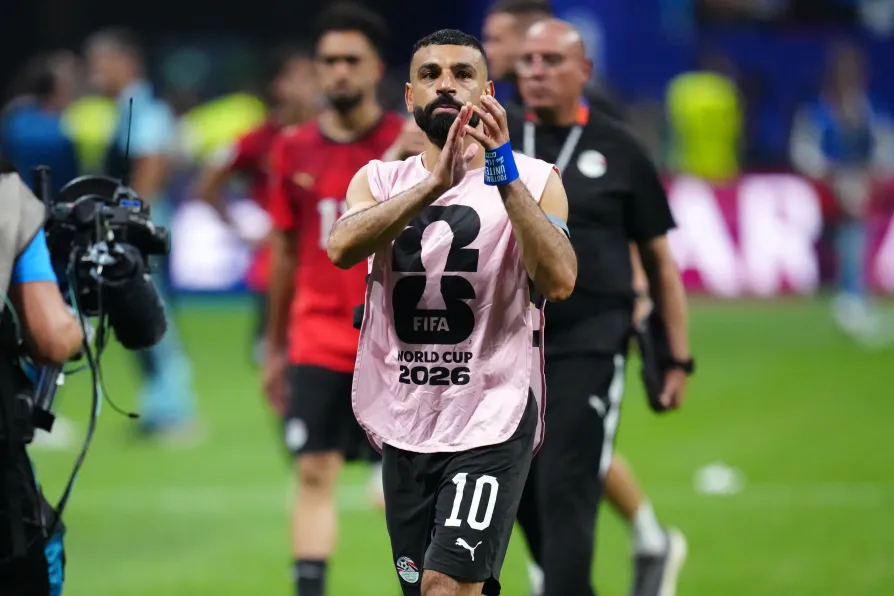
 NEW HORIZONS: Mohamed Salah
![The Rocky Balboa statue at the Philadelphia Museum of Art in Philadelphia, Pennsylvania [Pic: Scott D Welch]](https://msd11.gn.apc.org/sites/default/files/styles/desktop/public/2026-09/5462763896_3e00f4a919_b.jpg.webp?itok=Jtu8zObz)





IT LOOKED like the supporters of Trabzonspor were celebrating a league title win.
The stadium on the banks of the Black Sea was full to overflowing, and the passion spilled from the stands towards the pitch in the form of chants, pyro, and raised arms.
Fans jumped up and down and sang in unison, the noise was so loud it distorted some of the audio on the club’s recordings of the event.
On the pitch, along with those carrying out the obligatory filming of the moment for social media, was not a title-winning team, but one man, one new signing, Mohamed Salah.
They were all there to welcome their new player, who immediately looked at home as he joined in with the chants and interacted with the crowd.
In an area with a rich and diverse religious history, this also felt like a moment of worship. It highlighted what a big deal this is for the club’s fans symbolically, as much as it has been for Salah financially.
But though the money has clearly and understandably played a part in Salah’s decision to move to Trabzon, it is not the only factor at play.
Questions have been asked as to why he chose to join the Turkish league over others in Europe, or over other typical late-career, one-final-payoff leagues such as MLS and Saudi Arabia.
Many expected him to remain at a higher level of league, rather than moving to one that sits ninth in Uefa’s national association coefficient rankings, just above Poland and below the Netherlands. But in terms of those “retirement leagues,” Opta ranks the Turkish league 14th in the world, above MLS (22nd) and Saudi Arabia (37th).
Turkey offers a combination of European involvement and final-contract riches.
Trabzonspor are competing in the play-off round of Europa League qualifying later this month, and even if they lose that, they will take their place in the Conference League.
It means Salah will retain a profile in world football, more so than Ronaldo in Saudi Arabia or Lionel Messi in MLS, but will be worshipped locally more than being scrutinised globally.
He’s not the only familiar name in the Turkish league, far from it.
One of the best strikers in the world, and one in the peak of his career, Victor Osimhen, has spent the last two seasons in Turkey with Galatasaray.
Paul Onuachu, the towering Nigerian striker formerly of Southampton, plays for Salah’s new team and finished joint top scorer in the league last season.
Other former Premier League players such as Leroy Sane, Leandro Trossard, Davinson Sanchez, and Ederson all ply their trade in the country that spans two continents, but the majority of which is in Asia.
The most familiar region of Turkish football, Istanbul, sits on that Europe-Asia border and is home to the teams that have dominated the sport domestically: Fenerbahce, Galatasaray, and Besiktas.
Each of those teams have won the Turkish league title more than 20 times. The next most successful team is Trabzonspor on seven, having won it as recently as 2022, but Galatasaray have won the title for the last four seasons.
Salah will obviously have been attracted by the financial package on offer, but the money available elsewhere would have been far from meagre.
MLS was one of the available choices, but it’s no surprise that he swerved that option having seen the treatment of some Asian and African nationals in the United States during the World Cup.
Turkey is an obvious alternative to MLS as it is not dissimilar to the North American league in its accommodation of familiar names from Europe’s “big five” leagues who might be past their best.
But to improve, they need to do more than that, combining the best foreign players they can acquire with quality youth development at a local level.
This can be difficult to do while also remaining financially stable and free from political interference, something Turkey’s clubs can struggle with as much as any in Europe, but the arrivals of players like Osimhen and Salah raise the ceiling.
Signing such players, who may be perceived as out of their reach or too good for them, is one way for a team, or indeed a league, to raise its profile and quality. All of the most successful leagues in the world have done this to various extents during their rise to prominence.
Messi signing for Inter Miami has been seen as a boost for the game in the United States and something that will raise the profile and standard of MLS. Salah signing for Trabzonspor could be viewed in the same light for the Turkish league, although there has been less of this narrative with Salah’s move than there was with Messi’s.
At this stage of his career, Salah is probably ready for a step away from the spotlight of Europe’s most sensationalised teams.
His last season at Liverpool was a difficult one, and there is no guarantee things would be easier if moving to a top club elsewhere in Europe.
A buzz on signing for one of those teams can soon be replaced by something less wholesome, should results not match the high expectations of these clubs.
Sometimes players at this stage of their career target one final wage to further support themselves and their family, and ideally combine this with an environment in which they feel welcome in a country in which they feel at home.
Looking at it from these perspectives, Turkey, and Trabzon in particular, make sense. Even though money may have been a major factor, other elements fell into place, too.
Salah is not far from his homeland and is closer to his holiday home by the Aegean coast in Bodrum. The area surrounding Trabzon itself is an attractive place to live, and though its religious sites are diverse and historic, it is now a predominantly Muslim region.
In joining a team in the north-east of the country on the coast of the Black Sea, away from the glare and expectation of the big three of Istanbul, Salah has a chance to help an outsider break the capital city dominance. Doing so would immediately make him a Trabzonspor club legend as well as a Liverpool one.
The world of football is better for not revolving around a handful of teams and leagues in Western Europe. Those teams themselves are not without their financial problems, and as seen at the World Cup, political issues affect all levels of the game and are not limited to Turkey.
Salah’s decision to move to Trabzonspor might appear left field, but it is in many ways the perfect move for him at this time.

Similar stories
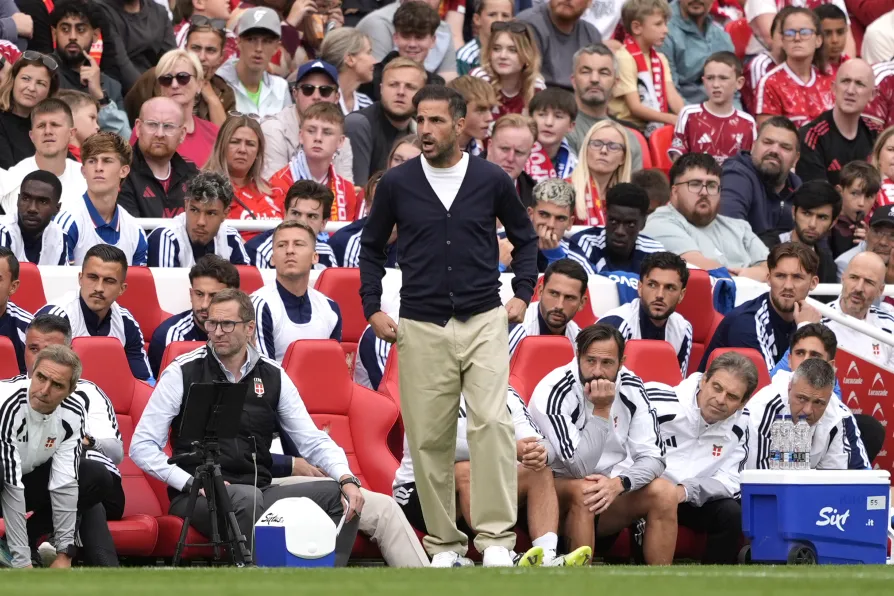
Snippets of news from the sporting world with JAMIE J
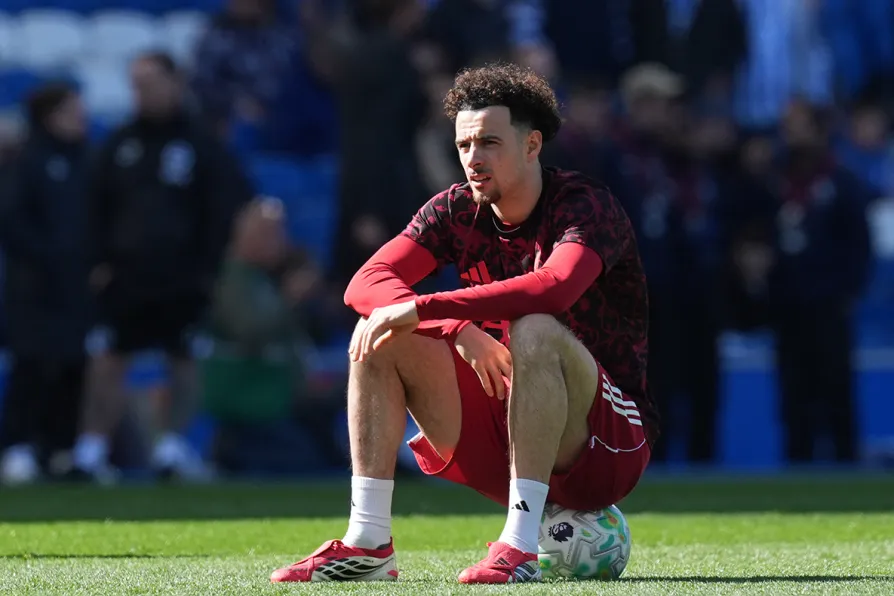
JAMES NALTON argues that Curtis Jones’s departure leaves Liverpool facing a stark local void as the club’s roots are increasingly swallowed by football’s globalised model
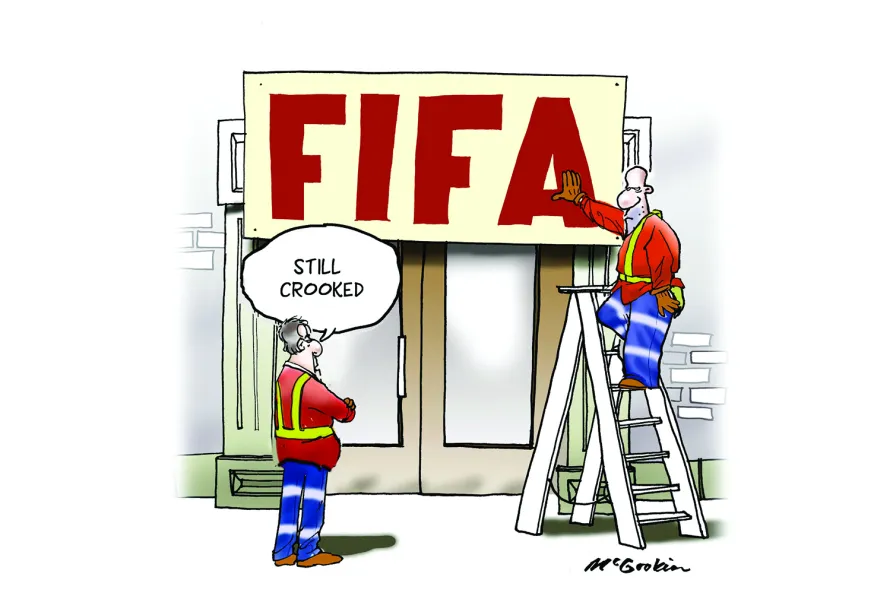
Resistance grows as Fifa seeks to hand private investors a slice of the international game, writes JAMES NALTON
England survived a thrilling Azteca encounter, but the stadium and its supporters created one of the tournament’s defining nights, writes JAMES NALTON