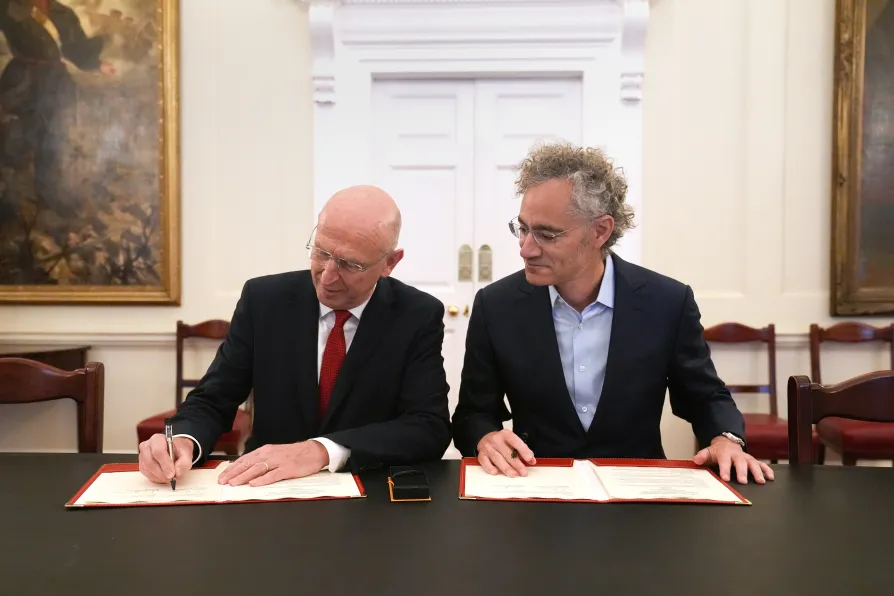
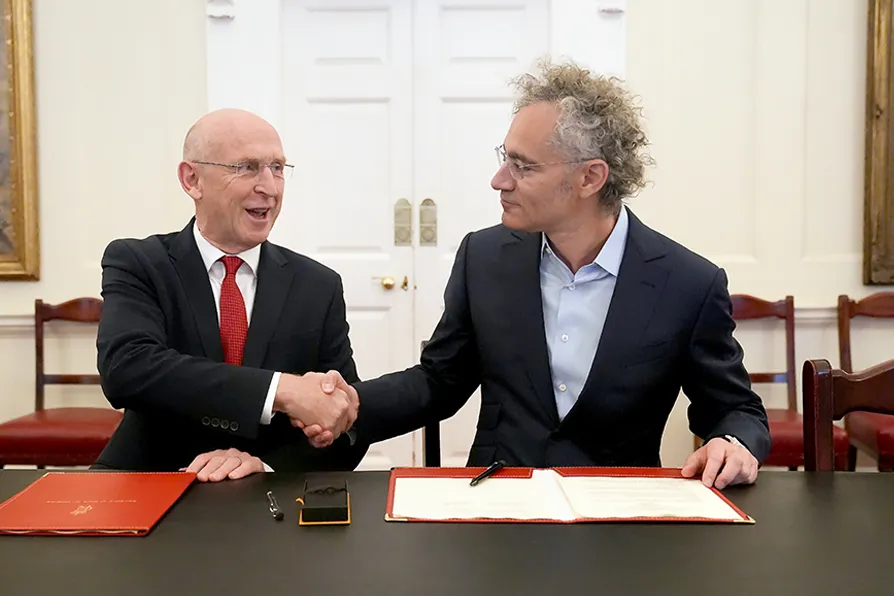
 Then defence secretary, now Chanellor, John Healey (left) and the CEO of Palantir Technologies Alex Karp sign a £1.5 billion investment, at Wellington Conference Room, Horse Guards, Whitehall, London, September 18, 2025






PALANTIR’S hire of former Labour deputy leader Tom Watson raises familiar questions about how this sinister company buys influence and secures contracts.
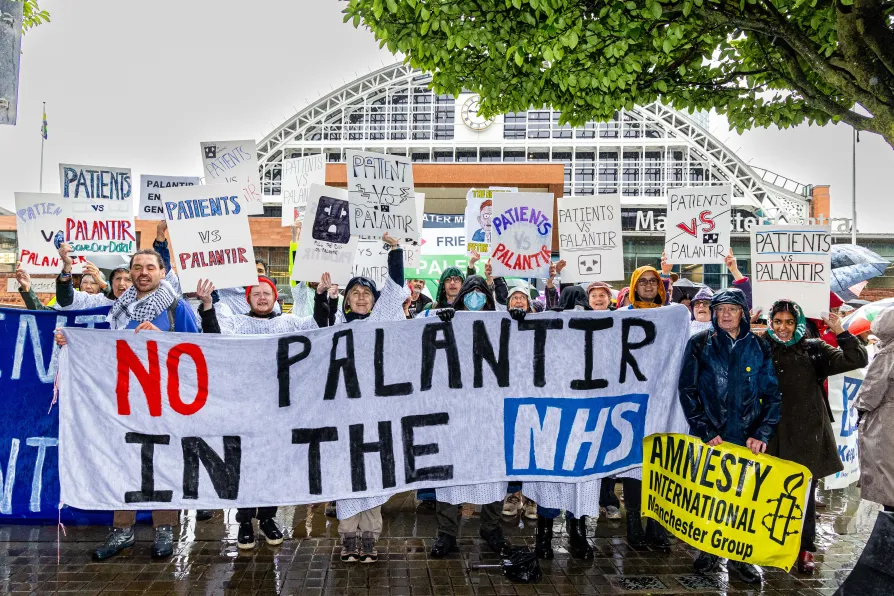
Back in April an investigation by The Nerve revealed that dozens of ex-government officials and former ministers had joined Palantir, including top mandarins in the NHS and Ministry of Defence (MoD), which have both agreed contracts worth hundreds of millions with the CIA-linked firm.
The stench of corruption went higher still, with the £240 million contract signed by the MoD following a personal meeting between then prime minister Keir Starmer and Palantir’s CEO Alex Karp in Washington, organised by then ambassador to Washington Peter Mandelson, of whose lobbying firm Global Counsel Palantir was a paying client.
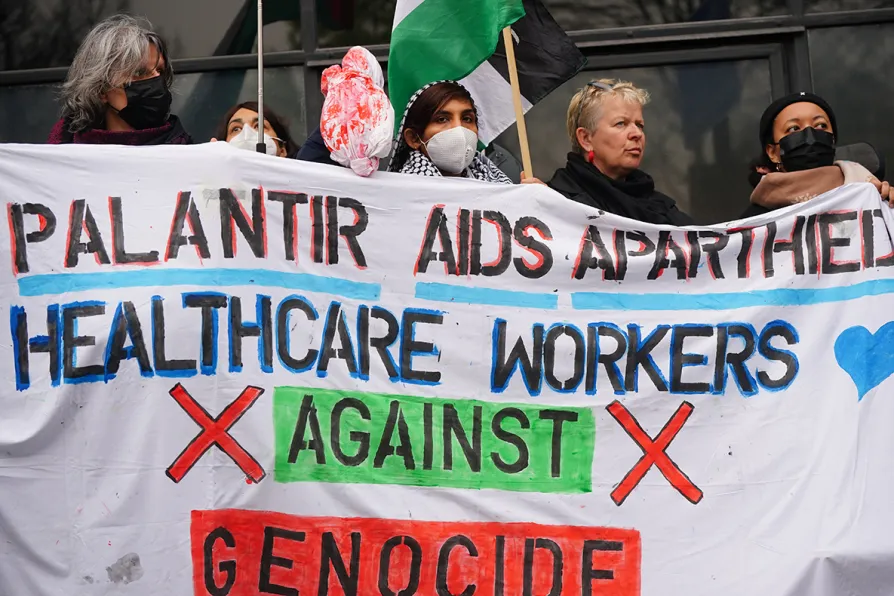
Pressure to block future contracts with Palantir and cancel those already agreed has grown, both because these exposés suggest they were not fairly acquired and because of the company’s unsavoury nature — its far-right founder and “post-democracy” advocate of untrammelled corporate rule Peter Thiel, its development of technology used in human rights abuses by the US Immigration, Customs and Enforcement (Ice) agency under Donald Trump and in war crimes by the Israel Defence Forces. London Mayor Sadiq Khan’s decision to block a Palantir contract with the Metropolitan Police shows the firm is becoming toxic.
Watson’s appointment is designed to counter that pressure. It is clearly based on the hope that the Labour peer — best known on the left for his serial sabotage of Jeremy Corbyn’s leadership from 2015 to 2020 — continues to exercise influence within the party.
And that leads to a much bigger question — what is Andy Burnham’s Labour Party? What are its politics and who does it represent?
Foreign Secretary Ed Miliband made a rare positive reference to the power of protest recently when discussing the government’s new tougher line on Israel: “Gaza mobilised a whole generation of people, and those people were right, not wrong.” But as the Morning Star has pointed out, this has not been matched by a reversal of the ban on Palestine Action or the other repressive measures taken against the Palestine movement.
Rhetorically, Burnham often echoes another movement that mobilised a generation, the Corbyn movement which saw Labour grow to be the biggest party in western Europe, energising hundreds of thousands of activists in the cause of change.
Like Burnham, Corbyn talked of Britain having been on the wrong track since Thatcherism. Like Burnham, he denounced the privatisation of economic power and demanded it be reversed. Like Burnham, he was accused of threatening to take the country back to the 1970s.
Unlike Burnham, he was treated as a mortal threat by the parliamentary party and the British Establishment more widely. The most obvious explanation is that they thought he meant it and do not think Burnham does.
These are obvious litmus tests for a Labour Party that hounded Corbyn and many of his supporters from its ranks, and whose parliamentary seats are largely occupied by new MPs carefully vetted by the ferociously anti-socialist faction around aforementioned Palantir pal Mandelson.
If they support Burnham’s stated programme, do they admit that Corbyn was right too? Do they want to win those driven away from Labour back, or would they meet socialist activists with the same hostility as before?
Pretending Corbynism never happened isn’t good enough — sleaze-ridden, warmongering and corporate-lackey Starmer-Labour was the party machine’s reaction to Corbyn, and Burnham has so far only rejected it in rhetoric, not in policy or personnel.
Which way he jumps on Palantir will be an indicator. If Burnham is the breath of fresh air most trade unions say he is, Watson’s lobbying will cut no ice with this government and its contracts will be revisited.

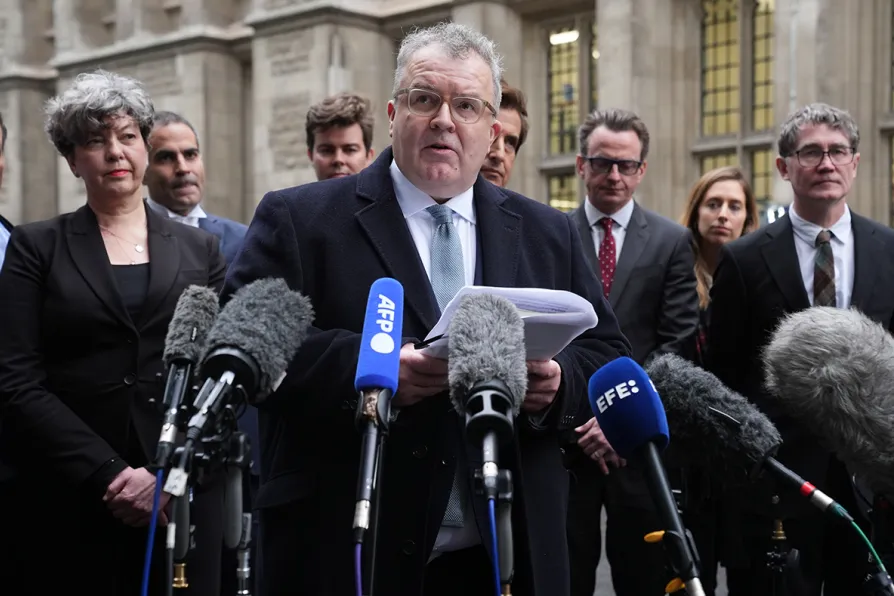
The greatest threat to democracy may no longer come from political parties but from unelected tech oligarchs like Peter Thiel and his powerful Silicon Valley network, argues JOHN GREEN