

 Latest editorial
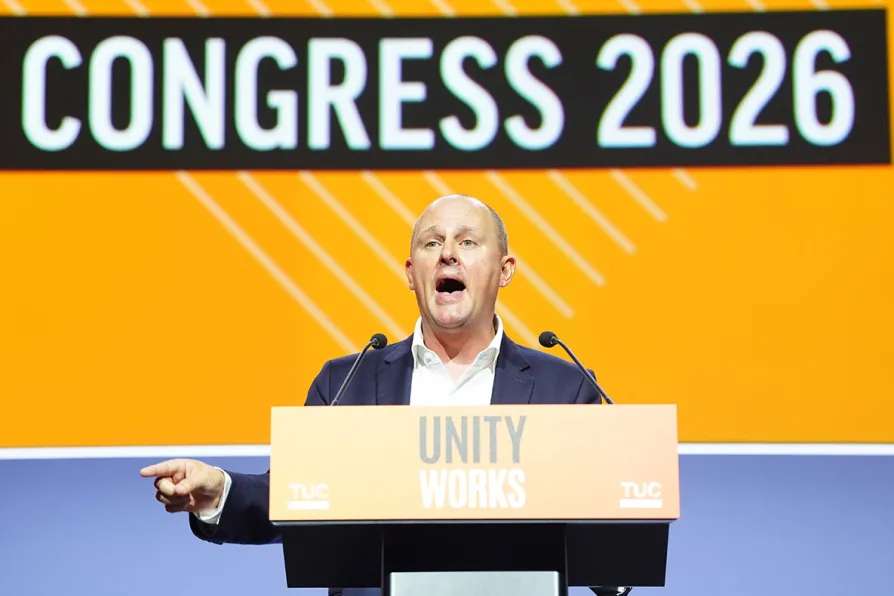






THIS week’s TUC Congress in Brighton made important demands on the economic transformation Britain needs and how to achieve it politically.
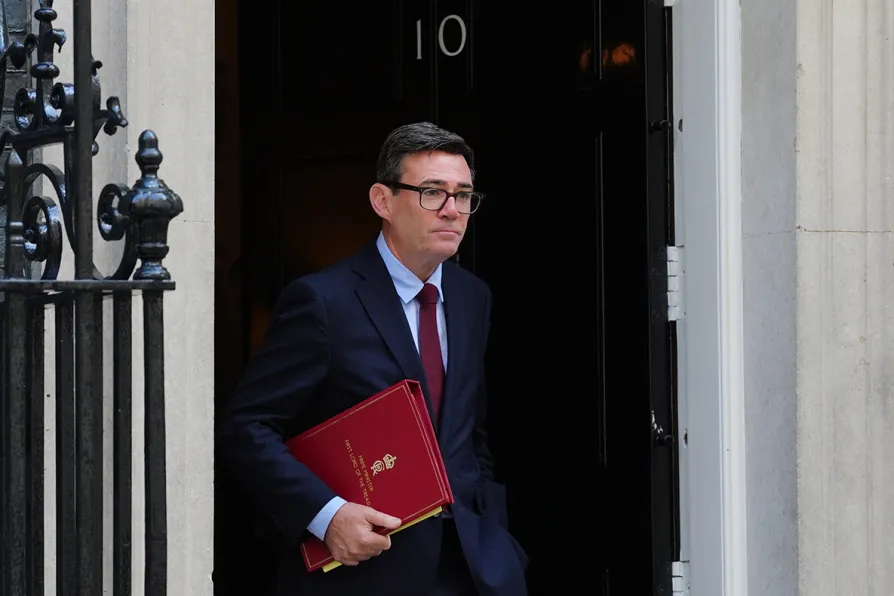
Despite the decline of two-party politics and the emergence of rivals on the left, it is clear most unions still see Labour as the only viable vehicle for political change in workers’ interests — and believe Andy Burnham offers it a chance to win back public trust.
Multiple unions welcomed his pledge to turn the page on 40-plus years of neoliberalism and pledges to support him in that project came from non-affiliated as well as affiliated unions. Many on the left will be sceptical about Burnham’s actual commitment to change, or else his ability to deliver it, but turning the trade union movement into a militant force for it makes sense either way.
The key motion on reshaping Britain economically — including through public ownership of utilities, sustained rises in public spending on services and public-sector pay rises, higher taxes on wealth and profits and use of state aid and procurement to reindustrialise the country needs to shape all trade union engagement with the government.
It was positive to see such wide union support for a composite which recognised the need for unions to press government on helping bring the Iran war to an end — on one level because of its impact on the cost of living, but bolstered by the (admittedly narrower) victory of the University and College Union’s welfare not warfare motion confirming the TUC is opposed to the militarisation of society and the drive to war.
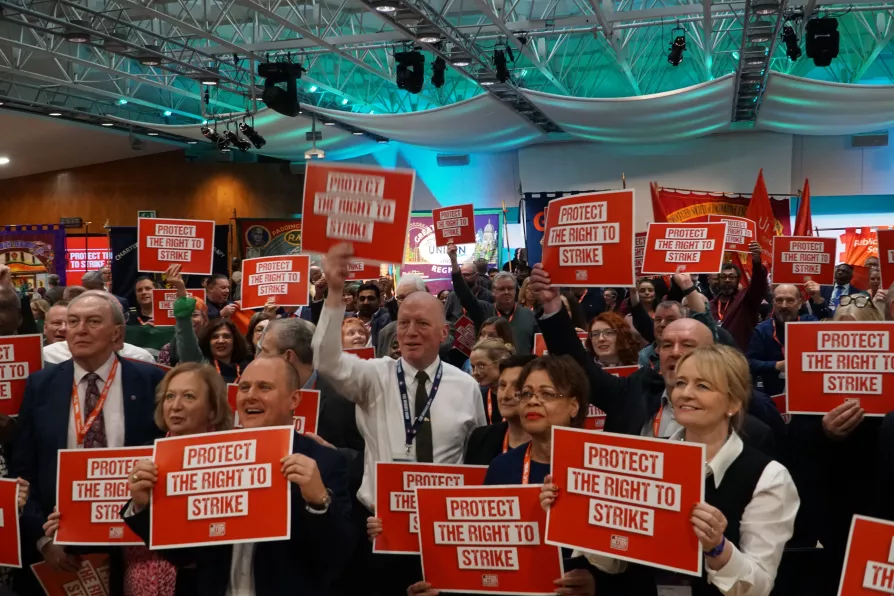
And votes to organise a national day of action for fairer taxes and public services, and to back co-ordinated strike action over pay, show thought is already being given to how to put pressure on government to act in line with this programme.
The TUC continues to face both ways, however, on the neoliberal model of globalisation which formed the context for Thatcherism and the market-worshipping policies of every government since the 1980s.
Delegates voted against “taking the country into divisive debates around both nationalism and EU/single market membership,” to “respect the result of the 2016 referendum on EU membership” and to recognise that “single market membership would reverse the UK’s progress to rail public ownership.”
They then voted the next day for a motion calling for “the deepest possible partnership with the EU” unlimited by “arbitrary red lines” and with “nothing off the table,” moved by a speaker explicitly saying Britain should rejoin the EU.
Coming in the week that the leaders of the devolved Scottish, Welsh and Northern Irish governments tied their calls for independence to “the future of our nations [belonging] in the European Union,” this risks a return to the cul-de-sac of “progressive” (as opposed to hard-headed, class-conscious) politics pitting cosmopolitan against nativist identities rather than workers against the rich.
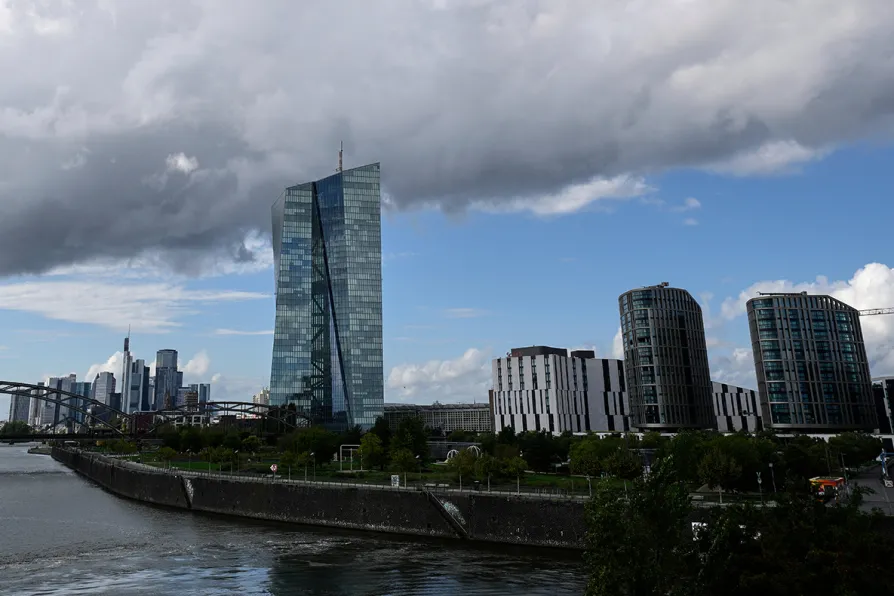
It is based on a mythical EU associated with tolerance and economic prosperity, when the realities are that EU members such as Germany, Italy and France face the same protracted economic decline and attacks on working-class living standards that British liberals blame on Brexit, and that the EU is increasingly militarist, authoritarian and racist.
It would return Britain to the toxic Brexit debates of the 2010s, rather than using the powers we have outside the EU to redesign the economy. It would also mean tying trade union ambitions to propping up the collapsing architecture of neoliberal globalisation when our economic demands rest on demolishing it.
Rebuilding class politics and anti-imperialism means abandoning liberal delusions about the explicitly capitalist EU — a pillar of an unjust international trading system based on plunder and exploitation of the Global South.

The TUC fell for the illusion of a ‘Social Europe’ in 1988 and backed single-market membership. DOUG NICHOLLS argues that dramatic changes in the EU prove the need for an independent economic policy

DOUG NICHOLLS welcomes a turning point at this year’s Congress, where many motions call for a co-ordinated plan to revive British industry, a perspective outlined in his new book