DOUG NICHOLLS says the parasitic finance markets must be challenged or another British government could be toppled


 Latest editorial

Peace and reconciliation are not platitudes – they are humanity’s only hope
On Hiroshima Day, we print a statement by Coventry Lord Mayor’s Committee of Peace and Reconciliation
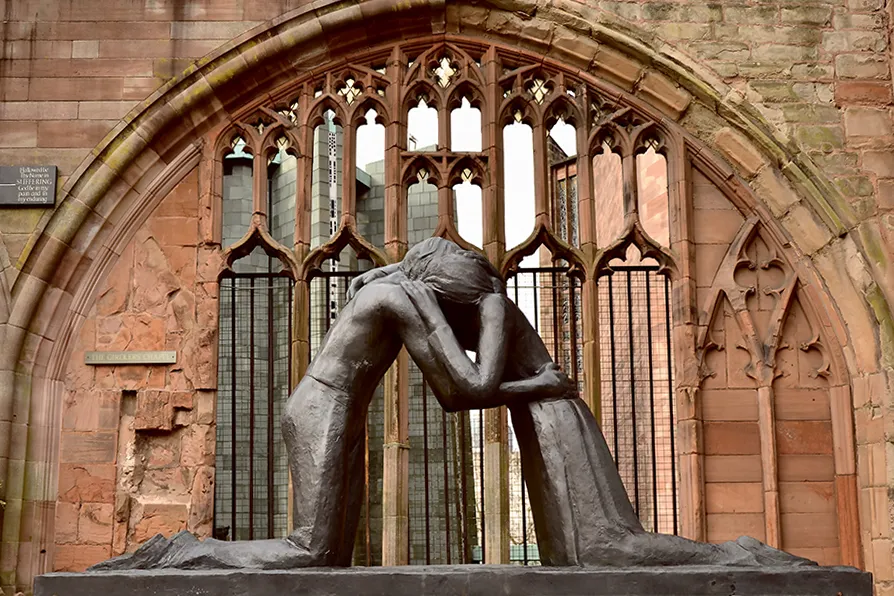 Reconciliation (originally named Reunion) is a sculpture by Josefina de Vasconcellos unveiled in 1977 at the Coventry cathedral destroyed during the bombing raid in 1940 / Pic: Jim Linwood/CC
The late country singer’s Imagination Library has put hundreds of millions of books into children’s hands. We should build on that legacy by defending the libraries at the heart of our communities, says BRENDA AITCHISON
Deprivation is a fundamental factor in criminal behaviour that must be addressed but, KENNY MacASKILL argues, there needs to a major rethink in sentencing to tackle overcrowding
MML director MEIRIAN JUMP outlines the recently refreshed library’s busy autumn schedule that ranges from book sales, archival exploration, community work with online education and the ever popular site tours
Some thinkers and authors on the right are openly discussing the possibility that the historically successful party of the British ruling class may be exhausted
Class struggle is the motor of history but the direction and detail of change at any time and place is the outcome of many factors, suggests the Marx Memorial Library and Workers’ School
TONY BURKE surveys the shifting political landscape and the challenges Labour needs to address if it is to prevail in the 2028 federal elections





WE REMEMBER Hiroshima. The Japanese city where the first atomic bomb was dropped on August 6 1945. The effect was devastating.
At least 100,000 people were killed instantly or in the first few days and many more died later due to radiation. The mental and physical suffering of the hibakusha [bombing survivors] who survived but suffered the effects of radiation continued for the rest of their lives.
Coventry also suffered extensive destruction during the second world war. On the night of the November 14 1940 there was a terrifying aerial attack with high explosive and incendiary bombs.
More than 4,300 homes in Coventry were destroyed along with most of the city centre including hospitals and the cathedral. Over 560 people were killed and many more were badly injured.
The Lord Mayor’s Peace Committee in Coventry organises an annual remembrance event in the cathedral to promote peace and reconciliation on the anniversary of the attack on Hiroshima.
World War II could have been the war to end all wars, with the deaths of 75 million people, but hopes that humanity had learned a lesson and wars would end did not materialise.
Today wars between Russia and Ukraine, Israel and Palestine/Hamas and Hezbollah in Lebanon are ongoing. There is ethnic violence and civil war in Sudan, civil war in other countries including Ethiopia, Somalia, Mozambique, Central African Republic, Myanmar, Colombia, Afghanistan and Yemen. Terrorist insurgency prevails in Nigeria, Iraq and many other countries.
The threat of the possible use of nuclear weapons is always there.
We urgently need to appeal to policy makers and political leaders to remind them of the devastating effects of war and to focus on finding peaceful solutions to our differences.
The USA’s and Israel’s attack on Iran to eliminate the possibility that they will develop nuclear weapons has provoked retaliatory attacks by Iran and its allies on Israel and Gulf states. Countries hosting US bases – Qatar, Bahrain, Jordan, the United Arab Emirates (UAE), Kuwait and US-allied Oman and Saudi Arabia were all attacked by Iran even though they were not engaged in hostilities.
The escalation of war to countries not originally engaged in the conflict has been shown throughout history, not least in the first world war.
Today Russia’s war in Ukraine has led to alarm among European countries and increased spending on arms.
In Hiroshima the active promotion of peace through the stories of the hibakusha is ongoing. The testimonies of survivors have been recorded because there are not many of them left to tell their stories.
This is a quote from Takiguchi Sakae who is one of the Hiroshima bomb survivors:
“Everyone is different. And if we learn to accept each other’s differences, the world would be much more peaceful.”
It is the simple message of tolerance and respect for individual choices. We need debate and dialogue to find solutions to our differences where our interests collide.
Simply knowing and understanding each other is a way to finding solutions. We do not all need to belong to the same religion or have the same world view to be able to get on with each other.
We have our shared humanity.
Today there are new threats to peace. Interference with sources of information mean that it is sometimes more difficult to see if news items are factually correct or not.
Social media algorithms push us towards extreme opinions so that information we receive is biased and polarised.
Peace depends on having fact-checked news so that we can make democratic choices based on reliable information. It also depends on people being prepared to look for the truth by checking sources of information and making fair choices.
Responsible journalism will also bring to our attention things of which we were previously unaware. Democracy depends on all of this.
This is a quote from the Bulletin of the Atomic Sciences: “A year ago, we warned that the world was perilously close to global disaster and that any delay in reversing course increased the probability of catastrophe. Rather than heed this warning, Russia, China, the United States, and other major countries have instead become increasingly aggressive, adversarial, and nationalistic.
“Hard-won global understandings are collapsing, accelerating a winner-takes-all great power competition and undermining the international co-operation critical to reducing the risks of nuclear war, climate change, the misuse of biotechnology, the potential threat of artificial intelligence, and other apocalyptic dangers.
“Far too many leaders have grown complacent and indifferent, in many cases adopting rhetoric and policies that accelerate rather than mitigate these existential risks.”
We urgently need to appeal to policy makers and political leaders to remind them of the devastating effects of war and to focus on finding peaceful solutions to our differences.
This year’s remembrance event takes place from 6pm to 7pm with doors opening at 5.30pm. The Lord Mayor of Coventry Councillor, Roger Bailey, Deputy Lord Lieutenant, Mr Dave Morecroft, general secretary of CND Sophie Bolt and a representative of the Embassy of Japan, will lead the commemoration service.
There will be reflections, music, poetry, the making cranes of peace. At 5.15pm there will be music on a Norwegian organ, at 5.40pm Taiko Drumming performance from workshops led by James. At 5.55pm there will be music on a Norwegian organ and at 6pm tolling of the bell of peace.
After a welcome to Coventry Cathedral by Interim Dean Kate Massey proceedings will be led by Manjit Kaur of the Sikh community. The Deputy Lord Lieutenant for King Charles III will welcome the Lord Mayor and representatives of the Embassy of Japan.
As in previous years the story of Sadako will be told. She was a two-year-old girl who lived in Hiroshima and was exposed to radiation from the bomb and became fatally ill with leukaemia eight years later.
She was told a legend that if you made a thousand paper cranes you could have a wish that would come true. She made hundreds of paper cranes during her illness. The making of paper cranes has come to symbolise hope and a desire for peace and reconciliation. This year the story will be told as a drama by Cardinal Newman School.
The Children’s Peace Monument is in the Peace Memorial Park in Hiroshima and commemorates Sadako Sasaki and all the children who died because of the atom bomb. After she died her friends started a campaign to collect donations from the public for a memorial and this monument is the result.
This will be followed by the making of Japanese Cranes of Peace led by Miho.
There will be a progression to the chapel of unity and back followed by a Reflection given by Sophie Bolt, secretary of the Campaign for Nuclear Disarmament. Finally, there will be prayers and words of peace.
We hope that we will all reflect on the need for dialogue and better ways to resolve differences and thus avoid the intolerance and injustice that lead to war.
Please book your free place on Eventbrite via QR code or Google: Eventbrite Hiroshima Day 2026 Coventry Cathedral.

Similar stories
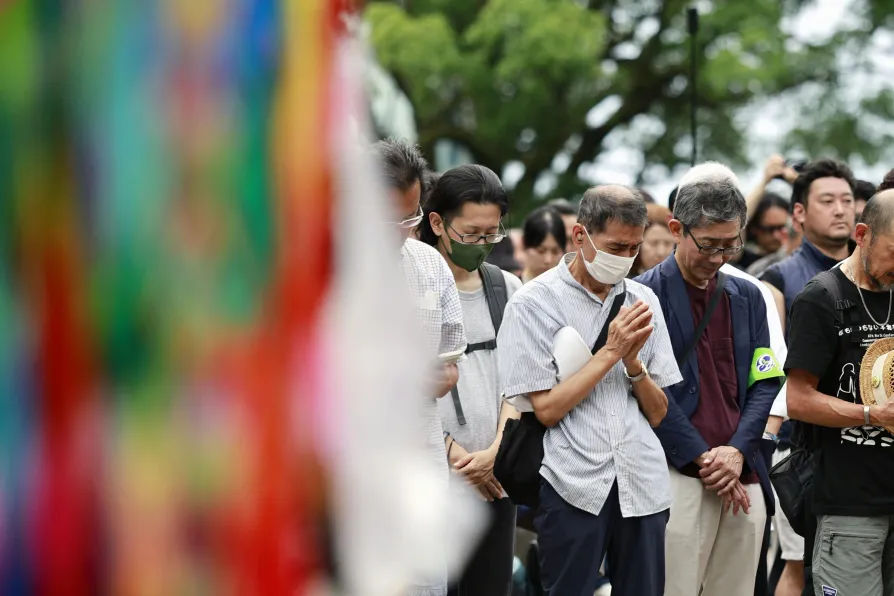
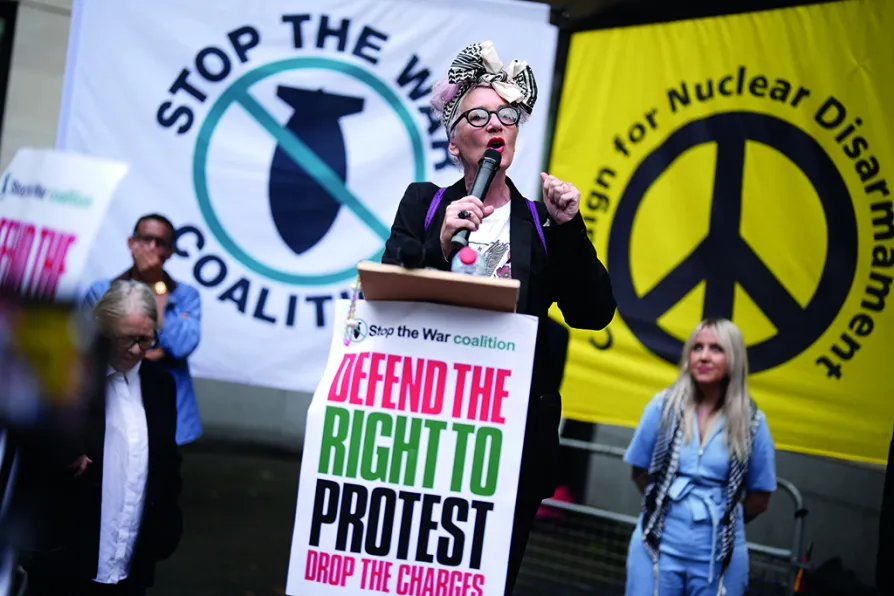
On Hiroshima Day, Campaign for Nuclear Disarmament general secretary SOPHIE BOLT explains why the danger of nuclear conflict is growing daily
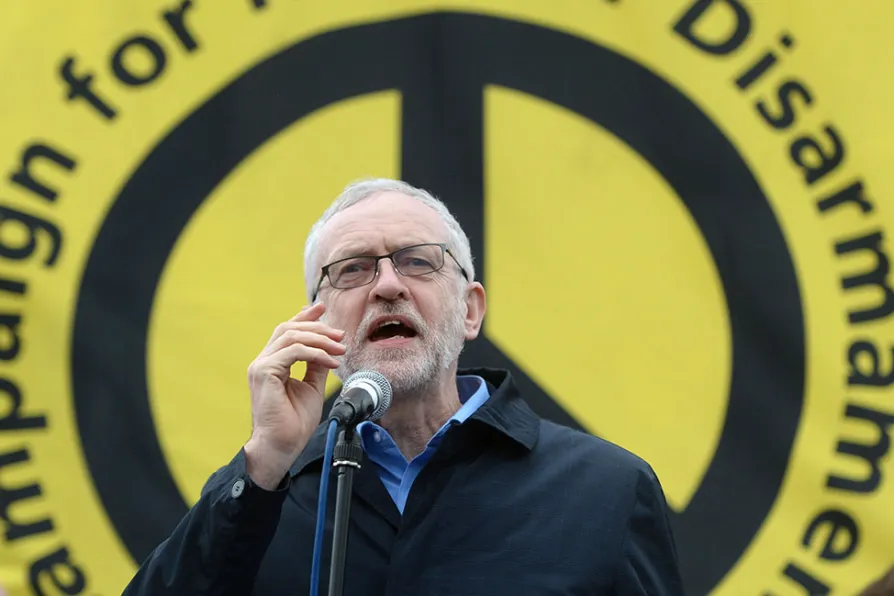
JEREMY CORBYN says we should never forget the horrific reality of nuclear weapons, or cease our efforts to rid the planet of them entirely