

 Latest editorial

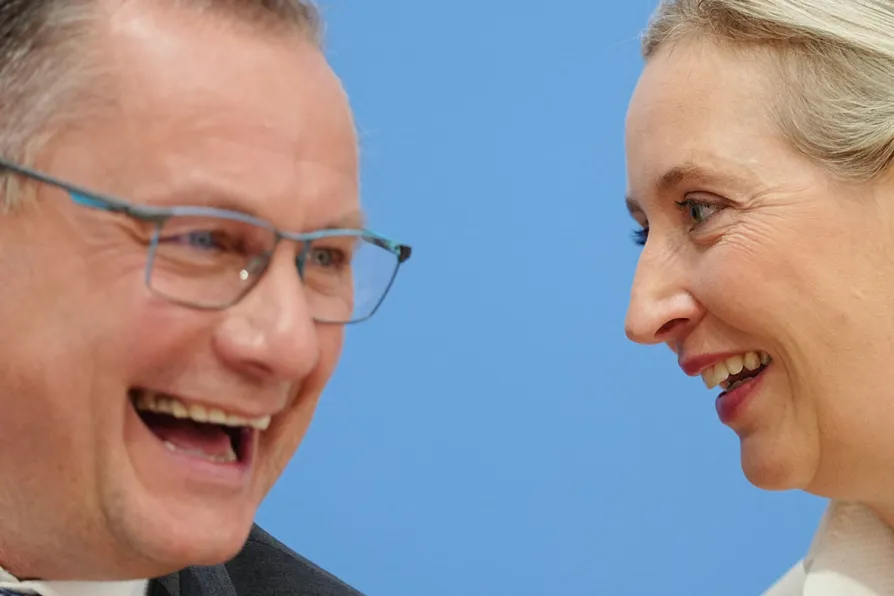 Co-leaders of Alternative for Germany party Alice Weidel and Tino Chrupalla, in Berlin, Germany, September 7, 2026





NAZI Alternative for Germany (AfD) party claimed today that “democracy demands” other parties work with them to form an administration after Sunday’s election win in the German eastern state of Saxony-Anhalt.
The AfD’s deputy parliamentary leader, Beatrix von Storch, told the BBC that her party is “very, very close” to taking power in Saxony-Anhalt after a historic election victory.
Sunday’s preliminary results show the AfD fell just three seats short of an outright majority, with 43.8 per cent of the vote.
The AfD is currently heading for 39 seats in the 83-seat state parliament instead of the 42 needed for an outright majority.
The AfD is now seeking support from other parties and would become the first far-right party to control a German state since World War II. It would have powers over policing and local education.
Although most German political parties refuse to work with the AfD, Ms von Storch called for its opponents to enter talks and said: “You cannot say, I do not accept the vote of the people.”
Ms von Storch said the state’s results “were on the table and now democrats have to talk to one another. This is what democracy demands.”
She added that if parties refused to work with the AfD, “then we might end up in severe chaos and maybe we have a new election.”
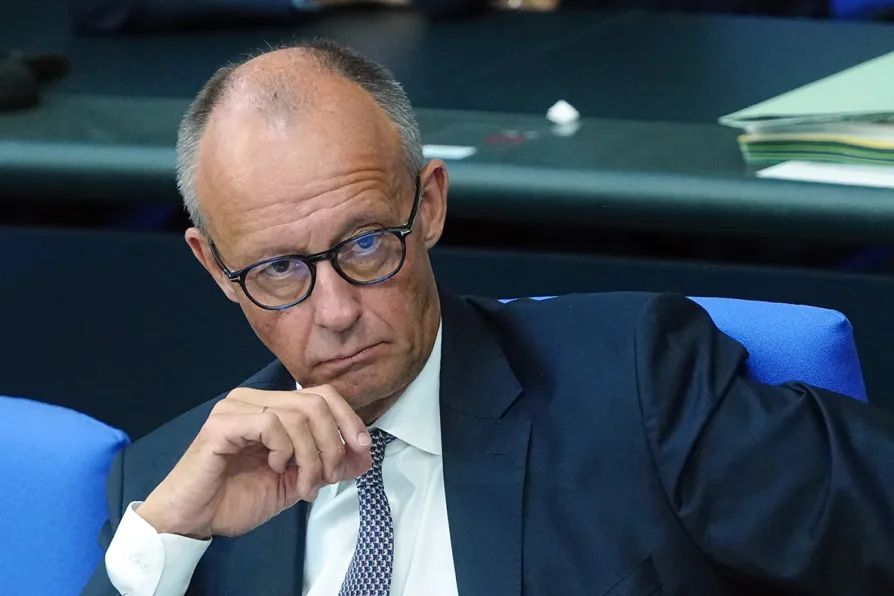
Germany’s right-wing Chancellor Friedrich Merz said he was “deeply shocked” by the result, describing it as “seismic not just in the country but also in my own political party and I take that very seriously.”
His party, the Christian Democratic Union (CDU), saw its share of the vote almost halved to 17.2 per cent in the state’s preliminary results.
Chancellor Merz said it was not possible to return to “business as usual,” adding that the country needed “profound reforms” adding that the CDU needed to “reach people at an emotional level.”
The AfD, which is assessed by domestic intelligence as “right-wing extremist,” has proposed plans for Saxony-Anhalt which include segregating child refugees into special classes and setting up a task-force to help detain and deport migrants who no longer have the right to be in the state.
Ms von Storch told the BBC the AfD was talking to individuals within the CDU group, the largest party in both the state’s outgoing coalition and Germany’s government, because they were “very, very unhappy with their own party.”



NICK WRIGHT returns to Berlin and finds a city in darkness and political turmoil