
ROB WARZYNIAK wades knee deep through a pile of ‘dead canaries’ of Trumpist policies which exacerbated the horrors of US capitalism domestically


One hundred years of Fidel
DR STEPHEN WILKINSON assesses the life and legacy of a revolutionary giant
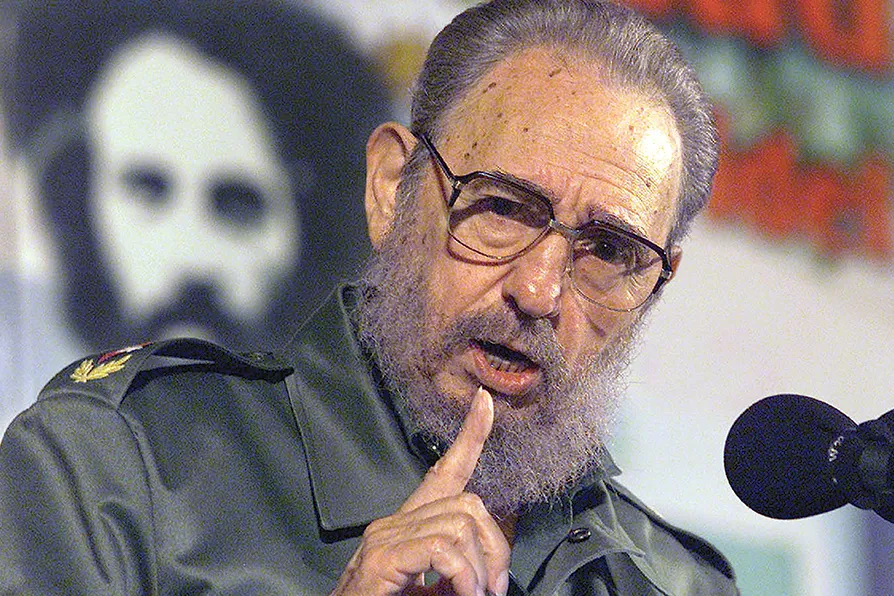
 Fidel Castro in December 2001
Without evidence or Nato consultations Berlin’s answer to the Leipzig incident is a rupture of relations. SEVIM DAGDELEN examines why
FRANCISCO DOMINGUEZ introduces the background to a conference on defending Latin America’s sovereignty
The glacier collapse in Nepal is yet another warning that a warming planet is making Himalayan disasters more frequent and destructive – but the countries facing the greatest risks are often those least responsible, says LI YANG
Nick Blair is set to benefit from a hugely lucrative contract to ‘virtually’ train the British army for its next war. Like father, like son, writes SOLOMON HUGHES
Even when tragedy strikes, Western media cannot resist the opportunity to turn it into a sordid propaganda opportunity, as the Nepal-China border tragedy shows, writes CARLOS MARTINEZ
Trade unions should be at the heart of the anti-racist push for reparations for the historic legacy and continuing impact of slavery, writes ROGER McKENZIE





FIDEL CASTRO once remarked, with characteristic rhetorical expertise: “I am not as good as my supporters think I am, but I am nowhere near as bad as my enemies say I am!” On the centenary of his birth, August 13 1926, that observation is perhaps the most apposite starting point for any assessment of one of the greatest statesmen of the 20th century.
Hagiographers do no favours generally and specifically in Fidel’s case, his detractors do history no service. The record demands something rare these days: honesty. I begin with a personal anecdote.
I had the honour to have been present at an interview with the former British Tory prime minister Edward Heath conducted by the film-maker Estela Bravo for her documentary about Fidel made in the 1990s.
Heath met Fidel three times. In his parlour on his grand piano he had arranged photographs of himself with every one of the 80-odd heads of state he had met. He gave pride of place to the three most impressive: Mao Zedong, Richard Nixon and… Fidel Castro.
When Estela asked Heath if he considered Fidel to be a dictator he replied (and I will never forget it): “No, I do not and what’s more, those who say he is do so for their own nefarious purposes.”
Those with nefarious purposes are still about. Fidel’s centenary arrives as Cuba weathers perhaps the most severe external assault in its history.
Trump and Rubio’s fuel blockade has cut Venezuelan oil supplies, produced blackouts of 20 hours a day, and driven food and medicine to levels the United Nations has described as a humanitarian catastrophe.
Yet the Cuban people still resist and the government has just passed 176 economic reforms through its National Assembly, is attracting investment from China, Vietnam, Russia and the Gulf states, and a Vietnamese delegation arrived in Havana the day after the reforms were announced.
None of this is the behaviour of a failed state. All of it is recognisably Fidelista: the refusal to capitulate, the sovereign determination to find a way through, and the sophisticated understanding that the struggle is longer than any single moment of crisis.
That spirit has deep roots. Fidel was born in Biran, in what was then Oriente province, the son of a Spanish immigrant landowner.
He grew up in a Cuba that was formally independent but substantively colonised by the United States. US capital dominated the economy, US strategic interests dominated the politics, and its racial attitudes permeated the social hierarchy. At the University of Havana, where he studied law, Fidel encountered the thought of Jose Marti, Cuba’s 19th-century poet-philosopher and independence hero, and the encounter was decisive.
Marti was not simply a nationalist. He was a follower of the German philosopher Karl Christian Friedrich Krause, and had been formed in a tradition of liberal rationalism that emphasised education as the foundation of emancipation, civil society as irreducible to state power, and the dignity of all peoples regardless of race.
Though he is not primarily seen as a philosopher it needs to be said that Fidel’s contribution to Marxist thought is the way in which he fused Marti with Marx. It is something philosophically remarkable and an underappreciated reason why the Cuban Revolution is so durable.
Fidel dd not merely apply European socialism to a Caribbean island, he produced an organic synthesis of two strands of political thought that rooted the revolutionary process in Cuba’s own civilisational experience. Moreover, it imbued Cuba’s socialism with a deep moral imperative that elevated the task of building socialism to a calling.
That moral calling was, is, indelibly anti-racist and inseparable from Africa.
Cuba is not, as the lazy terminology of Western journalism often suggests, a European society with an African community attached to it. The African civilisation brought to the island by enslavement is constitutive of what Cuba is: the music, the religion, the relationship to collective life, to ceremony, to resistance and solidarity. Fidel (and Marti) understood this viscerally.
“The blood of Africa flows abundantly through our veins,” he declared. Cuba, he said, was “a Latin-African country.” These were not rhetorical gestures. They were a philosophical statement about identity, and they had political consequences that would shake the world.
The revolution itself needs little summary for Morning Star readers.
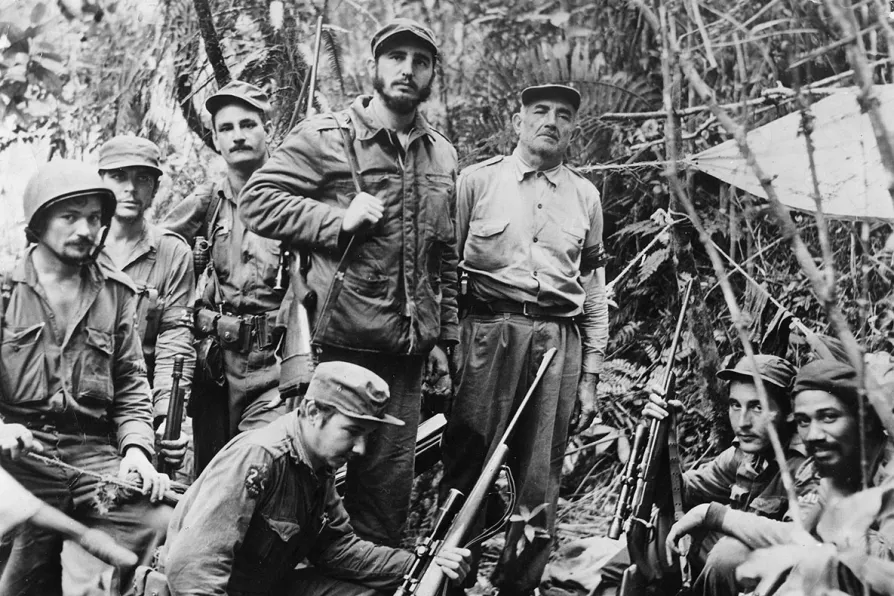
The Moncada attack of 1953, the trial at which Fidel turned the dock into a platform for his masterpiece “History will absolve me” speech that spawned a movement. The two years of guerilla war in the Sierra Maestra, the triumphant entry into Havana on January 1 1959: this is well known territory.
What is perhaps less known is the extraordinary speed and depth of the good works that followed: land reform, rent controls, nationalisations of key industries, a national cinema industry.
Within two years, Cuba had conducted a national literacy campaign that reduced illiteracy from roughly 25 per cent to zero. Within a decade, Cuba had built a healthcare system that would go on to produce life expectancy and infant mortality figures consistently better than those of the United States.
A national education system from pre-school to university was constructed. And in 1960, the newly founded National Press of Revolutionary Cuba, at Fidel’s request, inaugurated its operations not with a political manifesto or a Marxist classic but with 400,000 copies of Don Quixote de la Mancha, sold across the island at 25 cents each in four volumes.
Students of literature will find that detail striking; students of Fidel’s political thought should find it illuminating about the depth and breadth of his vision for what a revolutionary people might become.
What separated Fidel from nearly every other socialist leader of his generation was his capacity to respond to events with the correct course of action.
Like the great chess player and military general he was, he once said that the Revolution had survived because all its errors were tactical rather than strategic. And this was because he was able to see problems coming and to prepare his people for them.
The Rectification Campaign, launched in 1986 as Gorbachev was unveiling perestroika, was one the greatest examples. It was a deliberate strategic inoculation against the corrosive reform process that was being introduced in Moscow.
While Gorbachev was introducing market mechanisms and dismantling party discipline, Fidel moved Cuba in the opposite direction, returning to Che’s moral economy, rejecting material incentives, and shoring up the ideological foundations on which Cuba’s survival would depend.
Fidel was characteristically blunt about Gorbachev’s experiment: “Perestroika is another man’s wife; I don’t want to get involved,” he said.
By July 1989 he was warning Cuban officials explicitly that the socialist bloc might disappear and the Soviet Union itself might not survive. I was told personally by a senior Cuban official that same year that Fidel had already warned them the Soviet Union would be a capitalist country within five years, and that Cuba was not going to be.
In December 1989, in a searing speech honouring the Cuban dead of Angola, he made that public: no process of “slandering socialism, destroying its values, demoralising its vanguard” would take place in Cuba.
When the Soviet Union did indeed collapse in 1991, plunging Cuba into the Special Period with its contraction of GDP by a third, fuel shortages, food rationing, the near-disappearance of transport, the institutional and psychological preparation Fidel had made was the difference between survival and the disintegration that Washington was confidently predicting.
Cuba’s revolution outlasted the USSR. That is leadership.
Cuba’s internationalism is where the calumnies of Fidel’s enemies are most comprehensively demolished by the facts.
Morning Star readers will be aware of the massive medical aid Cuban doctors provide across the world. But how many are fully aware of Cuba’s role in Africa?
Between 1975 and 1988, 375,000 Cuban soldiers, doctors and teachers served in Angola. At the Battle of Cuito Cuanavale in 1987-88, Cuban and Angolan forces defeated the apartheid South African army in the largest conventional military confrontation on the African continent since the second world war.
The names of 2,070 Cubans who died in Angola are inscribed alongside South African liberation fighters at Freedom Park outside Pretoria. Nelson Mandela was precise about what this meant: “Without the defeat of Cuito Cuanavale our organisations would not have been legalised.” The first country outside South Africa that Mandela visited after his release from prison was Cuba.
Cuba’s scientific legacy is perhaps the least understood of Fidel’s inheritances in the West. The deliberate construction of a world-class biotechnology sector under conditions of blockade represents a specific theory of sovereignty: that a small nation can achieve genuine independence through knowledge.
The Soberana and Abdala vaccines developed during Covid, with over 90 per cent efficacy, by researchers sometimes sharing a single spectrometer because sanctions prevented them buying more, are products of this vision.
So are the CimaVax lung cancer treatment, the meningitis B vaccine, the first synthetic polysaccharide vaccine in the world.
The Henry Reeve Brigade, which provides disaster relief medicine across the globe, and the Latin American School of Medicine, which has trained thousands of doctors from the poorest countries on Earth at no charge, are its human face. Today the only doctors working in Haiti are Cubans. That single fact contains a revolution’s entire philosophy.
One thing my 50 years of research and engagement with Cuba has consistently shown is how profoundly the picture presented in Western media diverges from the reality on the ground. The Cubans who appear in Western reporting are often a self-selected sample, mainly English-speaking, frustrated, often connected to the emigre community and its networks. They are real enough, but they are not representative.
The majority of Cubans who remain on the island relate to Fidel’s legacy with a complexity and a depth that the liberation narrative simply cannot accommodate. I recently published research on Cuban’s attitudes to Fidel that found they are overwhelmingly proud of him; even those who said they did not like him expressed admiration.
Recently I spoke with a colleague at a Cuban university who, when I asked about the mood of the people she lived among, said without hesitation: “Some are frightened of course, but the immense majority know that the US will not bring them anything good.”
That is not the voice of someone who has been silenced or coerced into compliance, nor is it a people that do not know what is happening in the world.
It is the voice of a people who remember, deeply and generationally, what Cuba before Fidel actually looked like: the inequality, the racism, the Mafia-connected tourism economy that the revolution ended.
The Western polling that purports to measure Cuban opinion is structurally incapable of capturing this, because it cannot distinguish between “things are hard” and “we want America to fix it.” Those are not the same statement. In Cuba, for the great majority, they never have been.
Against all this, the charges of Fidel’s detractors ( authoritarian, dictator, oppressor) require scrutiny rather than mere repetition.
“Authoritarian” is a category generated within liberal political theory to mark the boundary between acceptable and unacceptable systems by criteria that are themselves ideological. Countries like ours, that have enabled genocides, occupied foreign nations, tortured prisoners and imprisoned whistleblowers do not attract the term.
The double standard is not accidental. It is structural. It serves the purpose of delegitimising any political project that escapes the control of Western capital.
Speaking as someone who comes from a country that enabled a genocide in Palestine, took part in an illegal war in Iraq that killed hundreds of thousands, starved the Irish and the Bengalis, and murdered the Mau Mau, I find the moral authority behind these charges incredibly hollow.
Antonio Maceo, Cuba’s great independence hero, refused in 1878 to sign the Zanjon Pact: a negotiated surrender that the rest of the movement had accepted. He stood before the Spanish general and said no, not because he had the military resources to continue, but because the legitimacy of surrender was itself rejected.
That spirit, the Baragua spirit, was taken up by Fidel in the 1990s. He proclaimed that Cuba would be “an eternal Baragua.” That spirit runs from Maceo through Marti through Fidel and on through the calm, trained endurance of every Cuban who has managed through 20-hour blackouts while knowing that the US will not bring them anything good.
Cuba has overcome Batista, the Bay of Pigs, the CIA’s assassination campaigns, the Soviet collapse, the Special Period, Covid and the current energy siege.
A hundred years after his birth in Biran, Fidel Castro is most honestly understood as neither as a saint or a monster, but as the embodiment of Cuba’s centuries-long, irreducible, deeply civilised refusal to accept the terms that imperial power would impose upon it. History, as he said, will absolve him. On the available evidence, it already has.
Stephen Wilkinson is editor of the International Journal of Cuban Studies. He is writing a book on Cuban socialism.

Similar stories
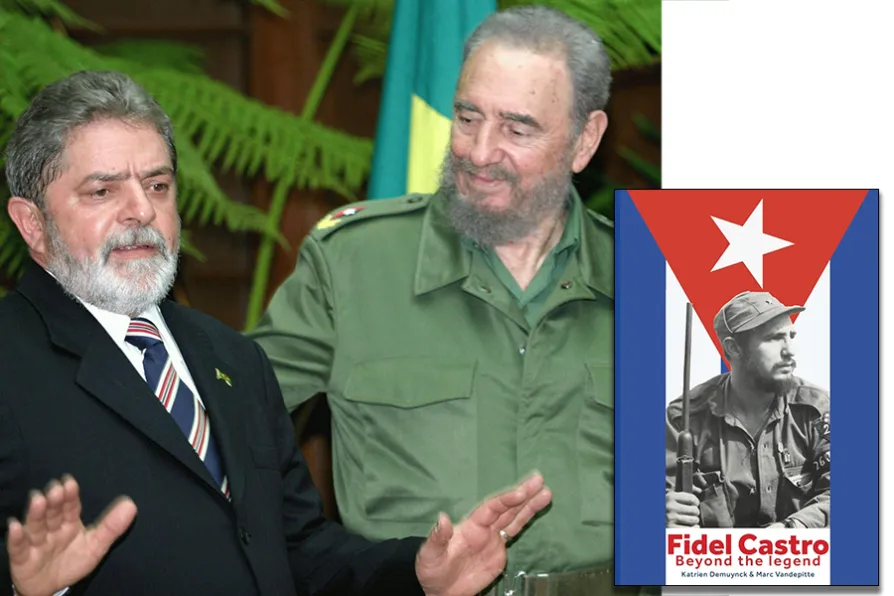
DAVID RABY welcomes a biography that emphasises how Fidel’s unique characteristics became hallmarks of the ongoing Cuban revolutionary process
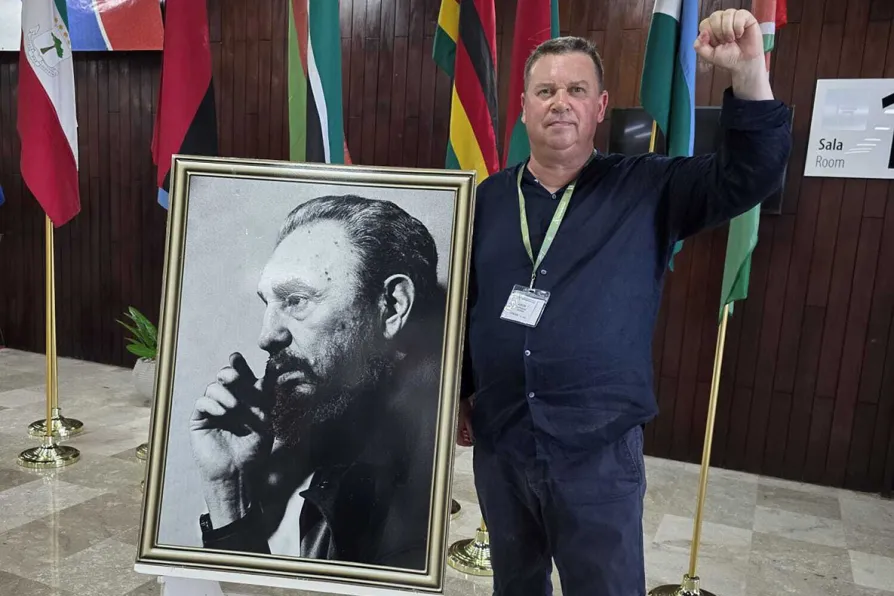
ALEX GORDON and LORRAINE DOUGLAS report from Havana, Cuba, where they represented the Communist Party of Britain at the 24th International Meeting of Communist and Workers’ Parties on August 7-8
by Her Excellency Ismara Mercedes Vargas Walter, Ambassador of the Republic of Cuba to the United Kingdom
Cuba continues to embody a vision of internationalism that imperialism has never forgiven, argues ZOLTAN ZIGEDY