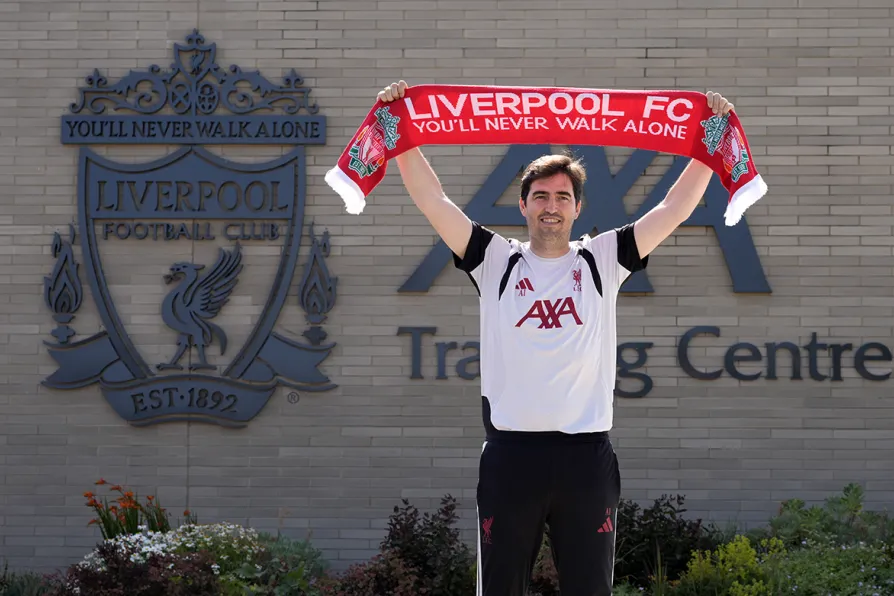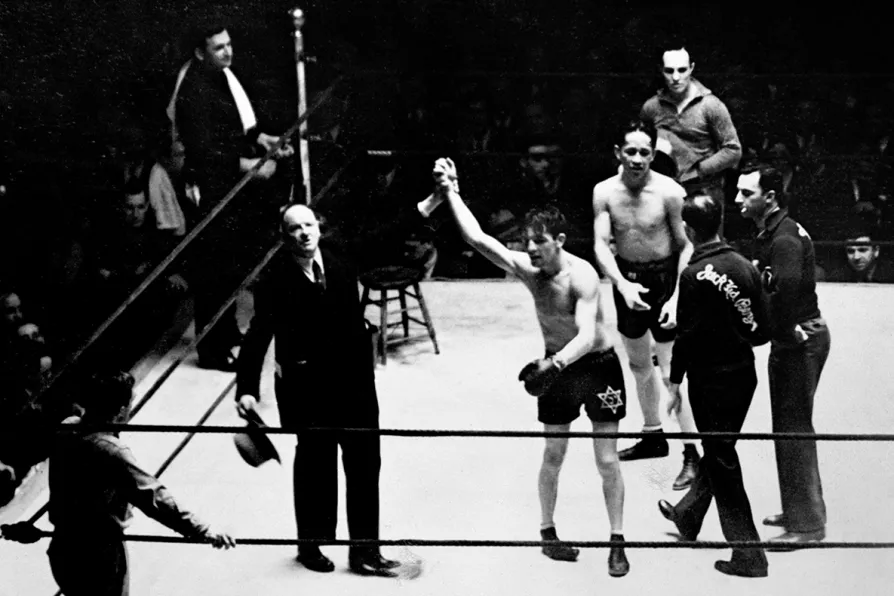
As antisemitism spread across Europe and the United States in the 1920s and 1930s, Benny Leonard and Jack ‘Kid’ Berg became symbols of hope and resilience, writes JOHN WIGHT



Where have all the Scousers gone?
JAMES NALTON argues that Curtis Jones’s departure leaves Liverpool facing a stark local void as the club’s roots are increasingly swallowed by football’s globalised model
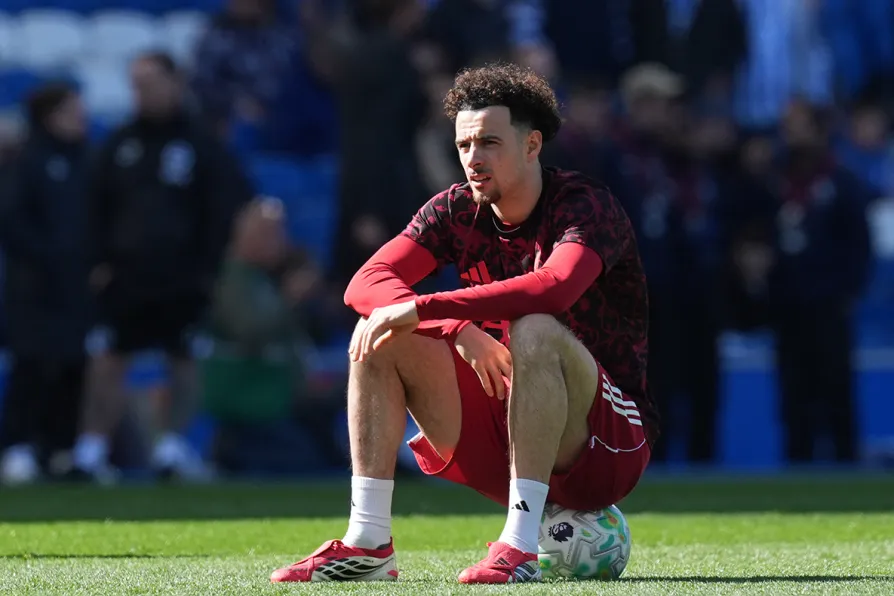
 Liverpool's Curtis Jones warming up before the Premier League match at Brighton, March 21, 2026





PRIOR to his departure for Real Madrid, Liverpool fans had a song for Trent Alexander-Arnold that referred to him as “the Scouser in our team.” It always felt a bit unfair on Curtis Jones, who was the other prominent Scouser in the team at that time, but it hinted that a local lad in the starting XI was becoming something of a novelty.
Liverpool statistician Michael Reid noted recently that the club have never gone through a season without a Scouser making an appearance. There is every chance this could happen in 2026/27.
Alexander-Arnold leaving for Madrid and Jones’s transfer to Inter Milan this summer mean there are no Scousers among the senior squad this season.
Historically, Liverpool FC’s identity on the pitch has included Scottish players as well as Scousers, and others from the wider region, including Wales.
Scottish and Welsh players have been prominent throughout the history of the club, perhaps because they feel more Scouse than players from elsewhere in England might, given Liverpool’s sense of independence from the country in which it resides.
The club has regularly built around those Scots, Scousers, and the occasional Welsh legend such as Ian Rush or John Toshack.
A recent poll of the best players in the club’s history voted a Scouser, Steven Gerrard, at number one, followed by a Scotsman, Kenny Dalglish, at two, and Rush at three. Six of the top 10 were either Scottish, Welsh, or Scouse.
Jones’s departure to Inter Milan means Liverpool go into the 2026/27 season without any Scousers, Scotsmen, or Welshmen.
Andy Robertson left on a free transfer to join Spurs, while backup right-back Calvin Ramsey will return north of the border to St Mirren.
Though two prominent players in the current Wales national team came through Liverpool’s academy, they have not been at the club for some time. Those players, Neco Williams and Harry Wilson, would both be very useful squad members for the Liverpool team in its current state.
Former manager Jurgen Klopp once said: “It will not happen in the next five years, but maybe in 10 years, it would be great if we could have a team full of Scousers, why not?”
Klopp himself became a key part of building and continuing Liverpool’s identity, arguably doing as much for it in the modern era as Bill Shankly, after whom the club’s supporters’ union Spirit of Shankly is named, did during the club’s growth spurt in the 1960s and ’70s.
But six years after Klopp dreamed of a team of Scousers, there are none.
Having spent the majority of his playing career at Athletic Club in Bilbao, Liverpool’s new manager Andoni Iraola is well aware of the importance of local identity.
Athletic Club’s policy of developing and signing players only from the Basque region of Spain and parts of France makes them an unusual, extreme example of a club that prioritises its local identity above anything else.
They believe they can be successful by fielding players only from their local area, and have done an impressive job in doing so.
Athletic have never been relegated from La Liga, are the league’s fourth-most successful team, and have the second-most Copa del Rey wins (24), with the most recent in 2024.
There is a danger that promoting local identity to an extreme degree can lead to a club becoming insular or overly parochial, and maybe even to a kind of xenophobia, but what is a club without at least some semblance of a unique identity? It’s a franchise.
Some clubs use internationalism as their identity, with one of the most obvious examples being the club Jones himself is joining, Internazionale of Milan. Though not entirely local, it’s still an international outlook rooted in a place. It’s still an identity.
Liverpool itself is an international city with a distinctly local flavour. This comes from a combination of its geographical position as a port city, its historic involvement in global trade, and its sense of being in some way separate from the rest of England. Manchester often displays similar sentiments, likely also thanks in part to its links to the port via the Ship Canal.
The best cities are proud to show off their local identity and like to invite others in to enjoy it, be part of it, and contribute to the evolution of that identity. Scouse itself emerged in a melting pot of international, northern European cultures.
Similarly, the best football clubs have a local identity, but are also open to the best international players from around the world being part of that.
“The door is open for all the other boys who want to play football, good football. Liverpool is a very open-minded club,” Klopp added when speaking of the club’s identity in 2020.
Liverpool FC has been many things over the years, including Scouse, Spanish, Scottish, Welsh, African and South American, but there is an underlying identity to which all players, staff and fans are introduced, and likely attracted to in the first place, that blends all these separate parts like a pot of Scouse.
Klopp described it as “humble and hard-working — it’s clear that they will fight like crazy.”
“We want to be the spot where everybody with a Scouse soul wants to play.
“It’s not a competition with Everton, you can join one or the other, but if you love football, are talented and ready to work hard, then we want you to be here.”
Liverpool are losing that soul at all levels.
The richest clubs now pick off the best youth players from teams below them with increased regularity.
This method of national recruitment at youth level, rather than local development from regional catchment areas, negatively affects all involved.
The top clubs lose a way of retaining a local identity, while the teams from which these young players are being picked lose a potential local star who would improve their chances of moving to the top.
Some football clubs are becoming characterless, global brands. There’s a danger one Champions League club will soon be indistinguishable from the next, regardless of where in the world they are based.
In Liverpool’s case, the sale of the club to a new billionaire consortium threatens to make this situation even worse, as football has become about the richest people and countries in the world using clubs as part of a business portfolio or sportswashing exercise.
Matchdays are being sold as entertainment products and experiences as part of a wider branding campaign, rather than community gatherings and spectating at a match that has just as much potential to be boring and disappointing as it does an exciting victory.
Modern football feels like it is no longer built for local, one-club players, and, at the bigger clubs especially, it is increasingly not built for maintaining a unique identity.
No Scousers, Scots or Welsh players in the team contributes to this feeling less like Liverpool FC than ever before, and more like a company some billionaires are considering buying.
The supporters’ union, as well as Iraola, have a big job on their hands if they’re to turn this around and retain an idea of Liverpool as a football club.

Similar stories
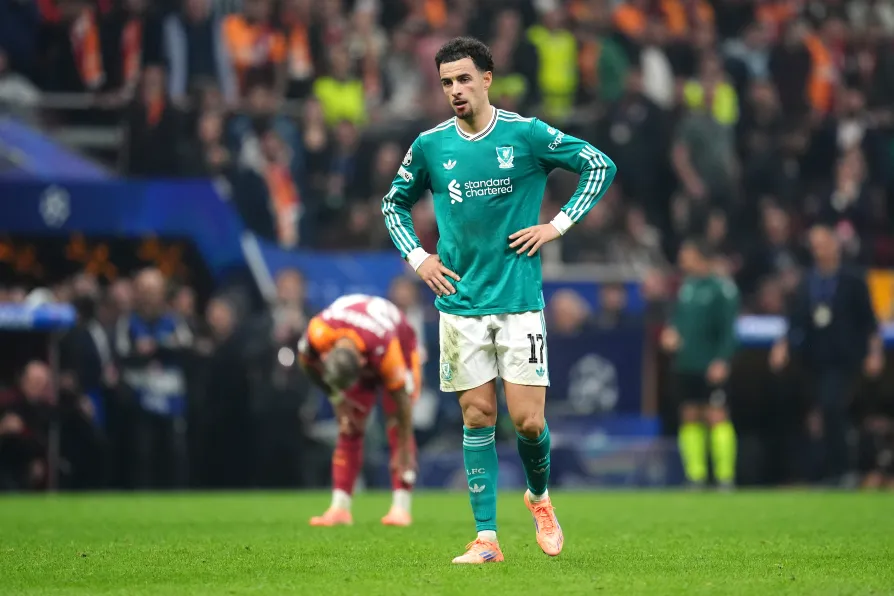
European nights, passionate supporters and a new sense of freedom await the Egyptian in Turkey, writes JAMES NALTON
The climate debate has focused on tournaments and fan travel, but the sport’s relationship with fossil fuels stretches back to the Industrial Revolution