


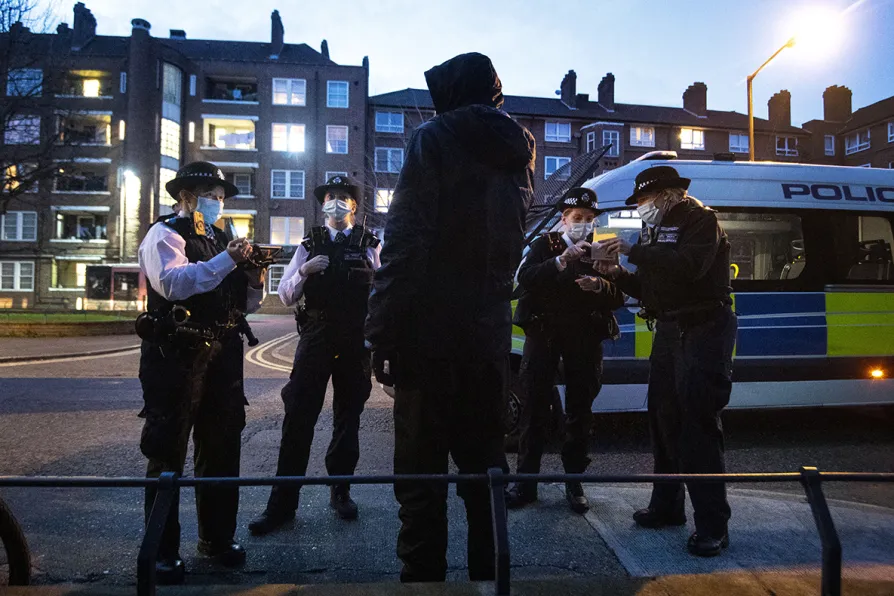
 Cops talk to a person following a stop and search in Walworth, Southwark, March 6, 2021
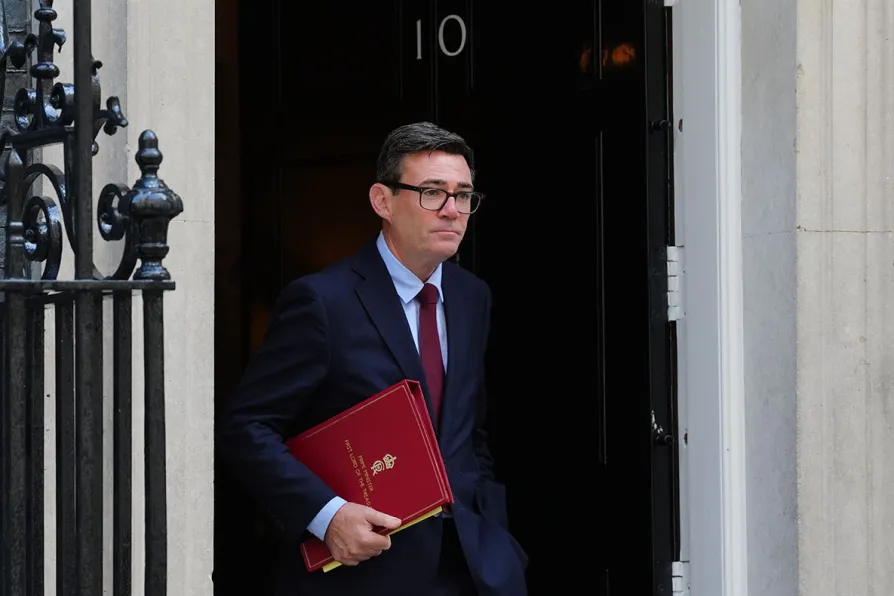





THE Metropolitan Police carried out almost 20 per cent more stop and searches over the last year, new figures released today show.
A little over a third of searches carried out in July resulted in officers finding weapons, drugs, or other evidence of offending.
In 2025, stop and search led to officers seizing at least 3,800 weapons and discovering illegal drugs on more than 27,800 occasions.
The Met claimed this was as a result of “officers making more precise and considered stops.”
But research by King’s College London released earlier this year suggested black people are up to 48 times more likely than white people to be stopped and searched by police in wealthier parts of London.
Analysis of every stop carried out by Met officers in 2023, covering 152,000 records, also showed the grounds given for search were more vague for black people.
In February, black Londoners were 3.4 times more likely than white Londoners overall to be stopped and searched by police.
The national rate is four times.
A national public consultation on updated standards was launched by the College of Policing.
Assistant commissioner Ade Adelekan, the Met’s stop and search lead, said: “We know that concerns around disproportionality remain, particularly among black Londoners, and we are committed to understanding and addressing those concerns through greater scrutiny, transparency and accountability.”
London Mayor Sadiq Khan welcomed the figures, posting on X: “Done fairly, respectfully and intelligence-led, it can remove dangerous weapons and drugs, disrupt crime and prevent violence.”
In July, Mr Khan’s office was forced to step in after Met officers were filmed handcuffing and pinning a black child to the ground for “play-fighting with friends.”
Naomi McAuliffe, Amnesty International UK’s head of policy and research, said stop and search “can be a gateway to further discriminatory treatment by police,” adding that “thousands of Londoners are subject to an ever-expanding array of these powers.”
She told the Star: “Everyone should be able to walk their own streets without being treated as a suspect because of their race. That’s the basic fairness communities need to feel safe.
“But these figures don’t reflect it. The Met, found institutionally racist by the Casey Review, continues to disproportionately target Black and racialised Londoners - in some wards, Black people are 48 times more likely to be stopped than white people.
“A record find rate doesn’t change that: two in three people stopped and searched, in itself a distressing experience, are released having done nothing wrong.
“Amnesty’s ‘Automated Racism’ report also found the Met’s own Violence Harm Assessment tool profiles people as ‘suspects’ without them ever having offended - feeding racial profiling into decisions about who gets stopped in the first place.
“A decade of language about ‘concern’ has to end. The Met must explain what role tools like this play in producing such severe disparities, and reform its practices urgently in consultation with Black, racialised and all Londoners. This must finally be acknowledgement followed by action.”

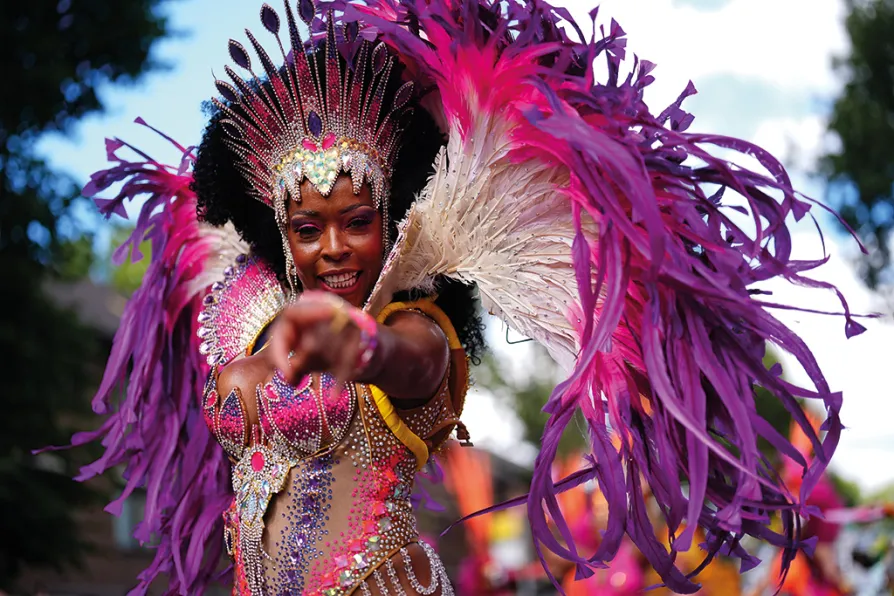
Britain funds the policing of black culture 16 times better than the culture itself. The Diamond Jubilee is the moment to end that, argues CLAUDIA WEBBE
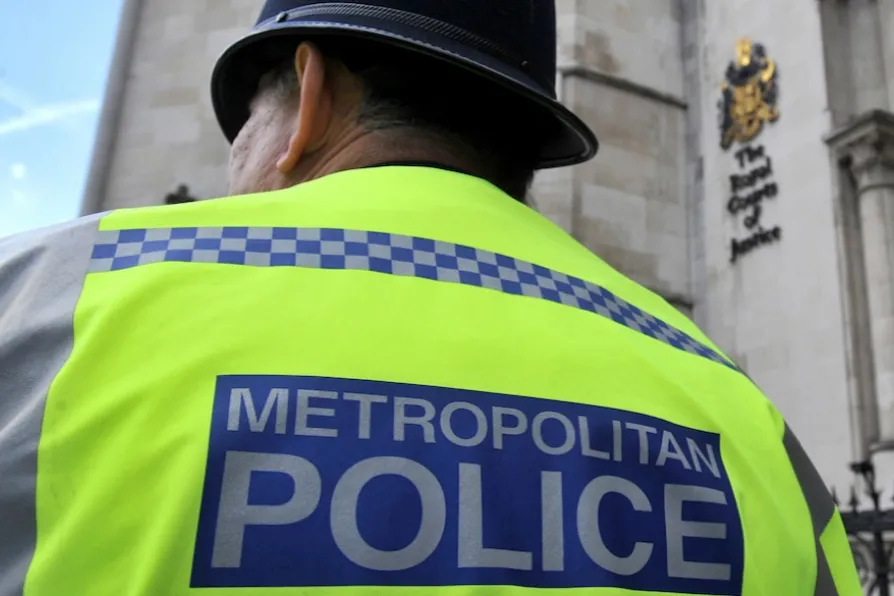


The Met Police's refusal to act against British nationals accused of war crimes in Gaza is a green light for Israel's genocide, writes CLAUDIA WEBBE