
CLAUDIA WEBBE speaks out against the lethal mechanics of Britain’s culture-war press


August’s riots echo the dark history of reactionary ‘Church and King’ mobs
Socialist historian KEITH FLETT traces the parallel evolution of violent loyalist rampages and the workers' movement's peaceful democratic crowds, highlighting the stark contrast between recent far-right thuggery and mass Gaza protests
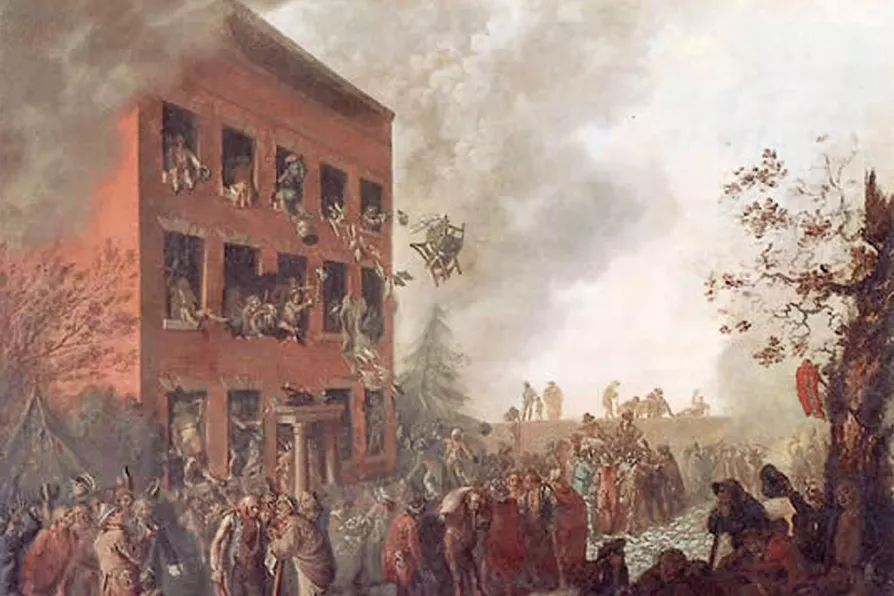
 REACTIONARY RAMPAGE:
The house of radical dissenter
Joseph Priestley is destroyed
by a right-wing mob during
the 1791 Birmingham riots
REACTIONARY RAMPAGE:
The house of radical dissenter
Joseph Priestley is destroyed
by a right-wing mob during
the 1791 Birmingham riots
Powerful agribusiness interests are trying to overturn efforts by the Lula government to protect the environment and indigenous peoples of the Amazon region, writes GABRIELA SA PESSOA
Trade unions and community groups are mobilising to push back against Trump’s racist raids after new revelations of spying on legal protesters. MARK GRUENBERG reports from the US state of Minnesota
The best wildfire service may begin with the community, argues KOMAL RAJ ARYAL
The evolution of the Scottish nationalist leadership into cheerleaders for Nato has led the party to betray its pledges on Palestine and social spending, writes COLL McCAIL
While riding the No 3 bus in Glasgow MATT KERR has ample time to dissect the moribund Scottish Labour decline into near oblivion and watch intriguing bus passenger dynamics





THE fascist-inspired riots of early August raised again the question of how protest occurs and what form it takes.
Some Tory leadership contenders made entirely specious comparisons with the huge and peaceful marches on Gaza that have taken place since October 2023.
Two entirely different things were being conflated but historically that wasn’t always the case. Until the last years of the 18th century, a riot was the most common and most frequent form of protest.
Before trade unions and working-class political organisations had developed there existed, for example, collective bargaining by riot. An employer would be besieged by workers until they addressed wage demands.

Similar stories
It may have become a traditional month for holidays, but episodes from early British labour movement history show that class struggle never takes time off, argues KEITH FLETT
Inspired by a hit TV show, KEITH FLETT takes a look at the murky history of undercover class war
It’s not just the Starmer regime: the workers of Britain have always faced legal affronts on their right to assemble and dissent, and the Labour Party especially has meddled with our freedoms from its earliest days, writes KEITH FLETT

Who you ask and how you ask matter, as does why you are asking — the history of opinion polls shows they are as much about creating opinions as they are about recording them, writes socialist historian KEITH FLETT