The Labour government must deliver on its commitment to bring back privatised services into the public sector. This not only saves money but also creates accountability and generates wider social benefits, argues ANDY MCDONALD MP


 Latest editorial
Capitalist competition kills – naturally, artificially and profitably
Even the oligarchs of the artificial intelligence industries are warning that their creations have the capacity for the ultimate destruction of the planet and its population. ANDREW MURRAY suggests that there might just be other solutions
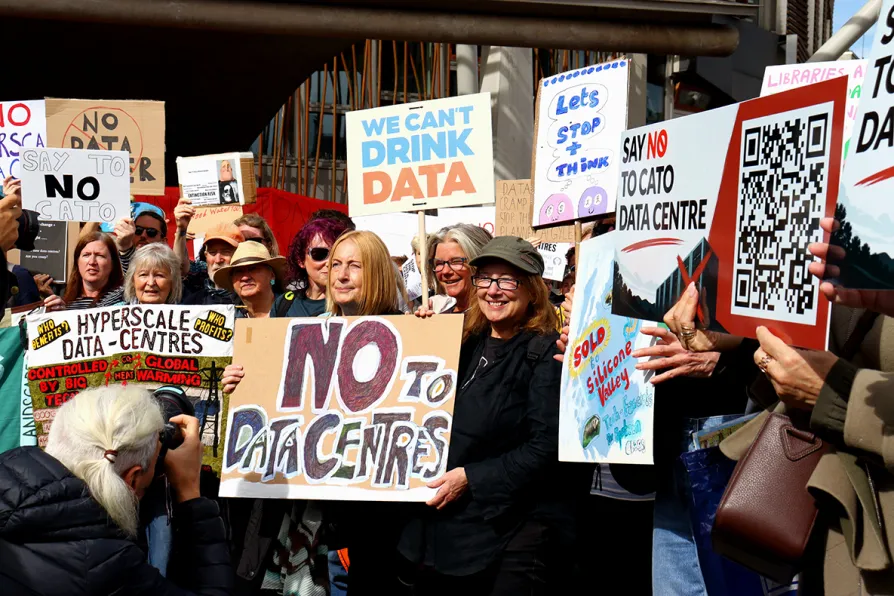 Campaigners from across Scotland taking part in a protest against AI data centres, outside the Scottish Parliament in Edinburgh [Picture: Danyel VanReenen/PA Wire/PA Image Thursday September 3, 2026]
PCS is demanding the long-overdue return of essential services to public ownership, explains FRAN HEATHCOTE
Despite promises of a new era of insourcing, billions of pounds of public contracts continue to flow to private firms. Unions are now calling for urgent action to bring services back in-house, says EDDIE DEMPSEY
Public ownership of Great British Railways has enormous potential to improve our railway network, but that can’t happen unless jobs, employee rights and union recognition is at the heart of the transition, argues MARYAM ESLAMDOUST
If Labour is genuinely committed to supporting working-class students it must act urgently to reverse the funding crisis affecting universities and colleges, JO GRADY tells Christophe Domec
Challenges from the unscrupulous misuse of AI to steal actors’ voice and physical likenesses is being met with a firm union response, writes LYNDA ROOKE





WERE there ever any doubt, the bald warnings coming from the heart of the artificial intelligence industry should still them.
The AI agents being busily created by vast monopoly concerns could exterminate human existence by 2030, we are told from the inside.
And we can do little about it because of — competition.
The idea that capitalism could end all life on Earth is not exactly a new one. Nuclear weapons first presented that possibility, but that remained at the level of state politics, since private ownership of weapons of mass destruction remains, at least presently, illegal.
Climate change presents another route to annihilation, again deeply rooted in capital accumulation. However, its depredations have proceeded in slow motion and, even if they are evidently speeding up, have not yet produced a plausible date for human extinction.
AI is a different matter. In an event unusual for big capitalists, to say the least, the bosses of several of the leading companies involved have called for some form of official regulation of their efforts, including Elon Musk, in whom humanity appears to have only a precarious hold in any case.
They are concerned, presumably, that they might not be in a position to enjoy their present and future riches because both they and their customers will have been negated in the most comprehensive way imaginable.
Here, to be clear, analogies with Dr Frankenstein are unfair — to his tormented creation above all, which had the decency to embrace a lingering form of suicide rather than do further damage.
Open AI, Google Deep Mind, Space X and Anthropic march to the beat of a different drum, that of unlimited capital accumulation. The Financial Times reported from San Francisco last week: “Intense competition between AI groups and distrust between their bosses is increasing the risk that the race to develop powerful AI could endanger humanity.”
Now the bosses in question may be bad but they are not mad. Their response is entirely within the logic of capitalist competition, which mandates that the first firm to decelerate its rate of development in the name of prudence will be the first to be devoured in the name of profit.
So, none of the capitalists in question, none of whom seem averse to alpha male public posturing in any case, dare risk being the one to blink first.
Hence their attempt to blink together after a fashion. But let’s be clear — their proposal for a sort of cartel solves exactly nothing. It aims to co-ordinate their accumulative appetites in a way familiar throughout monopoly capitalism’s history. Profit margins will be assured and social oversight minimised, while the major companies get to keep an eye on each other.
Even this modest proposal has not found favour in the court of Trump, whose response can be summarised as “yeah, but China.” The US empire fears that if it taps the brake in the interests of avoiding human destruction it will cede advantage to its great global rival.
Now, I am sure most of the world would rather have artificial intelligence controlled by the Chinese government, a rational actor for sure, than the Trump-Musk gang — who are not, in spite of the US president’s assertion that the only regulation required is his own brilliance.
Yet the pose struck by Washington has its own historical logic, transferring the dynamic of capitalist competition to the inter-state level.
That form of rivalry has already had a fair crack at exterminating human life in two global wars, and that without the technological advantages available to present-day Strangeloves, be they men or machines. The third time would not be a charm.
International regulation is clearly the immediate solution to the dangers of AI running amok, which is indeed the policy proposed by the Chinese government.
International anything is anathema to the “America uber alles” mindset hegemonic in US politics. But even if at some point an administration in Washington can be cajoled into doing some approximation of the right thing, will it be sufficient in the face of self-sustaining, self-developing intelligent machines?
There appears to be small grounds for confidence among those best placed to judge. The fact that ChatGPT gets basic facts wrong should not lull us into complacency. The larger problem seems to be competition. Even the modest call from the top AI capitalists did not go unchallenged within the industry.
One rival boss told the New York Times: “these oligopolies are now requesting to bend competition rules and be permitted to dictate the terms for everyone else — a wolf in sheep’s clothing, a cartel by any other name.”
Another, the head of Nividia, claimed the big firms were simply whipping up a furore the better to sell more stuff.
“What better way to create demand than to create a problem?” Jensen Huang said. “Who doesn’t want their market to be hysterical about their product and line up around the corner for it?”
Mr Huang clearly knows the rules of the game he is playing.
So, it would seem that salvation via cartelisation is not going to be easily agreed. Socialisation is the only durable solution.
Not only would public control, internationally mediated, avoid the worst dangers — and they don’t get much more alarming than all life ending in four years’ time — it would also unlock the real potential of these astonishing scientific advances.
For example, AI could surely crack the problem of economic planning, long bedevilled by the scarcity and reliability of information as to production and processes at anything below crude aggregate levels.
It was this shortcoming that allowed Frederick Hayek and Milton Friedman to argue that the mechanisms of market pricing embodied more information than any planner could conceivably assemble.
Here is where AI’s future must lie, in devouring the law of value and the logics of capital as it socialises the production of knowledge as surely as the factory socialised the production of goods.
Naturally such an ambitious hope would need to be preceded by a change in political regime. Doubtless that is why Musk and his close cousins in the crypto business are investing such enormous effort and funds in supporting Reform UK, a party which, on the evidence of its recent conference, offers acres of empty space for any form of intelligence to occupy.
How AI may choose to eliminate us all is speculative. It may start by denying humans water the better to service the vast data centres it needs to survive.
In Britain an AI superpower may find the services of privatised water companies no more satisfactory than regular humans do at present, but that is grim consolation.
So here is an immediate three-point programme for the government that would have mass appeal: Immediate public control of artificial intelligence in Britain. Nationalisation of the water industry. And complete suppression of the crypto “industry” and its avaricious adepts.
Would it work? We may at least be alive to find out.
For whom the bells tolled
Fifty years ago, your columnist was employed in the humbler capacity of a copy boy for the International Herald Tribune in Paris.
The principal duty attached to this post was to tear copy off the newswires servicing the paper and take it with dispatch and in correct order to the newsdesk.
The liveliest of the machines was that providing copy from the Associated Press. The AP had a system for alerting its customers to the urgency of its product. One bell was an important story demanding attention, two bells more so, all the way up to four.
I heard four bells just once during my time. The newsflash arrived on September 9 1976, and was two words long: Mao dead.
I hurried to tell the fearsome news editor that the great helmsman had, in his own piquant phrase, “gone to meet Marx.”
AP was not wrong. It was a momentous development. What, after the chairman, would become of China, then a little-understood revolutionary state?
Today, we know. A mighty political and economic country still asserting the perspective of socialism. Mao, I would guess, would be delighted by the power and prosperity of the PRC today, if surprised at the role commodity production rather than class struggle has played in the ascent.
Be that as it may, it certainly makes Mao and his signal achievement – the defeat of imperialism in China and giving a quarter of humanity the chance to “stand up” on its own feet — still more impressive than it seemed in 1976.
It would scarcely be too much to say that no 20th-century figure has had a greater influence on the 21st than Mao.
Five bells for Mao today.

Similar stories
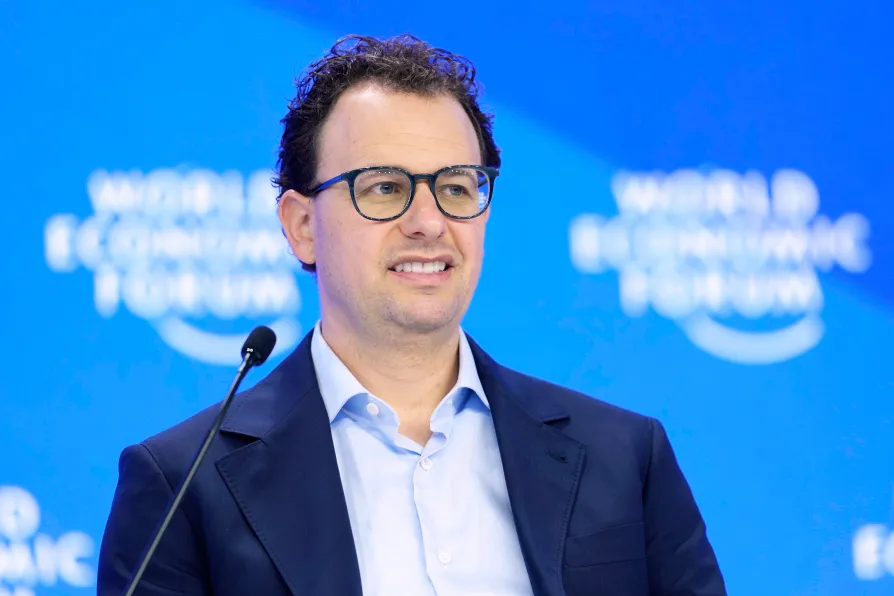

Elon Musk says AI will make work optional. The world of abundance he predicts actually spells the end of the capitalist system, argues FAWZI IBRAHIM
In the second and final part of his article MIKE SCOTT posits that if we don’t control AI while we’ve got the chance, we could be signing the death warrant for our children and grandchildren
MIKE SCOTT assesses the AI threat to jobs in the first of a pair of articles on the problems it poses