

 Latest editorial

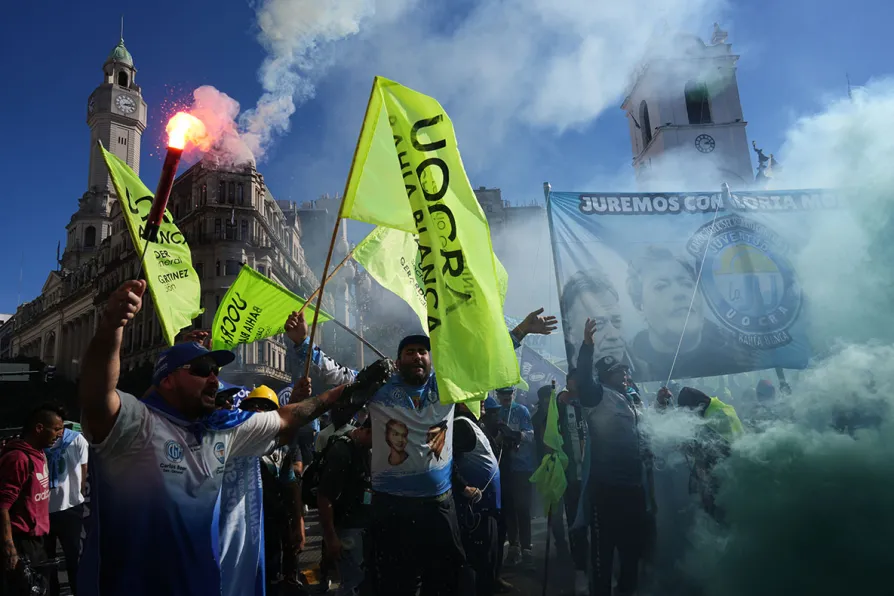 Laborers hold flares during a May Day demonstration in Buenos Aires, Argentina, April 30, 2026





WORKERS protested in Argentina’s capital Buenos Aires on Thursday, as annual May Day demonstrations coincided with outrage over far-right President Javier Milei’s recent evisceration of workers’ rights.
A day before International Workers’ Day, the General Confederation of Labour (CGT), Argentina’s largest union, marched to the government headquarters to “defend decent employment” against Mr Milei’s changes to the labour code, which since 1974 had guaranteed protections and rights for workers.
“We want to say to this government, enough is enough,” Octavio Arguello, a CGT official, told the crowds of workers beating drums, waving banners and chanting against Mr Milei.
“Our patience has run out, Mr President.”
Past presidents, for decades, tried to “liberalise” the labour market but failed in the face of fierce resistance from Argentina’s unions. Despite weeks of protests and a nationwide strike, Mr Milei pushed through the labour-law package in February in a major victory for his free-market fundamentalist agenda.
Mr Milei’s opponents are clinging to an appeal process challenging the law’s constitutionality. Union leaders plan to file a further petition after a court last week overturned an injunction that had suspended the law’s implementation at their request. The case is expected to go to the Supreme Court.
The new law aims to make it easier for bosses to fire new workers by extending probation periods, increase working hours from eight to 12 and replace overtime with time off instead of extra pay.
“This is a government that doesn’t care about the people,” said Sergio Aguirre, 51, a bus driver at the march. “Costs keep going up and our salaries stay the same. We survive on overtime pay. Now they want to take that away with the rest of our benefits.”
The legislation also curtails workers’ right to strike, diminishes the power of national unions to determine salaries across entire industries and limits courts’ discretion on severance payouts.
Thursday’s march offered an indication of what may lie ahead as the president’s promises of radical change run up against economic misery.
“We’ll stay in the street until the government changes or backtracks,” said 47-year-old Manuel Correa, who works at a textile factory on the outskirts of Buenos Aires that slashed its workforce in the last two years by 58 per cent, or 350 employees. “We don’t have an alternative.”
