ROB WARZYNIAK wades knee deep through a pile of ‘dead canaries’ of Trumpist policies which exacerbated the horrors of US capitalism domestically


 Latest editorial

Why sanctions are needed on Israel
History suggests apartheid ends not through appeals to conscience alone but through sustained economic and political pressure, says HUGH LANNING
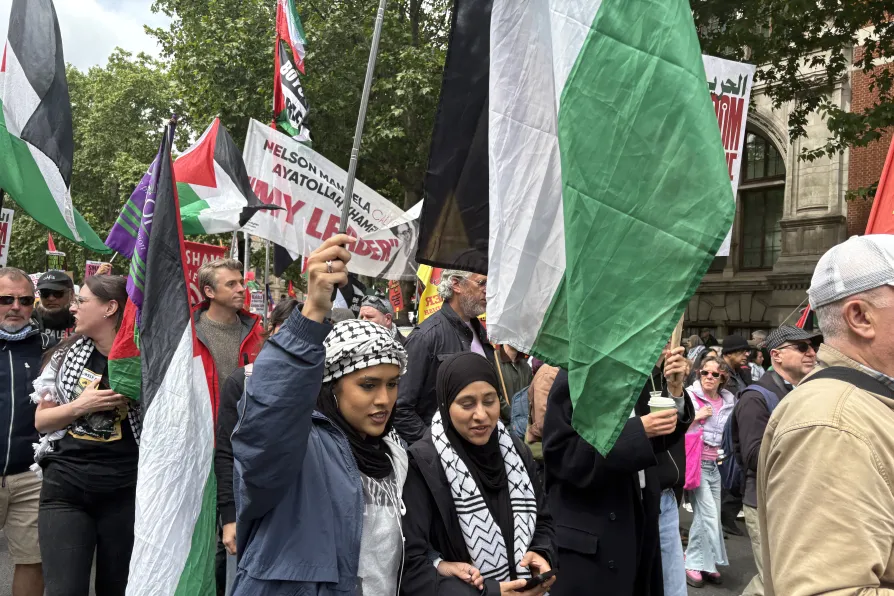 NAKBA 78: Protesters on the huge London rally on the anniversary of the Nakba in May
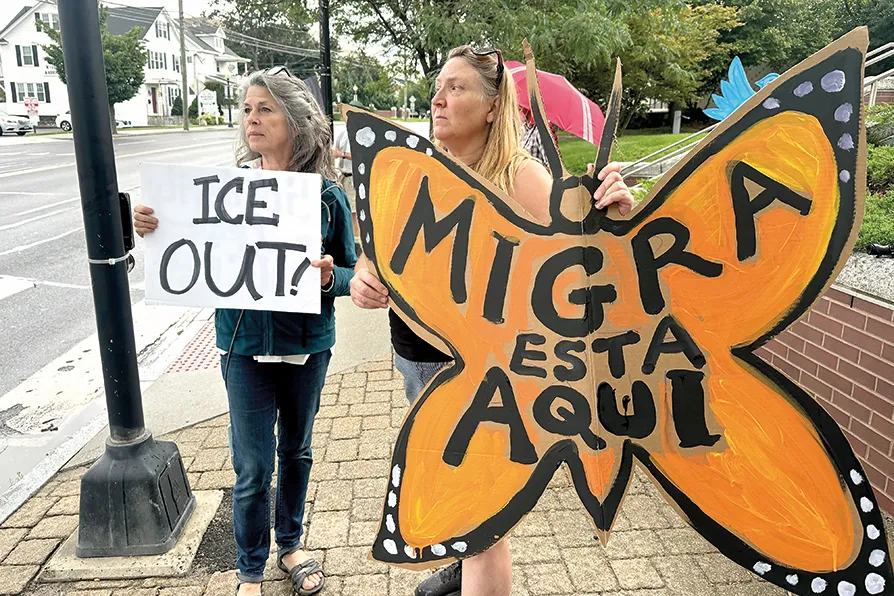
Without evidence or Nato consultations Berlin’s answer to the Leipzig incident is a rupture of relations. SEVIM DAGDELEN examines why
FRANCISCO DOMINGUEZ introduces the background to a conference on defending Latin America’s sovereignty
The glacier collapse in Nepal is yet another warning that a warming planet is making Himalayan disasters more frequent and destructive – but the countries facing the greatest risks are often those least responsible, says LI YANG
Nick Blair is set to benefit from a hugely lucrative contract to ‘virtually’ train the British army for its next war. Like father, like son, writes SOLOMON HUGHES
Even when tragedy strikes, Western media cannot resist the opportunity to turn it into a sordid propaganda opportunity, as the Nepal-China border tragedy shows, writes CARLOS MARTINEZ
Trade unions should be at the heart of the anti-racist push for reparations for the historic legacy and continuing impact of slavery, writes ROGER McKENZIE





DEFEAT of Israel and deconstruction of its apartheid regime are a prerequisite for Palestinians’ long overdue freedom and self-determination. Defeat means a fundamental shift in the balance of power so Israel can no longer maintain the illegal occupation by its overwhelming military might.
Withdrawal, though desirable, is not sufficient — the racist settler infrastructure has to be dismantled. This means removal of the wall from Palestinian lands, the return of their land, water and resources and crucially, removal of the settlers and their settlements.
Although they shouldn’t be, these are huge political barriers requiring effective pressure — more than protest, moral suasion and public opinion to make Israel comply with international law, something it has steadfastly refused to do and made very clear it has no intention of ever doing willingly.
Palestinians recognised this with their two-pronged strategy of internal sumud and resistance and global boycott, divestment and sanctions.
With every red line it crosses from the Nakba to genocide, Israel reveals its contempt for international law. It revels in the impunity the Western world grants that result partly from guilt rightly felt for the horrific crimes we inflicted on Jewish people in our countries, not just in the second world war, but over centuries of antisemitism, which is still ongoing.
But also, because Israel is a major part of the West’s colonial and now neoliberal strategy in the Middle East.
Under the protective wing of an increasingly authoritarian US and led by the ever-stronger fascist and racist tendencies within, Israel believes it has a generational opportunity to conquer Palestine completely and establish the zionist dream of a “greater Israel” from the river to the sea.
The mentality is: “If we got away with genocide in Gaza, we can get away with anything.”
How is this avalanche of violence, death and atrocity to be stopped? Well, not by the mealy mouthed “sanctions” recently announced by Yvette Cooper. When is a sanction not a sanction? When it does nothing to the perpetrators of the crime. Under international law the official role of sanctions is to bring pressure to bear on the miscreants to achieve compliance.
The token measures announced “target individuals and entities involved in financing and enabling settler violence in the occupied West Bank.” No mention of the Israeli state.
The Israeli government is a settler government; the forcible settlement of the West Bank is its official policy. It legalises and legitimises even the outlier settlements illegal under Israeli law. The IDF either stands idly by or actively protects and supports the settlers as they go about their violent business. Not surprisingly as many of the soldiers are themselves settlers — brothers and sisters of those committing the crimes.
The government itself is riddled by members of extreme settler parties. Indeed, Israel is a settler colonial entity, all but a few of its citizens are settlers.
The biggest settler violence was instigated, not by individual “rogue” settlers, but by the IDF itself with its merciless assaults on Gaza. Despite this, there are no consequences for Israel and its government, the current proposals are token, not meaningful sanctions.
They bring no pressure to bear on Israel; Britain knows what needs to be done.
There are currently 15 active UN sanctions regimes — not surprisingly, mostly targeting countries and regimes in the global South. The three most common tools are asset freezes, travel bans and arms embargoes, but some go further with sector-specific trade restrictions.
This can be seen in Donald Trump’s tariff wars and its vindictive sanctions on Cuba and Venezuela.
Even more relevant are the numerous additional executive orders and sectoral sanctions issued by the US administration against Russia following the invasion of Ukraine.
They demonstrate what can be done if one is minded to and that is the problem — Western governments do not want to take effective action. They have stood idly by during starvation and genocide and the deliberate slaughter of tens of thousands of civilians, women and children.
Only one thing will move those Western regimes in hock to the Israel state — in particular, the US and British governments — the threat of the loss of power — the loss of votes.
The Palestine Solidarity Campaign’s excellent polling initiative has revealed the extent the haemorrhaging of political support from Establishment parties has been due to their overt and unstinting support for Israel’s policies and actions.
There is an understandable but incorrect myth, that to help Palestine achieve self-determination all we have to do is follow the South African boycott model. It is a great example but was no overnight success — it took over 30 years from the ANC call for a boycott until Nelson Mandela walked free.
Most of this time he was in prison and treated and regarded by Western leaders as a terrorist. In the boycott campaign there were very visible targets.
Abundant consumer products — food and wine — on the supermarket shelves to boycott. It is not a boycott if you must hunt to find the thing you are not going to buy or use. To be effective as a campaigning tool boycotts need to be aimed at visible targets, as the BDS Committee has recognised.
Readily identifiable sporting targets of white-only teams and very public “whites only/black only” signposts exposed the nature of the apartheid regime.
Notwithstanding this it was not easy, and despite the massive support for the campaign, it was only in the latter stages in the late 1980s that Britain and US in particular, came on board with the necessity of taking effective sanctions action.
It is likely, probably inevitable, that it will be the same in relation to Palestine, and one suspects that Israel is a bigger immovable object than South Africa was.
It was a white minority regime amid an overwhelmingly black population, with liberation movements in the ascendancy in much of southern Africa.
Israel has been very careful to avoid such a situation arising, focusing incessantly on the demographic war, never to allow a majority Arab population. One suspects this is the reason they have not already annexed the West Bank officially.
It has been argued retrospectively that the economic impact of the sanctions on the South African economy was not huge and that in many ways there was a bigger effect from the silent boycott of companies and institutions just walking away from South Africa, just deciding not to invest there for their own economic rationales.
This is already happening in relation to Palestine. Israel has lost the cultural wars and global public opinion, something it has lost forever with the current generation — it cannot magically PR it away. People have witnessed what Israel has done.
But it is desperately clinging on to the political power it has in Britain, the US and elsewhere. This has been Israel’s conscious strategy, believing it can outlast and survive hostile public opinion so long as it retains political support from its key partners.
It was the loss of this, especially the support of the US, that finally made the white South Africans realise they had to give up power.
It could be argued Israel is not being asked to yield power, rather to give up its zionist ambitions and co-operate with the creation of a Palestinian state. But for many Israelis, this goes to a core belief, they are not and never will be satisfied with a safe Israel within defined borders sitting alongside a free Palestinian state.
That is why sanctions are so vital, alongside the broader boycott and divestment campaign to bring to bear the pressure necessary to bring about meaningful sanctions.
Israel is in some ways harder to target than South Africa as its targets are less visible to the individual. Israel is a military, war economy. Its economy lives off military aid, its trade is dependent on the arms trade and related technologies. Without this, Israel’s economy would be in real danger of imploding.
What would an effective sanctions regime look like? In response to Cooper’s statement, the Palestinian ambassador Husam Zomlot called for a “a ban on the settlement products and comprehensive sanctions on those profiting from illegal sanctions.”
The tipping point is that the action needs to be government action with enforceable consequences for Israel and its economy, not just aimed at individuals. It will need to be comprehensive and capable of being sustained over time.
Apart from an arms embargo on the two-way trade with Israel, the new Burnham government ought to institute an audit of all government, local and national, expenditure, contracts and co-operation to identify and stop any support for companies engaged in supporting the settlements and the occupation — Oracle and Palantir being obvious examples.
As the US has done with Russia and supporters of Palestine — follow the money. The war, the occupation, the settlements are all funded with much investment and finance coming from abroad and being channelled through British financial institutions. This should be stopped.
The EU has a positive trade agreement with Israel treating it an as associate member which Britain is trying to replicate following Brexit. These trade agreements should be ended.
The government and its representatives ought to support, not block, moves in international bodies to ban and boycott Israel — be it Fifa or Eurovision — Israel should be treated as the apartheid state it is.
So complicit has the British state been for decades, the list of what could be done is almost endless.
So, the solution is relatively straightforward — turn off the tap. However, achieving this is a huge ask of the solidarity movement. With global and right-wing pressure to increase military expenditure, for whom war is the answer, not the problem, the alliance of vested interests is very strong. For them, genocide is an acceptable consequence.
The change in Labour’s leadership and of prime minister doesn’t mean there will be any policy change — all the same pressures will be on Burnham, and he has not been immune to them in the past.
However, it is an opportunity where like-minded people inside and outside the Labour Party will hopefully be reinvigorated to be pick up the baton once more and challenge the neoliberal orthodoxy that pervades British and Western politics.
The new Labour regime will be very keen to give itself a chance of winning the next election, which seems remote at present.
Logically it should be seeking the friends and allies it has lost, not trying to win the votes of those it has never had. In this context supporters of Palestine need to organise politically as never before. To build new alliances we need to talk outside our, albeit large, bubble.
If we need sanctions to defeat Israel, then we need to force, coerce and persuade governments to act. To do this, building on the amazing level of support there has been for the protests, our challenge in order to move governments, is to build a mass movement capable of bringing enough pressure to bear to make those necessary sanctions a reality.
Hugh Lanning will be among the speakers at a Labour and Palestine online event on Tuesday July 7 looking at ending Britain’s role in crimes against the Palestinian people. Find out more and register for the meeting at bit.ly/endukcomplicity.
Join the National March for Palestine July 18 in central London at noon. Visit palestinecampaign.org for more details.

Similar stories

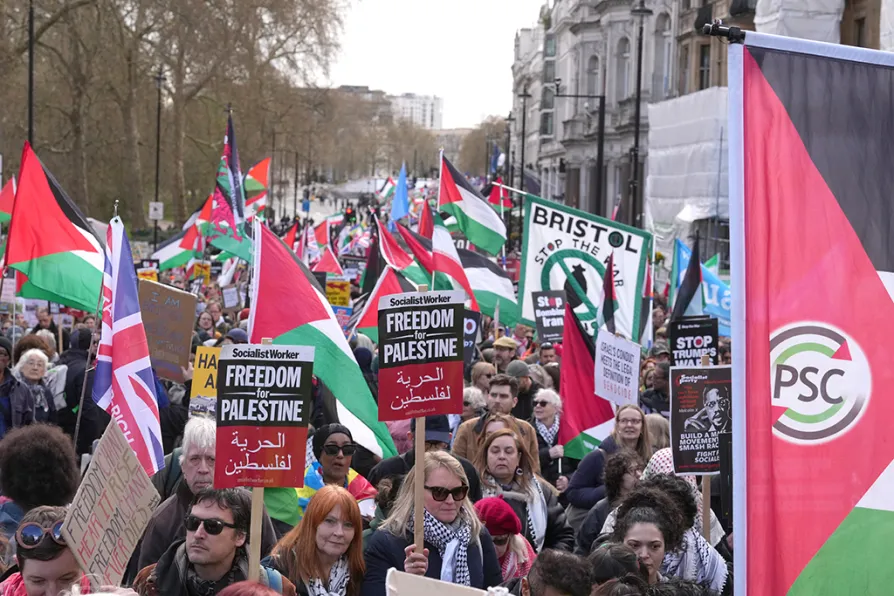
The struggle for Palestinian freedom has become a defining issue for everyone committed to justice, democracy and peace, says PETER LEARY ahead of the Stop the War International Conference on Saturday
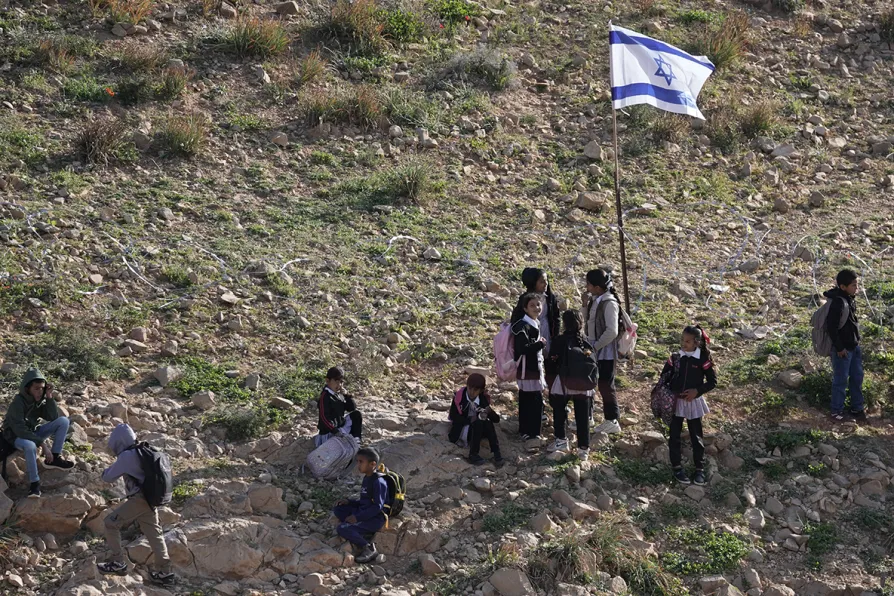
Bezalel Smotrich’s measures to extend Israeli property law into the West Bank are a continuation of a decades-long project to dispossess Palestinians and preclude statehood, argues HUGH LANNING
On International Day of Solidarity with the Palestinian People, HUGH LANNING warns that the US-led “Comprehensive Plan” entrenches decades of Western complicity in Israel’s domination and denial of Palestinian land and rights