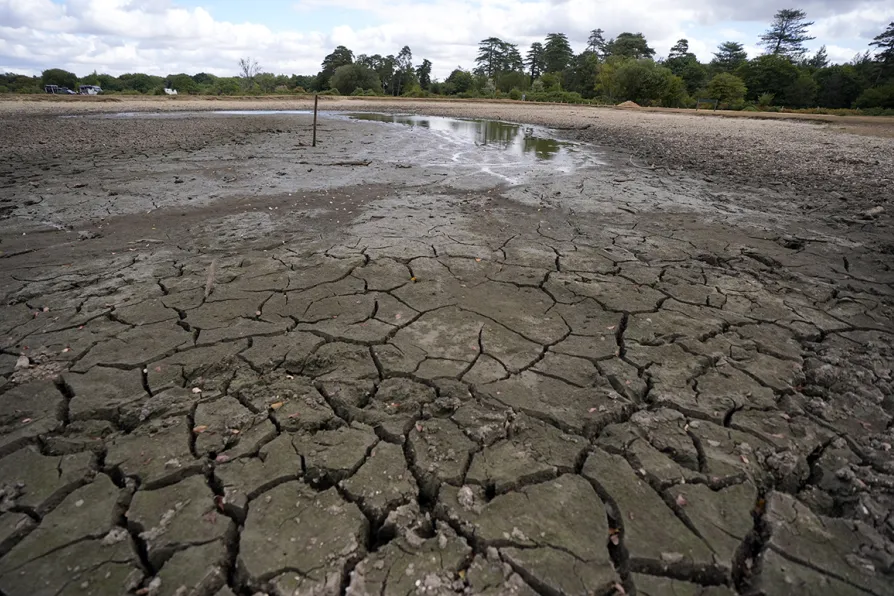
Andy Burnham could learn a few lessons from a previous Labour government in the pre-privatisation era on how to tackle water shortages, writes KEITH FLETT


 Latest editorial

Who Decides Legitimacy? Elections, Power, or the Politics of Democracy
SALLY LEWIS asks why Maduro’s legitimacy in Venezuela is contested, while Keir Starmer’s is not despite his mandate resting on a far smaller share of the vote
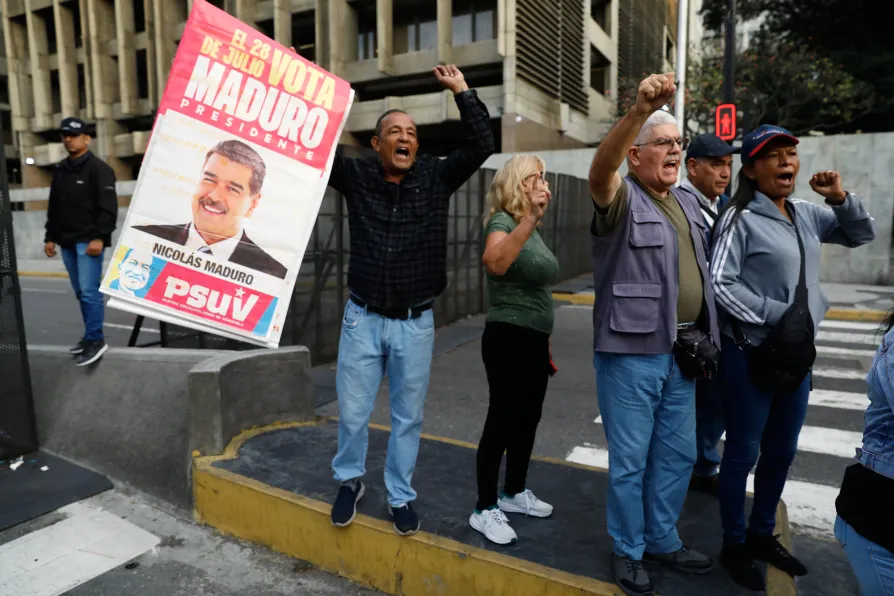 Supporters display a poster of Venezuelan President Nicolás Maduro in Caracas, Venezuela, January 3, 2026, after U.S. President Donald Trump announced Maduro had been captured and flown out of the country
North East Volunteers for Liberty plan to mark a double anniversary in October for local heroes who stood firm against tyranny, writes TONY FOX
India’s monsoon is running below normal overall, yet extreme rainfall has already caused deadly flooding in Kerala, explains LIGIN JOSEPH
Renewed illusions in social democratic reformism are sprouting as a result of Andy Burnham’s rhetoric, but material conditions are already intruding into the debate, argues NICK WRIGHT
The US is hell-bent on dismantling the International Criminal Court as part of its assault on global legal systems, but others also have valid reasons to seek its demise. BEN CHACKO provides the analysis





ELECTIONS are meant to reflect the will of the people. Yet when the same levels of popular support are treated entirely differently depending on where a leader stands geopolitically, it exposes a troubling contradiction at the heart of modern democracy.
What counts as a “mandate” in one country can be labelled “illegitimate” or even “dictatorial” in another — raising urgent questions about the standards we use to judge democratic legitimacy.
In Venezuela’s disputed 2024 presidential election, the government‑controlled National Electoral Council (CNE) declared incumbent Nicolas Maduro the winner with 51.2 per cent of the vote, compared with 44.2 per cent for his main rival, Edmundo Gonzalez Urrutia. Turnout was roughly 59 per cent, meaning that just over 31 per cent of all eligible Venezuelan voters actually voted for Maduro.
Despite this, Western governments and media outlets routinely brand Maduro a “dictator,” questioning the legitimacy of his mandate.
Several European states, including Britain and Italy, called for “greater transparency” and expressed “concern over allegations of serious irregularities” in the vote count. Critiques include the CNE’s failure to publish detailed polling station data, leaving independent observers and opposition groups sceptical of the official results.
By contrast, in the United Kingdom’s 2024 general election, Keir Starmer’s Labour Party won a parliamentary majority with roughly 34 per cent of votes cast. With turnout at around 59.7 per cent, this means only 20–21 per cent of all eligible voters directly supported Labour .
Yet Starmer’s victory was widely celebrated as a legitimate mandate — no accusations of illegitimacy were made, no questions about “dictatorship” arose.
Across the Atlantic, Donald Trump’s 2024 presidential victory came with 49.8 per cent of the popular vote, on a turnout of approximately 64 per cent.
Around one-third of all eligible voters supported him — comparable to Maduro’s backing in Venezuela — yet there was little mainstream dispute about his democratic legitimacy.
These contrasts illuminate a stark truth: democracy is not judged solely by numbers or popular consent. Narratives of legitimacy are constructed, often depending on geopolitical alignment and who holds power in global politics.
Leaders aligned with Western interests are afforded legitimacy even with limited support, while those challenging these interests are frequently denounced, regardless of the actual vote.
For citizens, the lesson is clear. Your vote, and the collective will of the electorate, matter more than the labels imposed by governments or media narratives.
If democracy is to mean more than a slogan, legitimacy must rest on participation, transparency, and respect for the people’s choice — not on whose interests it serves internationally.
