RITA DI SANTO assesses the winners of the most politically charged festival to date


 Latest editorial
When life objects to art
LEO BOIX applauds an audacious, self-questioning film about grief, friendship and film-making
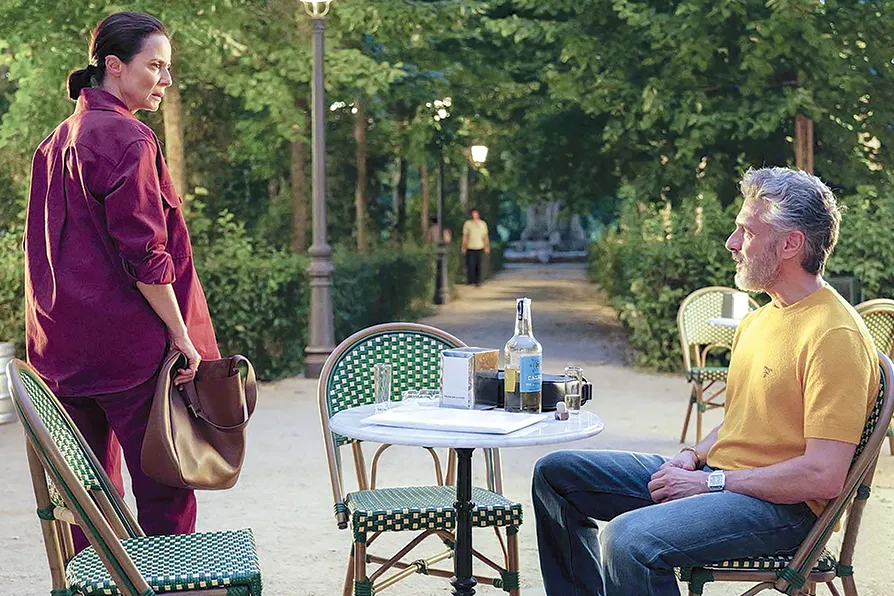 (L to R) Aitana Sánchez-Gijon and Leonardo Sbaraglia and in Bitter Christmas / pic IMDb
KATARZYNA KOSMALA introduces a retrospective by one of the most significant figures in contemporary US photography
MAYER WAKEFIELD is entertained but let down by an audacious production that, sadly, doesn't ring true
MARY CONWAY is disappointed by drama that, despite accomplished performances, cannot overcome an unfocused script
New releases from Sam Carter, Spell Songs and Les Thomas





Bitter Christmas
Directed by Pedro Almodovar
⭑⭑⭑⭑☆
IN Ovid’s Metamorphoses, stories breed other stories. One character becomes another narrator; memories become myths; bodies, voices and perspectives are continually transformed. Orpheus even makes art out of grief, singing so beautifully that the underworld briefly suspends its laws. But art cannot restore what has been lost. Orpheus looks back, and Eurydice disappears.
Something similarly slippery happens in Pedro Almodovar’s Bitter Christmas (Amarga Navidad), his 24th feature: an absorbing film about grief, friendship and film-making, but also about who owns a story once individual experience becomes art.
It begins in 2004 with Elsa (a superb Barbara Lennie), a commercials director and former cult film-maker debilitated by migraines and panic attacks. Escaping to Lanzarote with her friend Patricia (Victoria Luengo), Elsa begins writing a film about two grieving women on a volcanic island. But fiction soon trespasses on friendship: Patricia recognises too much of her own life in Elsa’s screenplay.
Then Almodovar pulls the rug away. In 2025 we discover Elsa’s story is itself a screenplay, written by celebrated film-maker Raul (Leonardo Sbaraglia), whose experiences she partly mirrors. His assistant Monica, played magnificently by Aitana Sanchez-Gijon, gradually becomes the film’s moral conscience. Raul believes he transforms life into fiction; Monica suspects he steals life and calls it fiction.
Here Bitter Christmas becomes both playful and political. Who gets to turn another person’s grief into cultural property? Is experience ever purely individual when our lives are made through lovers, friends, families and communities? Almodovar puts the artist, and implicitly himself, on trial.
Like Ovid, he understands storytelling as metamorphosis: event becomes memory, memory becomes anecdote, anecdote becomes character, character becomes cinema. Each transformation reveals something while falsifying something else.
Jose Luis Alcaine’s cinematography and Alberto Iglesias’s score are characteristically sumptuous, while Chavela Vargas’s aching title song becomes part of the film’s emotional architecture. Yet the film occasionally feels too enclosed within its own cleverness. I missed some of Almodovar’s anarchic humour and social exuberance; its emotional register can feel curiously uniform.
Still, this is audacious, self-questioning cinema. Almodovar looks back at his own methods and asks an uncomfortable question: when artists make beauty from other people’s lives, what, and whom, do they leave behind?
In cinemas August 28.

Similar stories
Nothing, says ANDY HEDGECOCK, can rescue this undistinguished amalgam of ponderous melodrama and shallow philosophical speculation
ANDY HEDGECOCK is charmed by a skilful adaptation of Tove Jansson’s lyrical portrait of three generations of a family, overcoming grief

ANGUS REID, FIONA O’CONNOR, JAMES WALSH and MARIA DUARTE review Wham! 10 Days in China, Lesvia, Di’Anno: Iron Maiden’s Lost Singer, Spider-Man: Brand New Day, and The Fires
LEO BOIX, ANDY HEDGECOCK and MARIA DUARTE review Dreamers, It Was Just An Accident, Folktales, and Eternity