

 Latest editorial
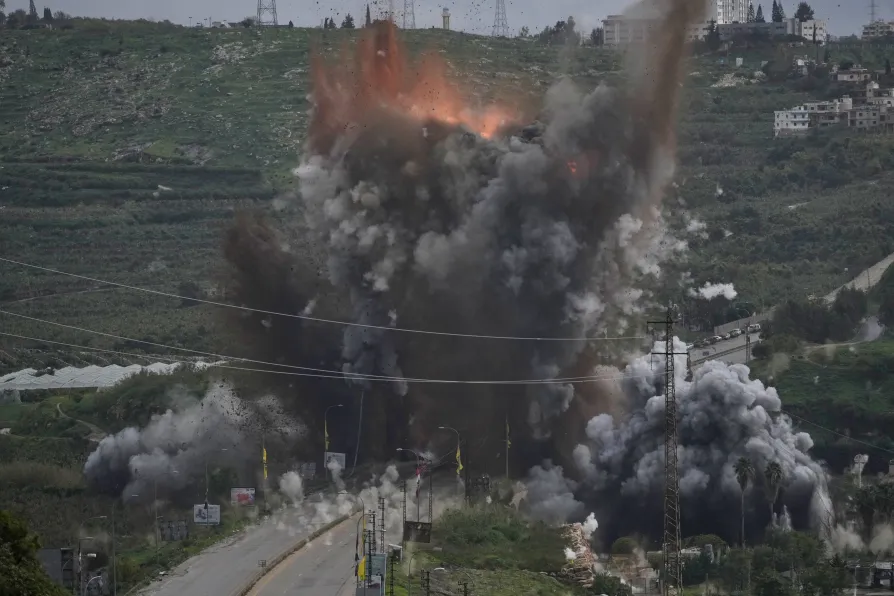 Smoke and flames rise from an Israeli airstrike that hit the Qasmiyeh Bridge near the coastal city of Tyre, Lebanon, March 22, 2026





IRAN and its ally, Hezbollah, the Lebanese resistance group, stepped up pressure on Israel today, with intense attacks on the country’s north and south.
This came after the United States and Iran threatened to widen their targets in the war in the Middle East, now in its fourth week.
On Saturday, US President Donald Trump said he would give Iran 48 hours to open the strait or the US would destroy Iran’s “various power plants, starting with the biggest one first!”
The Iranian parliament speaker, Mohammad Bagher Qalibaf, responded Sunday on X that if Iran’s power plants and infrastructure were targeted, then vital energy and desalination facilities would be considered legitimate targets and “irreversibly destroyed.”
Separately, Iranian officials on Sunday said they would keep providing safe passage through the strait to vessels from countries other than its enemies.
As Israel came under renewed fire, top Israeli leaders travelled to the Negev Desert, home to the country’s main nuclear research centre and the site where Iran’s barrages struck two towns on Saturday, shattering apartment buildings and injuring scores of people in Arad and Dimona.
Prime Minister Benjamin Netanyahu toured Arad and said it was a “miracle” that no-one had been killed there.
Iran said its strikes in the Negev Desert were in retaliation for an earlier attack on Iran’s main nuclear enrichment site in Natanz.
“If the Israeli regime is unable to intercept missiles in the heavily protected Dimona area, it is, operationally, a sign of entering a new phase of the battle,” said Mr Qalibaf.
Dimona is about 12 miles west of the nuclear research centre and Arad is around 22 miles to the north.
Soroka, southern Israel’s main hospital, received at least 175 wounded from Arad and Dimona, the hospital’s deputy director Roy Kessous told reporters.
Israel is widely believed to possess nuclear weapons, though it doesn’t confirm or deny their existence.
Israel denied responsibility for hitting Natanz on Saturday while the Iranian judiciary’s official news agency, Mizan, said there was no leakage.
The Pentagon declined to comment on the strike at Natanz.
The developments signalled that the illegal and unprovoked attack launched by the US and Israel on February 28 was moving in a dangerous new direction, despite President Trump’s mention last week that he was considering “winding down” operations.
The war has killed hundreds of people, plunged the global economy into crisis and sent oil prices surging.
Hezbollah claimed responsibility for an air strike on Sunday that killed a man in northern Israel.
