

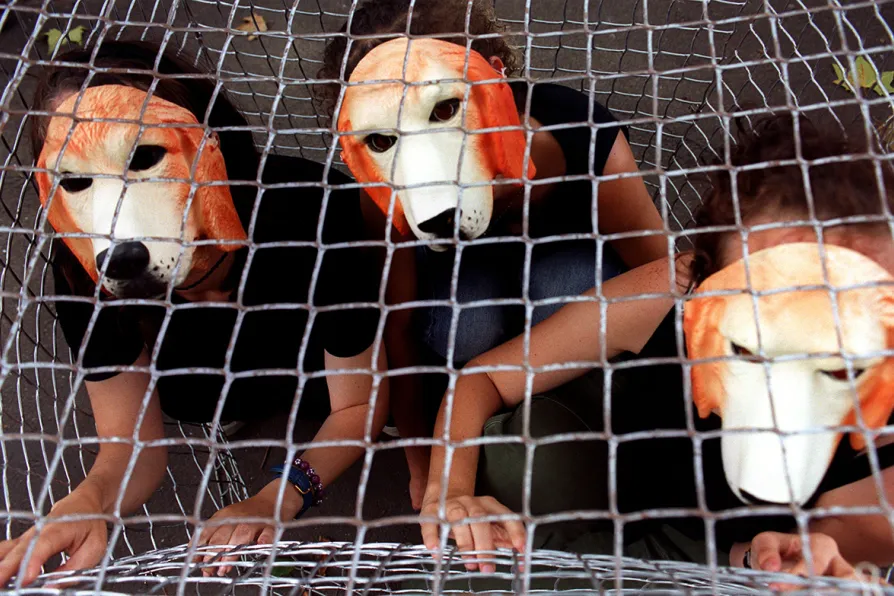
 Masked members of People for the Ethical Treatment of Animals (PETA) protest outside the Britsh Heart Foundation in North Finchley, London, August 2000






THE secrecy surrounding animal testing licences has been ruled unlawful by the Upper Tribunal, in a landmark case brought by Cruelty Free International.
The case challenged Section 24 of the Animals (Scientific Procedures) Act 1986, which allows the Home Office to withhold detailed licence applications for animal experiments.
Cruelty Free International argued this breached the European Convention on Human Rights, which obliges governments to disclose publicly important information to watchdogs such as NGOs and the media.
The charity’s request focused on why the Home Office resumed granting licences for cosmetics testing in 2019, having refused them for 30 years on the basis the suffering caused was not justified.
The department refused to disclose its reasoning, citing Section 24.
The tribunal ruled in the charity’s favour, noting the Home Office had previously accepted that there was “no justification” for retaining the secrecy provision but had done nothing to change it.
The case is now expected to proceed to the Court of Appeal.
Cruelty Free International’s Dr Emma Grange said: “The public has a right to know the basis on which licences for animal experiments are granted.
“It should not be a cosy club between researchers and regulators.”

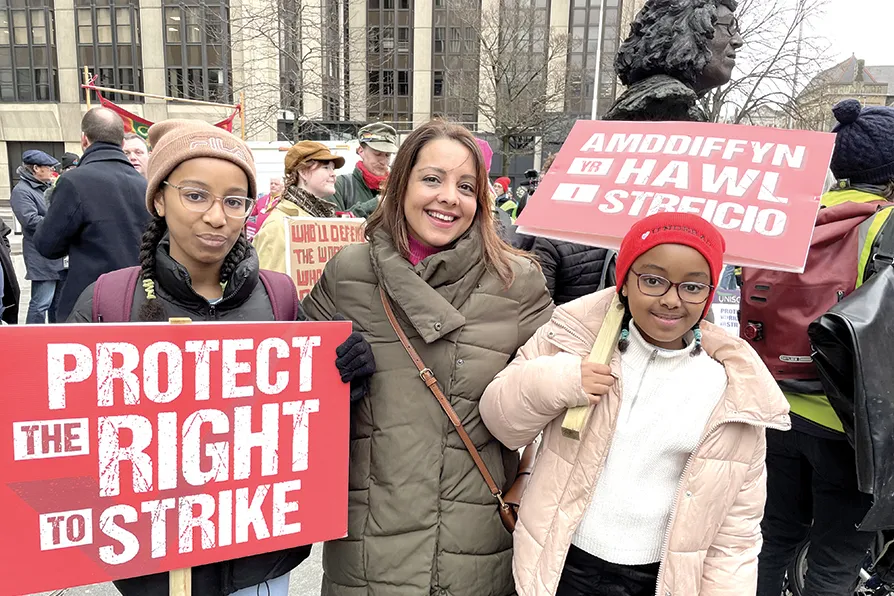
The International Court of Justice has delivered its clearest ruling yet that the right to strike is protected under international law, write Professor TONIA NOVITZ, Professor KEITH EWING and Lord JOHN HENDY KC

DYLAN MURPHY reports that far from helping people back into work, the sanctions regime is inflicting unnecessary trauma on working-class families