US Justice Department says the ‘reporters are not the targets, those leaking classified information are’. But media freedom advocates warn that Trump's ‘war on the press is looking for another victim’


 Latest editorial
UN experts say Sudan's el-Fasher bears ‘hallmarks of genocide’
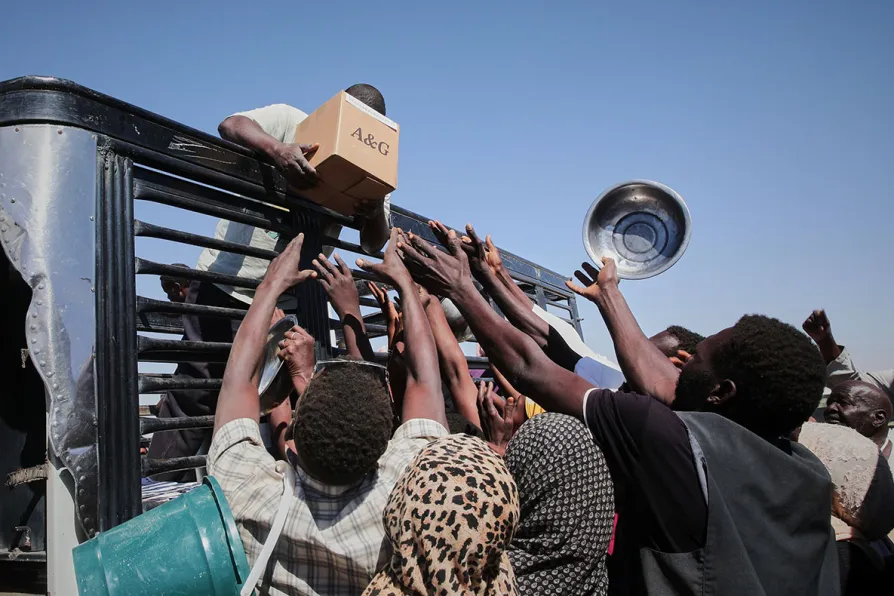 Sudanese families displaced from El-Fasher reach out as aid workers distribute food supplies at the newly established El-Afadh camp in Al Dabbah, Sudan's Northern State, November 16, 2025





UN-BACKED human rights experts said today that widespread destruction by Sudanese paramilitaries in el-Fasher in October bears the “hallmarks of genocide.”
The Rapid Support Forces (RSF) carried out mass killings and other atrocities in el-Fasher after an 18-month siege, during which they imposed conditions “calculated to bring about the physical destruction” of non-Arab communities, in particular the Zaghawa and Fur peoples, the independent fact-finding mission on Sudan reported.
UN officials say several thousand civilians were killed furing the RSF takeover of el-Fasher, which had been the Sudanese army’s only remaining stronghold in Darfur.
Only 40 per cent of the city’s 260,000 residents managed to flee the onslaught alive, thousands of whom were wounded, the officials said. The fate of the rest remains unknown.
Sudan plunged into conflict in mid-April 2023, when tensions between its military and paramilitary leaders broke out in the capital Khartoum and spread to other regions, including Darfur.
The devastating war has killed more than 40,000 people, according to UN figures, though aid groups say that is an undercount and the true number could be many times higher.
The RSF overran el-Fasher on October 26 and rampaged through the city.
The offensive was marked by widespread atrocities that included mass killings and summary executions, sexual violence, torture, and abductions for ransom, according to the UN Human Rights Office.
The RSF killed more than 6,000 people between October 25 and October 27 in the city, the office said.
Rebels ran riot in the Abu Shouk displacement camp, just outside of the city, ahead of the attack and killed at least 300 people in two days, it said.
An international convention known as the Genocide Convention sets out five criteria to assess whether genocide has taken place.
They are: killing members of a group, causing its members serious bodily or mental harm, imposing measures aimed to prevent births in the group, deliberately inflicting conditions calculated to bring about the “physical destruction” of the group and forcibly transferring its children to another group.
The fact-finding team said it found at least three of those five were met in the actions of the RSF.
Under the convention, a genocide determination could be made even if only one of the five were met.
The RSF did not respond to a request for comment.
The group’s commander, General Mohammed Hamdan Dagalo, has previously acknowledged abuses by his fighters, but disputed the scale of atrocities.
