

 Latest editorial

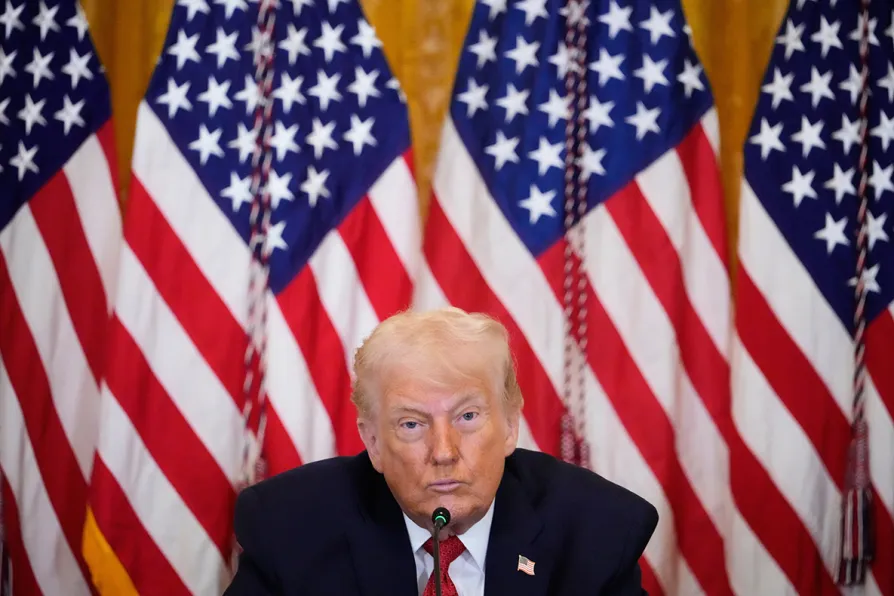 US President Donald Trump speaks during an event to promote investment in rural health care in the East Room of the White House, in Washington, January 16, 2026





THE United States believes its power matters more than international law, the United Nations secretary general said today.
Antonio Guterres told BBC Radio 4’s Today programme that the US had a “clear conviction” that multilateral solutions were irrelevant and that what mattered most was the “exercise of power.”
The comments from the secretary general come weeks after the US violated international law when it attacked Venezuela and kidnapped its president.
The US has also threatened to take control of Greenland by “any means necessary,” including by force.
Mr Guterres said he believed that the founding principles of the UN — including the equality of member states — were now under threat.
President Trump has previously been scathing in his criticism of the UN and used his address at last September’s general assembly to question its very purpose, falsely claiming he had “ended seven unendable wars” on his own and the UN “did not even try to help in any of them.”
“Later I realised that the UN wasn’t there for us,” he said.
During his interview with the BBC, Mr Guterres admitted his organisation was struggling to make members abide by the international laws laid out in the UN Charter.
He said the UN was “extremely engaged” in solving major global conflicts, he insisted. “But the UN has no leverage — the big powers have stronger leverage.
Mr Guterres said: “There are those that believe the power of law should be replaced by the law of power.
“Indeed, when one sees the present policy of the US, there is a clear conviction that multilateral solutions are not relevant and that what matters is the exercise of the power and the influence of the United States and sometimes in this respect by the norms of international law.”
The secretary general also accused the UN’s most influential body, the security council, of being “ineffective” and no longer representative of the world.
He claimed vetoes were being used to further individual members’ interests and criticised the fact that “three European countries” were permanent members.
When asked if he saw the UN as powerless in Gaza where it should have made a difference, he said: “Of course, but let’s be clear.
“For a long time, Israel was saying that humanitarian aid was not distributed because the UN was not able to do so.”
Mr Guterres said: “I think that people are sometimes reluctant to confront the powerful. But the truth is that if we don’t confront the powerful, we will never be able to have a better world.”
