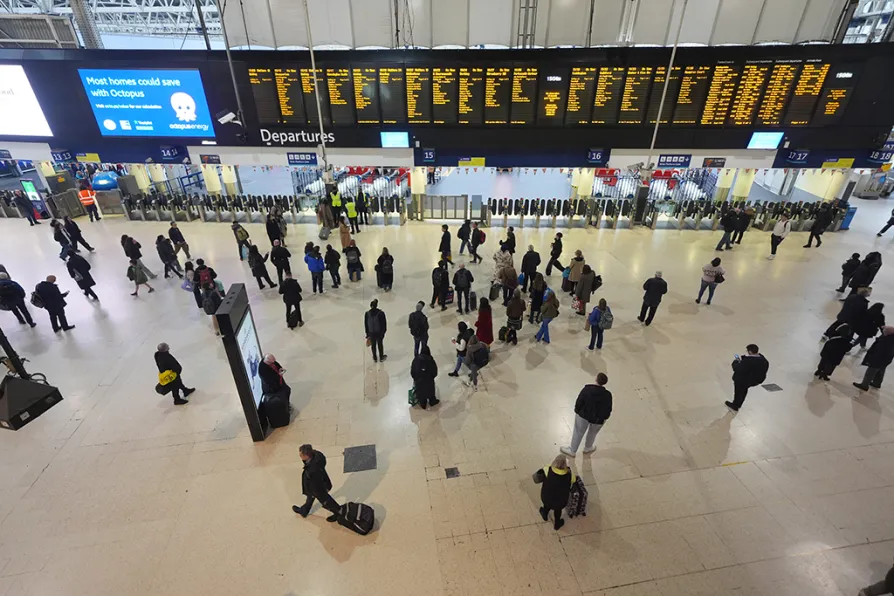
 Waterloo station concourse






TRAIN services to and from London Waterloo were disrupted today after smoke was reported on the track between the station and Vauxhall.
South Western Railway (SWR) said services were running slower than usual while a safety inspection took place, with delays affecting routes to and from Guildford, Woking, Chessington South, Dorking, Hampton Court, Shepperton and Strawberry Hill.
SWR did not say whether the incident was related to the current high temperatures, but the train operator also issued a general alert warning that services across its entire network “may be revised” because of the hot weather.
Several afternoon and early evening services were cancelled, affecting journeys between London Waterloo and Weymouth via Winchester, Southampton and Bournemouth and between London Waterloo and Aldershot via Woking and Guildford.
Some services between Exeter St Davids, Salisbury and London Waterloo ran only as far as Basingstoke.
Elizabeth line trains between London Liverpool Street and Stratford were also disrupted in the afternoon, with eastbound services to Gidea Park cancelled.
Thunderstorm warnings were issued for parts of the south-west, the east and west Midlands and the east of England between 3pm and 10pm yesterday, which was the hottest day in May since records began.