Even the oligarchs of the artificial intelligence industries are warning that their creations have the capacity for the ultimate destruction of the planet and its population. ANDREW MURRAY suggests that there might just be other solutions


 Latest editorial
A ‘super El Nino’ could make India’s monsoon drier yet more dangerous
India’s monsoon is running below normal overall, yet extreme rainfall has already caused deadly flooding in Kerala, explains LIGIN JOSEPH
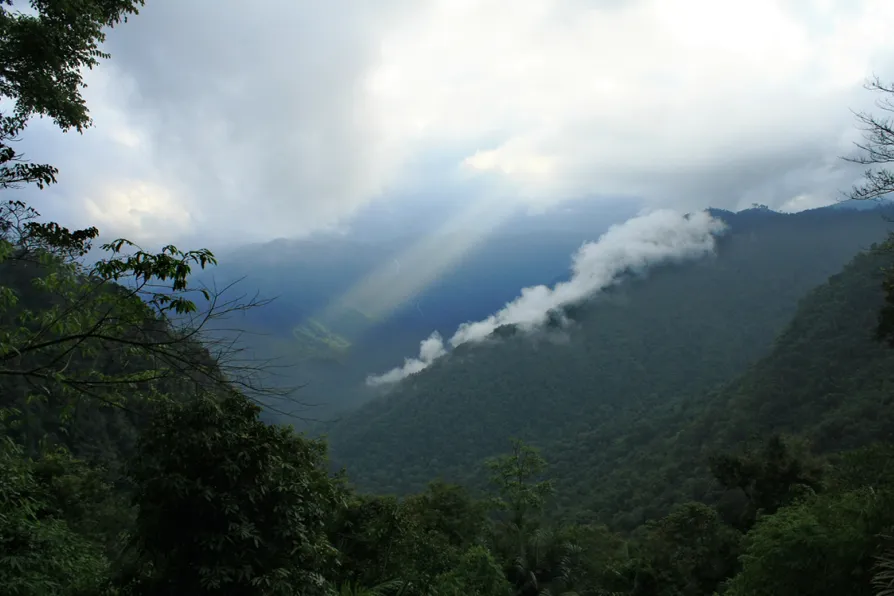 Monsoon clouds over the Western Ghats, Kerala (Pic: Nagesh Jayaraman/Creative Commons)
The Labour government must deliver on its commitment to bring back privatised services into the public sector. This not only saves money but also creates accountability and generates wider social benefits, argues ANDY MCDONALD MP
PCS is demanding the long-overdue return of essential services to public ownership, explains FRAN HEATHCOTE
Despite promises of a new era of insourcing, billions of pounds of public contracts continue to flow to private firms. Unions are now calling for urgent action to bring services back in-house, says EDDIE DEMPSEY
Public ownership of Great British Railways has enormous potential to improve our railway network, but that can’t happen unless jobs, employee rights and union recognition is at the heart of the transition, argues MARYAM ESLAMDOUST
If Labour is genuinely committed to supporting working-class students it must act urgently to reverse the funding crisis affecting universities and colleges, JO GRADY tells Christophe Domec
Challenges from the unscrupulous misuse of AI to steal actors’ voice and physical likenesses is being met with a firm union response, writes LYNDA ROOKE





INDIA IS currently in the middle of its summer monsoon, but this year’s rainfall presents an interesting paradox. Much of the country has received less rain than usual so far, yet has still been hit by severe floods and landslides. In the southern state of Kerala, for example, devastating floods occurred despite the overall monsoon rainfall remaining well below average.
A weaker monsoon does not necessarily mean an absence of extreme rainfall. Rainfall can be highly uneven, with long dry spells broken by intense cloudbursts that cause flooding and landslides. This year’s experience in Kerala illustrates the apparent contradiction: a season that is dry overall can still produce devastating rainfall.
Amid this highly uneven monsoon, attention is also turning to something happening thousands of kilometres away in the tropical Pacific Ocean: El Nino.
It is well established that El Nino years, when certain parts of the Pacific are warmer than usual, are often associated with weaker Indian monsoon rainfall. Meanwhile La Nina — the opposite state to El Nino — tends to favour wetter conditions. This year, El Nino conditions have developed rapidly in the Pacific, with forecasts suggesting it could become exceptionally strong.
A super-strong El Nino could have important implications for hundreds of millions of people across India, particularly later in the monsoon, when the relationship between the two tends to become stronger.
An uneven monsoon
Before the monsoon even began, the India Meteorological Department was already expecting a weaker-than-usual season, partly because of the anticipated development of El Nino. Its first long-range forecast in April predicted June-September rainfall at around 92 per cent of the long-term average.
So far, rainfall has broadly followed this below-normal outlook, although with considerable fluctuations. By mid-June, rainfall across India was nearly 40 per cent below normal, before several active monsoon spells reduced the deficit. By early August, cumulative rainfall was still around 12 per cent below average nationally.
But these national and seasonal averages hide an important part of the picture. Take Kerala. Between June 1 and August 5 2026, the state received around 22 per cent less rainfall than normal. Yet during the single week from July 30 to August 5, the state received more than double its usual rainfall.
This intense spell of rain triggered severe flooding and landslides, despite the state still being rainfall-deficient when viewed over the season as a whole. By August 5, 26 people had died in monsoon-related incidents across Kerala. Among them were a mother and son who were killed when a landslide buried their home in Poonjar, Kottayam — a tragedy that felt especially close to home because my aunt knew the family.
But the relationship is more complicated than simply saying that El Nino causes drought over India. El Nino is one of the most important large-scale phenomena that influences the Indian monsoon, but it does not determine the season on its own.
Of the 16 El Nino years recorded since 1950, only seven were associated with below-normal monsoon rainfall over India. Other factors play a role, including the Indian Ocean temperatures and wind patterns, snow cover in the Himalayas and Eurasia, along with the monsoon’s own natural variability from year to year.
More importantly, a weaker monsoon does not necessarily mean an absence of extreme rainfall or floods. A study published in Science in 2025, analysing more than a century of rainfall observations, found that El Nino summers can produce lower rainfall overall while simultaneously intensifying extreme daily rainfall, particularly over parts of central-eastern India and the south-west coast (where Kerala is located). In other words, El Nino can potentially create an apparently contradictory situation: less rain over the season as a whole, but heavier rain when it does rain.
The recent experience in Kerala — a seasonal rainfall deficit interrupted by an exceptionally wet week and severe flooding — is consistent with this broader pattern, although the individual flood itself cannot be attributed to El Nino without a dedicated analysis.
What happens next?
There is certainly reason to keep a close watch on the Pacific. El Nino is already strengthening rapidly, and is expected to be very strong throughout the northern hemisphere autumn and winter of 2026-27.
However, this does not mean that India is destined for drought. An El Nino of this magnitude increases the likelihood of drought, flooding and other typical impacts, but they are not guaranteed.
This El Nino is expected to peak after the core summer monsoon season, but it is already strengthening while the monsoon is still underway. For India, the important question isn’t how much rain will fall in total, but where, when and how intensely it will fall.
Ligin Joseph is a PhD candidate in oceanography at the University of Southampton.
This article is republished from theconversation.com under a Creative Commons licence.
Please DO NOT REMOVE. —><img src=“https://counter.theconversation.com/content/219852/count.gif?distributor=republish-lightbox-basic” alt=“The Conversation” width=“1” height=“1” style=“border: none !important; box-shadow: none !important; margin: 0 !important; max-height: 1px !important; max-width: 1px !important; min-height: 1px !important; min-width: 1px !important; opacity: 0 !important; outline: none !important; padding: 0 !important” referrerpolicy=“no-referrer-when-downgrade” /><!— End of code.

Similar stories
ALEX BROWN explains how medieval Europe was plunged into sunless years, with widespread crop failures and devastating famines
Climate extremes are becoming our new normal, says CHLOE BRIMICOMBE
Rising temperatures and human activity are making life far harder for these vital pollinators. ALEX DITTRICH explains
STEPHEN ARNELL looks back to when protesters took to the streets in London demand to Irish liberty, fair pay and free speech — and wonders what’s changed in 138 years