Labour prospects in May elections may be irrevocably damaged by Birmingham Council’s costly refusal to settle the year-long dispute, warns STEVE WRIGHT



Still on the streets: why the movement for Palestine cannot be shut down
As tens of thousands return to the streets for the first national Palestine march of 2026, this movement refuses to be sidelined or silenced, says PETER LEARY
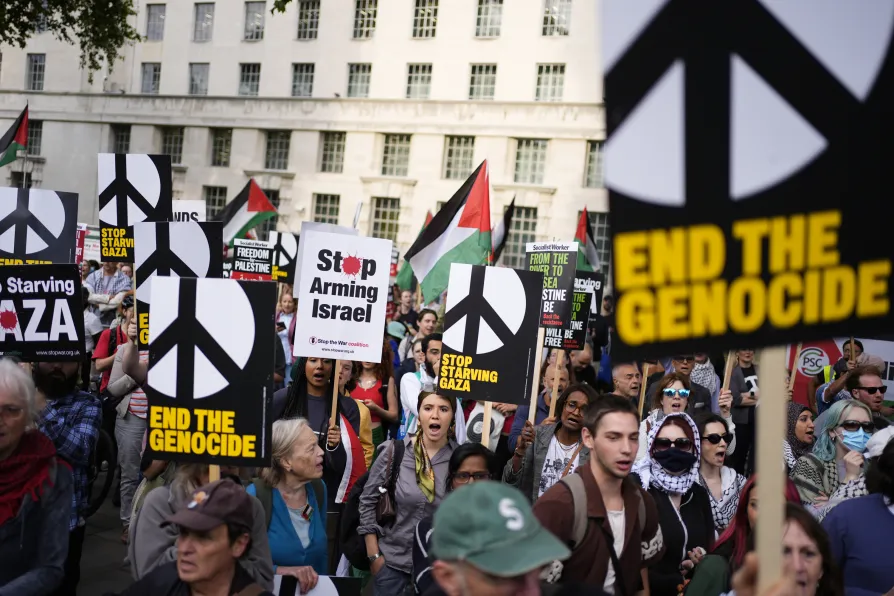
 Campaigners from the Palestine Solidarity Campaign take part in a protest outside Downing Street, London, September 9, 2025
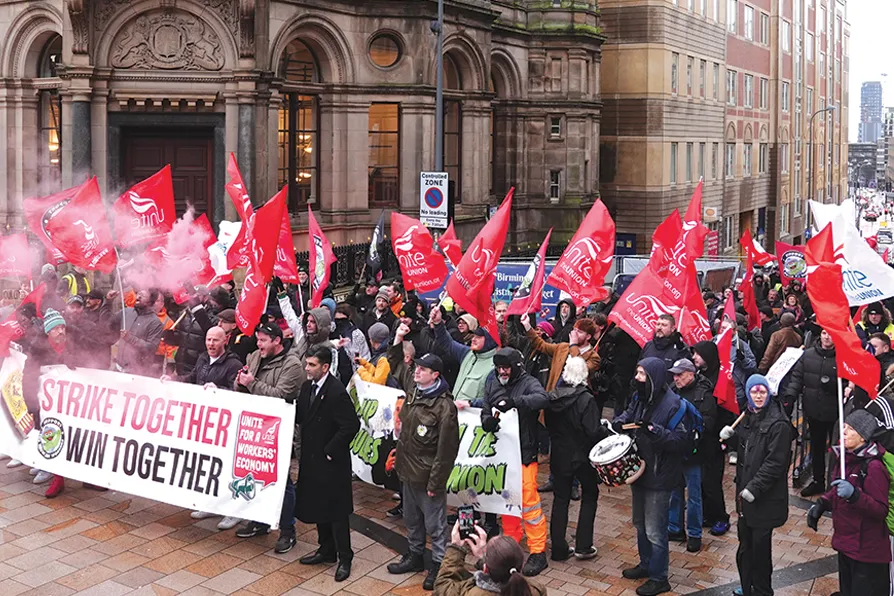
HENRY FOWLER and ROB POOLE explain the significance of today’s Megapicket
One hundred years after 1.7m workers shut the country down in defence of the miners, the struggles that sparked the 1926 General Strike are still with us – and will be honoured on London’s May Day march this year, writes MARY ADOSSIDES
The Labour Growth Group and its think tank partner, the Good Growth Foundation, have taken funding from major lobbying firms linked to housebuilders, banks and Heathrow – raising questions about corporate influence at the heart of Starmer’s pro-growth project. SOLOMON HUGHES reports
The fatal shooting of Alex Pretti, a registered nurse and union member, has sparked nationwide protests and renewed calls from National Nurses United to dismantle Ice and related agencies, says MARK GRUENBERG
A Vatican photo-op, a hard-right donor and a rhetoric of mass deportations reveal how appeals to ‘Christian values’ are being reshaped by Reform and Tory MPs, says SOLOMON HUGHES





TODAY’S march from Russell Square to Whitehall is the first national march for Palestine of 2026 and the 34th since October 2023.
This is an extraordinary achievement for a protest movement unparallelled in British history, but it is also hard to believe that 2026 is still only one month old.
With Donald Trump trampling over international law, seemingly acting with impunity — whether that is in Venezuela, in relation to Greenland, or his threats of further illegal military interventions around the world — this is a dangerous moment for us all and a challenging one for the mass movement for Palestinian rights.
Despite the desperate reality that Palestinians continue to face, the government and much of the media are eager to move on, and to slam the door on the extraordinary campaign that we have built in response to more than two years of genocide in Gaza.
We must not allow that to happen.
We must not allow it to happen because we owe it to the Palestinian people to stand in solidarity with them as they continue to confront these horrors as well as in their decades-long struggle against oppression, dispossession, apartheid and a genocide that continues despite the so-called ceasefire.
And we must not allow it to happen because what we are starting to see now — on a global scale — is what it means to live in a world of impunity, where any fig leaf of international law can be jettisoned, and where crimes that were once hidden or covered up are boasted about openly, photographed and livestreamed to our phones.
Palestine remains the central issue of our time because what is at stake are two very different visions of the world.
Nowhere has this been more evident than in the grotesque recent announcements regarding the arrangements for Trump’s so-called “Board of Peace.” Supposedly established for the future governance and reconstruction of Gaza — in reality, to further entrench colonial control — a body that Trump himself will chair, apparently for life, with an executive packed with his associates and cronies — family members, golf buddies, and, of course, Tony Blair.
While Trump dreams of using Gaza as a starting point, a testing ground, for his plans to replace the United Nations, the situation for Palestinians remains dire.
Since the announcement of the so-called “ceasefire” in October, at least 492 Palestinians have been killed in the Gaza Strip including 82 children, while recent weeks have seen distressing images of Palestinians desperately sheltering in tents from the wind and rain of winter.
Israel, meanwhile, continues to restrict and deny adequate aid, including by banning dozens of international aid organisations.
In the West Bank, ethnic cleansing is intensifying, with more homes destroyed and deadly attacks in recent days. Around 9,000 Palestinian political prisoners, including 350 children, are currently held by Israel and subject to torture and abuse.
All of this should be rightly understood as the continuation of genocide — the imposition of conditions of life, that are unbearable and are calculated to bring about the destruction of the Palestinian people in whole or in part, including by dismantling the health and other infrastructure, that sustains life itself.
On the ground in Palestine, and in the international arena, both Israel and Trump are trying to use this moment to impose a new and frightful reality. We must not allow that to happen.
By marching today, we show that this movement remains strong, we remain in the streets, and we will continue to press our demands.
Because the paradox of this moment is that the global movement for Palestinian rights is stronger that it has ever been before.
Israel is only able to do what it does because of the support it receives from Western governments, companies and institutions.
And it is down to us to end that complicity.
From weekly shopping baskets to town halls across the country, the campaign for Boycott, Divestment, and Sanctions (BDS) is making huge progress. In a little over a month, nearly 1,000 councillors have signed PSC’s Councillor Pledge for Palestine and, under pressure from campaigners and local government workers, 30 councils throughout Britain have now endorsed the divestment of pension funds from companies that are implicated in Israel’s crimes.
But we also have to keep up the pressure on the British government.
Faced with growing public outrage at its ongoing support for Israel’s atrocities, the government has chosen to crack down on our right to protest and to express our support for the Palestinian people by targeting artists and musicians, health workers, schools and academics, attempting to criminalise chants, deploying unprecedented police powers to restrict marches, and the shameful conflation of direct action with terrorism.
Through anti-protest measures in the Crime and Policing Bill the government now wants to further chip away at our democratic rights.
We must not allow that to happen either.
As we fill the streets of Whitehall in London this afternoon, we have a powerful message for Keir Starmer — we will not be silenced, we will not give up, and we will not stop standing with the Palestinian people until their freedom is secured.
Peter Leary is deputy director of the Palestine Solidarity Campaign.
