CLAUDIA WEBBE speaks out against the lethal mechanics of Britain’s culture-war press


 Latest editorial

A spectre is haunting Trump – the spectre of communism
CJ ATKINS takes a closer look at Trump’s recent spate of red-baiting speeches and asks why the authoritarian president is running scared
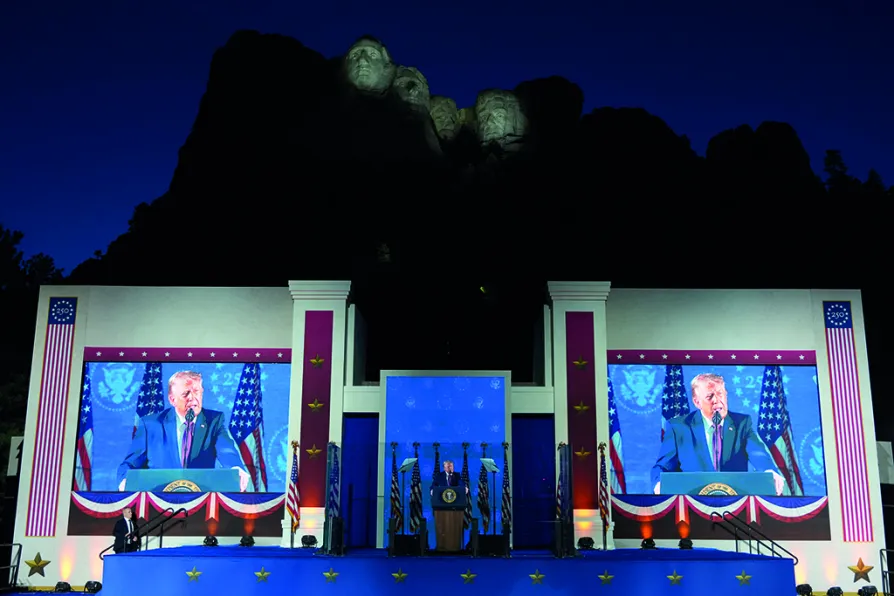 Donald Trump delivers an anti-communist rant at Mount Rushmore on Friday
Powerful agribusiness interests are trying to overturn efforts by the Lula government to protect the environment and indigenous peoples of the Amazon region, writes GABRIELA SA PESSOA
Trade unions and community groups are mobilising to push back against Trump’s racist raids after new revelations of spying on legal protesters. MARK GRUENBERG reports from the US state of Minnesota
The best wildfire service may begin with the community, argues KOMAL RAJ ARYAL
The evolution of the Scottish nationalist leadership into cheerleaders for Nato has led the party to betray its pledges on Palestine and social spending, writes COLL McCAIL
While riding the No 3 bus in Glasgow MATT KERR has ample time to dissect the moribund Scottish Labour decline into near oblivion and watch intriguing bus passenger dynamics





A SPECTRE is haunting Donald Trump — the spectre of communism. Over back-to-back holiday weekend speeches marking the country’s 250th anniversary, the president delivered what amounted to a two-part anti-communist sermon, casting Karl Marx, the Communist Party USA, and the country’s fast-growing democratic socialist movement as existential threats to the republic.
Speaking beneath the granite faces at Mount Rushmore on July 3, Trump told the crowd that “you can be loyal to Karl Marx or you can be loyal to America. You can be a communist or you can be a patriot. You cannot be both.” He went further, calling communism a “mortal threat” to the country and insisting it posed a greater danger than “World War I, World War II, Pearl Harbor, or even 9/11.”
Trump did not stop at Marx. He vowed the country would “vanquish communism quickly,” then pivoted straight into his domestic legislative wish list, urging Congress to “terminate the filibuster” and pass the “Save America Act,” a piece of voting rights suppression legislation, so that Republicans would “not lose an election for a hundred years.”
Moments later he made the target of his rhetoric that night more explicit: “The Communist Party is made up of illegal immigrants, criminals, and everybody that doesn’t want to work.” In one sentence, Trump folded communists, immigrants, and the unemployed into a single undifferentiated enemy — using the language of anti-communism to launder a hard-line immigration crackdown and a push to gut voting rules alike.
That the same speech included the line that “such doctrines can be given no quarter in a democracy because the first thing they do when they get into power is turn around and destroy it” reads as unintentional irony, given he heads an administration that has spent the past year working to restrict ballot access, jail protesters, and prosecute dissent while branding its critics un-American.
The First Amendment protects the right to organise as a communist, a socialist, or anything else Trump dislikes. Treating political belief itself as disloyalty is the same move McCarthyism made 70 years ago, and delivering such attacks on consecutive nights of a national holiday suggests Trump intends to escalate that playbook rather than let it fade.
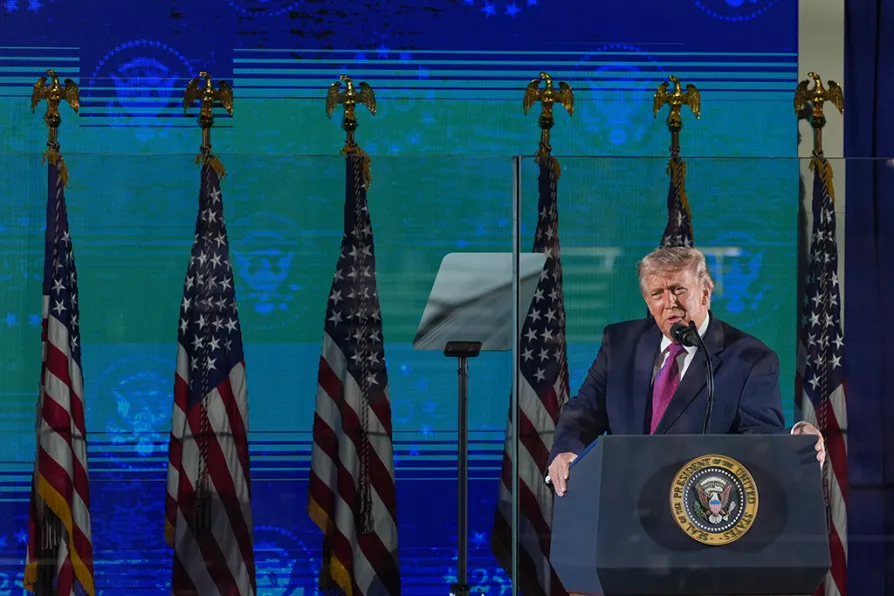
The following evening on the National Mall, after a two-hour weather delay, Trump kept up the theme, comparing the alleged threat to a disease: “It’s like a cancer—you’ve got to cut it out and you got to cut it out fast.” He added that communism “never worked, and it never will work,” and that it “is a loser, and it always will be.”
The tirades landed just weeks after Democratic Socialists of America (DSA)-backed candidates, running with the endorsement of New York City Mayor Zohran Mamdani, swept the June 23 primary victories in New York. A similar progressive string of wins happened in Colorado last week.
Mamdani, for his part, used his own July 4 remarks to needle Trump without naming him, saying that “those ideals upon which our nation was built — they are strong enough to endure any authoritarian regime, but only if we reach for them.” And as for DSA, it announced that membership surged passed 120,000 on Independence Day.
For the Communist Party USA, the sudden presidential attention was met with something between alarm and vindication. Co-chair Joe Sims, responding in a video statement, reacted to being singled out by the president with a wry: “Oh my goodness, we’re so back!”
Showing that communists disdain to conceal their views and aims, he described the CPUSA’s own programme as fighting for “a Bill of Rights Socialism that puts people and planet before profits.”
As People’s World reported in the days before the two speeches — which followed a similar set of remarks at the right-wing Faith and Freedom conference — these outbursts reflect midterm panic more than strength.
We traced it to a broader pattern: 450 years in combined federal prison sentences handed down in late June to eight defendants connected to a 2025 protest outside a Texas Ice facility, alongside Trump’s escalating description of DSA candidates as “hardcore, godless communists” and “animals.”
CPUSA co-chair Rossana Cambron put it plainly: “Maga is going to lose the midterms, and Trump’s getting desperate.”
Anti-communism has been a recurring motif for Trump throughout his first and second terms as president and while he was out of office. It usually comes out whenever left and labor-backed candidates are gaining steam in elections or when the GOP is facing a big loss at the ballot box.
It was among the central themes of the Republican National Convention in 2020, and anti-communist attacks were deployed to win Florida and smear US Senate candidate Jon Ossoff of Georgia in that year’s election.
Back in 2023, Trump said he’d “deport” communists if he was re-elected. And last fall, in 2025, when Mamdani was on the verge of winning the New York mayor’s race, the president accused the candidate of being a communist.
At the time, the CPUSA’s Sims, in an appearance on The Daily Show, said that “any effort to put forward an idea of a more equitable distribution of wealth is labelled socialist or communist in an effort to just dismiss it out of hand. It’s called red-baiting.”
He also asked Trump and other Republicans, “What are you guys afraid of? This idea that communists control everything is such a worn-out, tired, false, fake, counterfeit notion that’s been abandoned time and again by the American people.”
Trump’s rhetoric, while driven by domestic political concerns, must also be situated within a wider geopolitical anxiety about the position of US capitalism in the world economy, especially with the growing power and influence of China.
The new Cold War launched abroad is another side of the anti-communist, anti-socialist rhetoric and attacks at home.
Whether the short-term part of the strategy works in November is still to be seen, but Trump’s past efforts to stir up anti-communist panic among the US people have largely fallen flat, at least beyond the hardcore Maga voting base. That old strategy just doesn’t light the fires of fear like it did when Trump’s mentor, Roy Cohn, and Sen. Joe McCarthy deployed it back in the 1950s.
But an administration reaching for the ghost of Karl Marx, the 19th century’s most famous revolutionary, while moving simultaneously to rewrite voting law and stir up anti-immigrant sentiment, is not merely refighting the Cold War.
It is testing how far the definition of disloyalty can stretch and how much of the Bill of Rights can be folded it along the way.
With every anti-communist stump speech, it becomes more apparent that Trump and the elements of US capitalism who’ve aligned with Maga — just like ruling classes before them throughout history — are trembling.
This article appeared on People’s World.

Similar stories
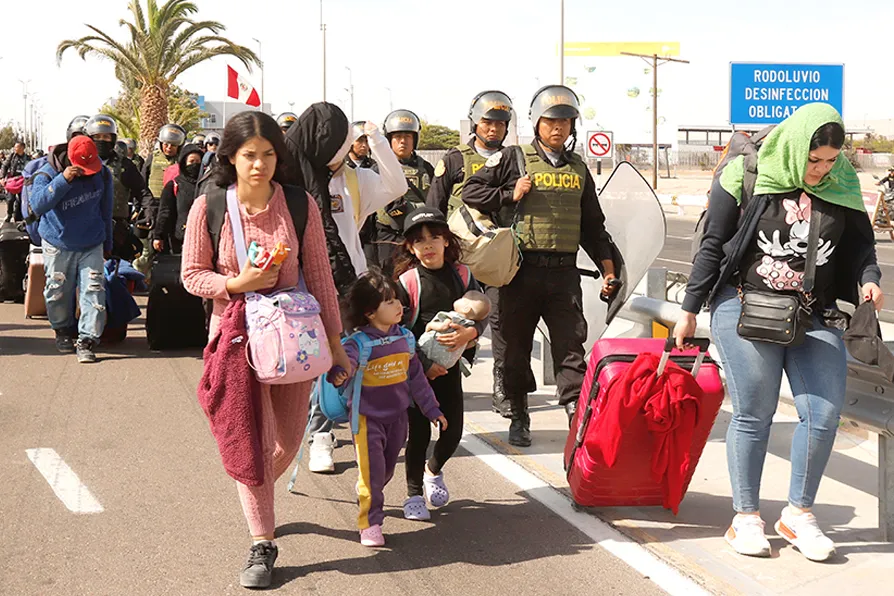
Far-right forces are rising across Latin America and the Caribbean, armed with a common agenda of anti-communism, the culture war, and neoliberal economics, writes VIJAY PRASHAD
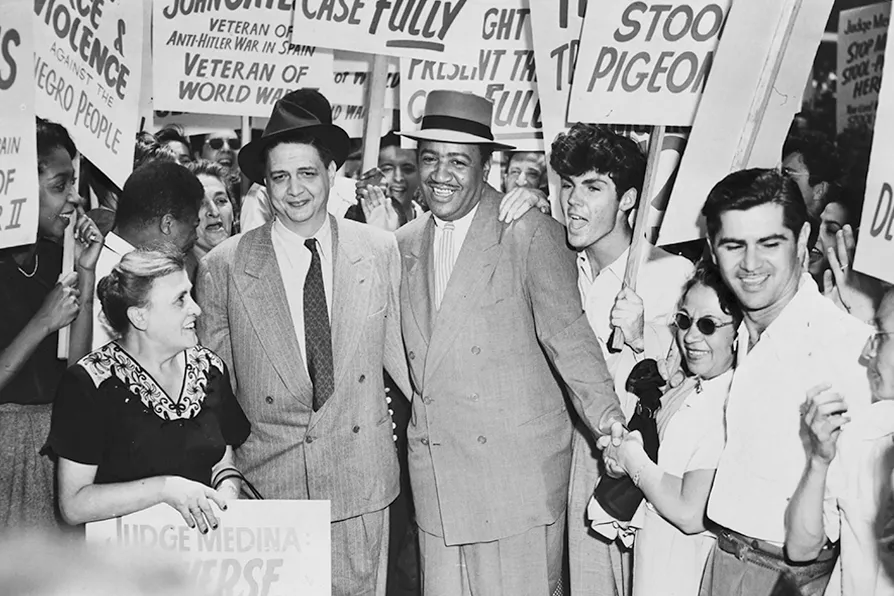
After Zohran Mamdani’s electoral win, BHABANI SHANKAR NAYAK points to the forgotten role of US communists in New York’s radical politics