

 Latest editorial





CAMBODIA and Thailand accused each other today of causing the renewed clashes along their disputed border as the death toll continues to climb.
In Cambodia, the Ministry of National Defence said at least nine civilians had been killed and around 20 injured since renewed fighting broke out on Sunday.
The Thai military said two more deaths had brought the death toll among its troops to three, with another 29 wounded.
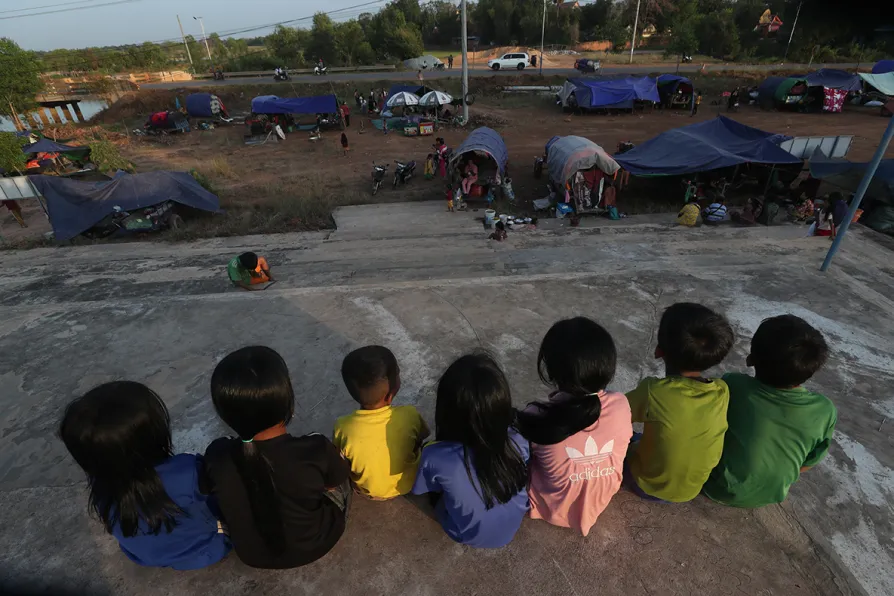
Tens of thousands of civilians have fled their homes amid the latest fighting.
The violence earlier in the year left at least 48 dead on both sides and caused the evacuation of more than 300,000 people before a ceasefire was brokered by Malaysian Prime Minister Anwar Ibrahim, but with US President Donald Trump claiming the credit.
Cambodian Senate President Hun Sen said in a social media post today that the military had refrained from firing on Thai forces the previous day, but soldiers were forced to begin shooting back overnight.
Targeting areas where Thai forces were advancing would allow the Cambodian military to “weaken and destroy enemy forces through counterattacks,” he said.
Hun Sen added: “Cambodia wants peace, but Cambodia is forced to fight back to defend its territory.”
Thailand’s army said Cambodian forces had fired artillery at a village in eastern Sa Kaeo province early today, adding that that Thai positions had come under attack with rockets and drones.
Each side blames the other for firing the first shots.
Thai Foreign Minister Sihasak Phuangketkeow said Cambodia was “not ready” for peace negotiations.
“They say they’re ready on one hand, but their actions on the ground are entirely in the opposite direction,” he said.
“Diplomacy will work when the situation provides the space for diplomacy. I’m sorry to say that right now we don’t have that space.”
Mr Sihasak insisted that the Cambodians needed to “show that they’re ready to stop what they’re doing – and then, of course, we can consider the prospect for diplomacy and negotiations.”
For more than a century, Thailand and Cambodia have contested sovereignty along their 508-mile border, first drawn in 1907 by the latter’s then colonial ruler France.
A 2013 ruling by the International Court of Justice upheld a 1962 judgement by the same body awarding part of the land around Preah Vihear temple, a Unesco world heritage site, to Cambodia and instructing Thailand to withdraw its personnel stationed in the area.
Thailand has refused to acknowledge the court’s jurisdiction on this issue.
