Latest editorial

JAMES NALTON explains how this historic Lancashire clash has become a fixture of the Championship season
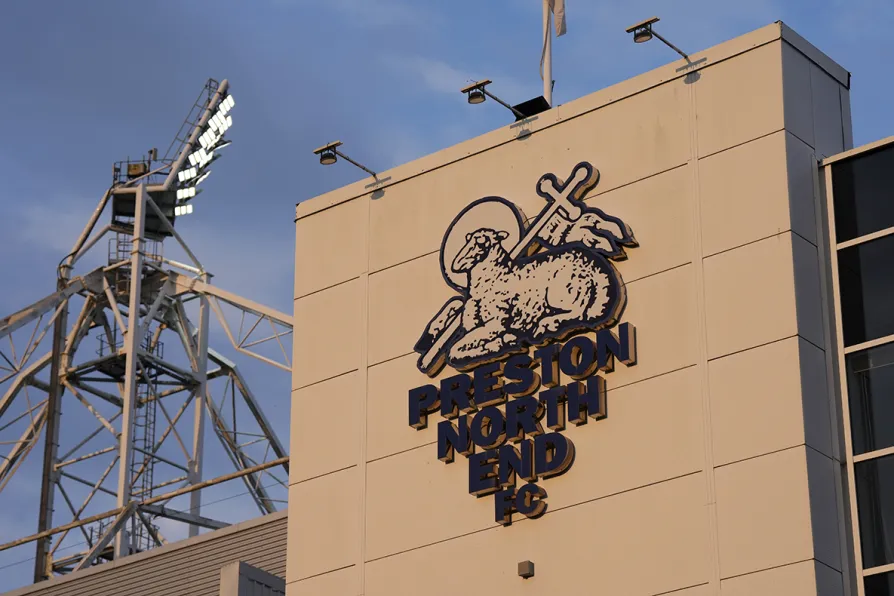 A general view of the ground ahead of the League Cup second round match at Deepdale, Preston, August 26, 2026





PRESTON North End and Blackburn Rovers meet this weekend in familiar surroundings in a familiar league. It’s one they would not have wanted to become so acquainted with, as the pair of languishing Lancashire clubs have become synonymous with the EFL Championship.
Preston, especially, are one of the stalwarts of the second tier. Of the teams to have spent the most time at this level in English football, the Lilywhites are one of the few not to have experienced top-flight football in the Premier League era.
The only other team in the top 10 for total time spent in the second tier to not have experienced the Premier League is Bristol City.
Preston are also the only one of the four teams with 19 or more seasons in the second tier since it was rebranded to the EFL Championship not to have been promoted. The other three, Cardiff City, Derby County, and QPR, have all played top-division football at some point since it was rebranded to the Premier League.
Blackburn, meanwhile, are former Premier League champions, and one of only seven clubs to lift the title in this era of modern football, but have since become rooted in the Championship. They did leave it once, in 2017, but that was due to a relegation to League One rather than a promotion.
The Premier League and Championship rebrands are used here as handy markers to highlight these teams’ recent fortunes, or lack of fortune, not to erase their rich history.
This history is important not only to the clubs themselves, but to English football and the sport as a whole.
There is a strong argument to be made for Lancashire to be considered the original home of professional football as we know it today.
Its necessary adoption of professionalism in the industrial north, given that workers needed to be compensated for the increased amount of time taken off work to represent their football teams, was the beginning of professional leagues as we know them across the world today.
Preston North End and Blackburn Rovers were key figures in this development, and both were among the 12 clubs that contested the first-ever Football League season in 1988-89.
They were part of a line of teams across the middle of Lancashire that competed in that inaugural season, along with Accrington and Burnley. With Bolton to the south and Everton to the south-west (when Liverpool was still part of Lancashire), the county boasted half of the teams in the newly created league that would become the blueprint for professional football across the world, association or otherwise.
Three of the longest continuously used professional football stadiums in the world are Burnley’s Turf Moor and Blackburn’s Ewood Park, with Preston’s Deepdale claiming the title of the oldest in continuous use at the professional level.
This is contested by another area that could claim such football heritage, Sheffield, and particularly United’s Bramall Lane ground, but it’s safe to say that these Lancashire clubs and their old stadiums are a surviving link between the first moments of professional football and the modern game.
Preston won the league undefeated in that first season. The only other team to have achieved this feat since are Arsenal in 2003-4. Preston also won the FA Cup in 1889, meaning they are the only team in England to have won the domestic double unbeaten.
Association football is ingrained in this part of the world, but the two clubs who meet this weekend have become ingrained in the Championship while they watch others pass them by.
The Premier League has featured numerous forward-thinking sides that have risen through the divisions over the years, epitomised by teams such as Fulham, Crystal Palace, Brighton, Bournemouth, and Brentford.
Why have the Lancashire originals been unable to match this southern progress?
Part of it is luck. Some of it is bad judgement. Who ends up as your club’s owner is a lottery, and what those owners then do, even more so.
The successful clubs have eliminated some of the financial risks prevalent at this level by fine-tuning their scouting and recruitment departments.
The use of data to find players with potential from around the world not only improves their teams on a budget, but can also improve their finances if these players are then sold for relatively large sums to the Premier League.
The key is then reinvesting this money into the squad to continue the cycle.
With the sales of Adam Wharton and Adam Armstrong, Blackburn have made two of the biggest transfers from the Championship to the Premier League in recent years (not including teams selling players after just being relegated from the top flight), but they have struggled to make that count. Preston have been unable to get into such a cycle in the first place.
In their current squads, Blackburn have high hopes for 19-year-old Blackpool-born Northern Ireland international centre-back Tom Atcheson, while Preston spent a club record fee of around £6 million for the permanent transfer of 22-year-old Tottenham midfielder Alfie Devine, who was previously on loan at the club.
Though both teams would likely name others as their biggest rivals — Blackpool in Preston’s case, and Burnley in Blackburn’s — this is a historic Lancashire fixture that has become a fixture of the Championship season.
Going into this weekend’s game, Preston sit bottom of the league as the only team still without a point, and Blackburn fans are worried their team could be dragged into a relegation scrap despite an impressive win against Middlesbrough.
The Championship is an unpredictable league, though, and there can be a fine line between hovering around the mid to low end of the table and pushing for a shot at the Premier League.
Just ask Hull City, who started last season with just two wins in eight games but ended up getting promoted via the playoffs.
Even at this early stage of the season, this is already a big game, especially for Preston and their manager Paul Heckingbottom. The goal for these two teams should be to escape the EFL Championship via promotion to the Premier League, but there is a danger they could escape it in an unwanted fashion through relegation.
Though these Lancashire clubs have become overly familiar with the second tier, this season could end up being about ensuring they remain so.