

 Latest editorial
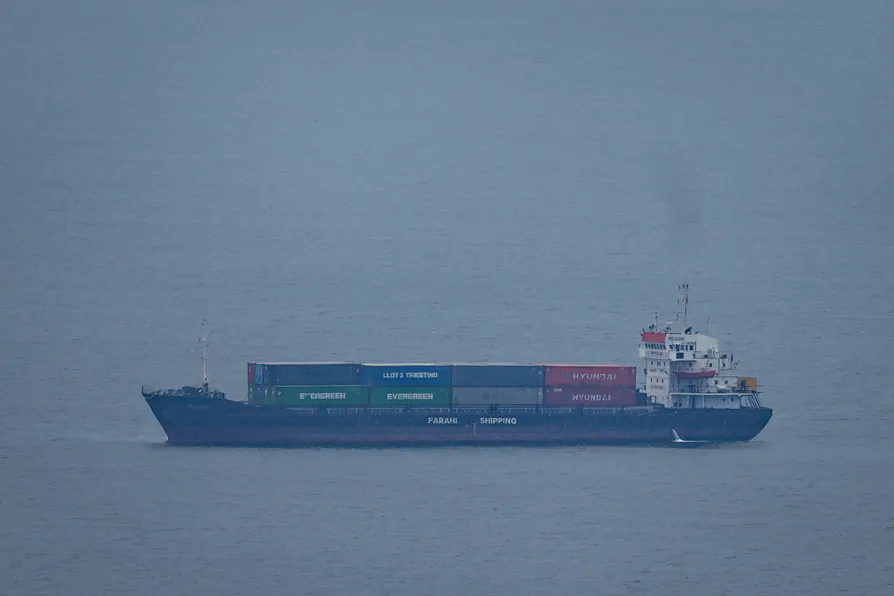 A cargo ship sails in the Persian Gulf towards Dubai port as seen from Ajman, United Arab Emirates, April 14, 2026





PAKISTAN led efforts today to get a second round of peace talks off the ground between the United States and Iran.
Negotiations between representatives of Washington and Tehran broke down on Sunday and US President Donald Trump has since declared a blockade of Iranian ports and the Strait of Hormuz.
Though the ceasefire declared last week has appeared to hold, the confrontation over the strait risks reigniting hostilities and deepening the global economic fallout from the conflict.
Two Pakistani sources insisted that the marathon 21-hour talks to end the illegal and unprovoked war on Iran begun by the US and Israel on February 28 were part of an ongoing diplomatic process, rather than a one-off effort.
Two US sources said on Monday that discussions were still under way about opening a new round of talks.
They said that while the venue, timing and composition of the delegations had not been decided, the talks could start as soon as Thursday.
The US military said on Monday that its blockade applied to vessels going to and from Iranian ports.
Today, China condemned the illegal US action, with Foreign Ministry spokesman Guo Jiakun branding it a “dangerous and irresponsible act” that would further raise tensions in the region.
Mr Guo warned that, along with the blockade, the expanded US military deployment in the region threatened to undermine an “already fragile ceasefire.”
A sanctioned Chinese vessel did manage to pass through the strait today, but most commercial vessels have avoided the waterway, even though the Iranian have insisted that, for a fee, the route is open to all nations. The only exceptions, they said, were the US, Israel and their allies.
Meanwhile, Chinese President Xi Jinping put forward a four-point proposal today to promote peace and stability in the region.
He called for adherence to the principle of peaceful co-existence, stressing the need to build a “common, comprehensive, co-operative and sustainable” security architecture for the Middle East and the Persian Gulf.
Mr Xi also urged conformity with the principle of national sovereignty and the upholding of international rule of law to prevent the world from “falling back into the law of the jungle.”
He said development and security should be co-ordinated. All parties should work together to create a favourable environment for the development of countries in the region.
The Chinese president added that Beijing is willing to share the opportunities of Chinese modernisation with Gulf countries, fostering a solid foundation for regional development and security.
