

 Latest editorial

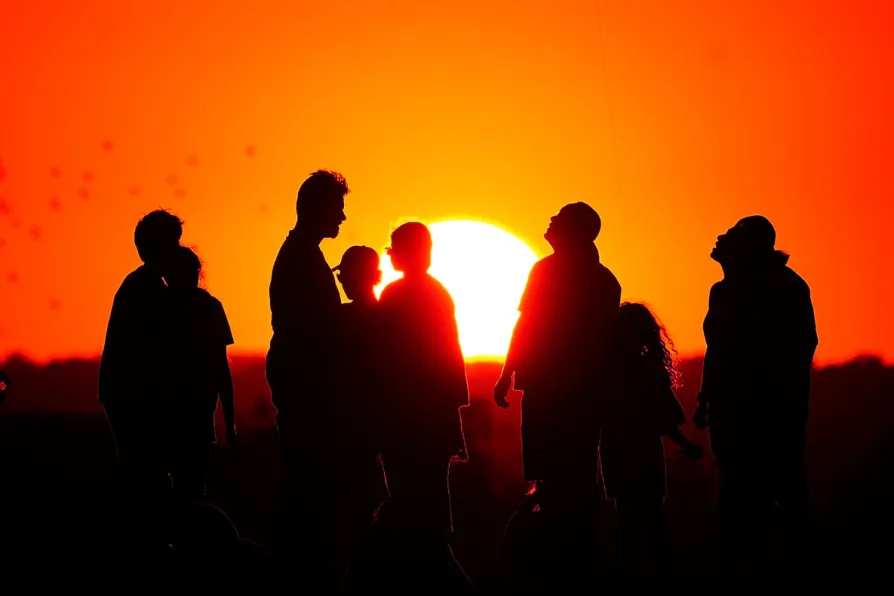 A crowd of people watching the setting sun from a hill in Ealing, west London






MINISTERS blocked the publication of an intelligence report warning that climate change could cause “global competition for food” by the 2030s and trigger nuclear war in Asia.
The study, reportedly held back by Number 10 last autumn for being too negative, also highlights the potential for a massive increase in climate refugees.
A freedom of information request forced the release of the report put together in part by the joint intelligence committee, the body overseeing MI5 and MI6.
But the government only published an abridged version of the study, describing a “realistic possibility” that the decline of forests and glacier-fed rivers would lead to “global competition for food” beginning in the 2030s.
The unabridged version of the study goes further, according to The Times.
It describes a “reasonable worst-case scenario” in which several ecosystems could pass a tipping point as soon as 2030 after which it would be impossible to stop environmental degradation. This includes forests in Canada and Russia, as well as glaciers in the Himalayas that feed rivers on which two billion people depend.
Melting glaciers in the Asian mountain range would “almost certainly escalate tensions” between China, India and Pakistan, intelligence chiefs warned, which could potentially lead to nuclear conflict.
Britain would struggle to feed itself unless it made big investments into supply chains, the report said.
Additionally, the severe levels of degradation of rainforests in the Congo Basin, as well as the drying up of rivers fed by the Himalayas, could drive the number of people forced to flee.
This would lead to “more polarised and populist politics in the UK” and “additional pressure on already strained national infrastructure,” due to an increase in climate refugees.
Eco-terrorism in Britain could flourish as a result of collapsing ecosystems and Nato could be drawn into war over potentially unaffected breadbaskets in Ukraine and Russia.
A Department for Environment, Food and Rural Affairs spokesperson said: “The findings of this report will inform the action we take to prepare for the future.
“The UK has a resilient food system and remains one of the most food-secure nations in the world, producing around 65 per cent of all the food we eat.
“We have access through international trade to food products that cannot be produced here, which supplements domestic production and ensures that any disruption from risks such as adverse weather or disease do not affect the UK’s overall security of supply.”
