
Washington’s inability to subjugate Iran is an example of how it is trying to preserve a regional order that no longer exists, argues RAMZY BAROUD


Militarisation drive threatens Lithuanian nuclear arms ban
The Baltic state is set to reverse its constitutional prohibition on nuclear weapons and foreign bases as part of accelerated Nato war preparations, warns TOM UNTERRAINER
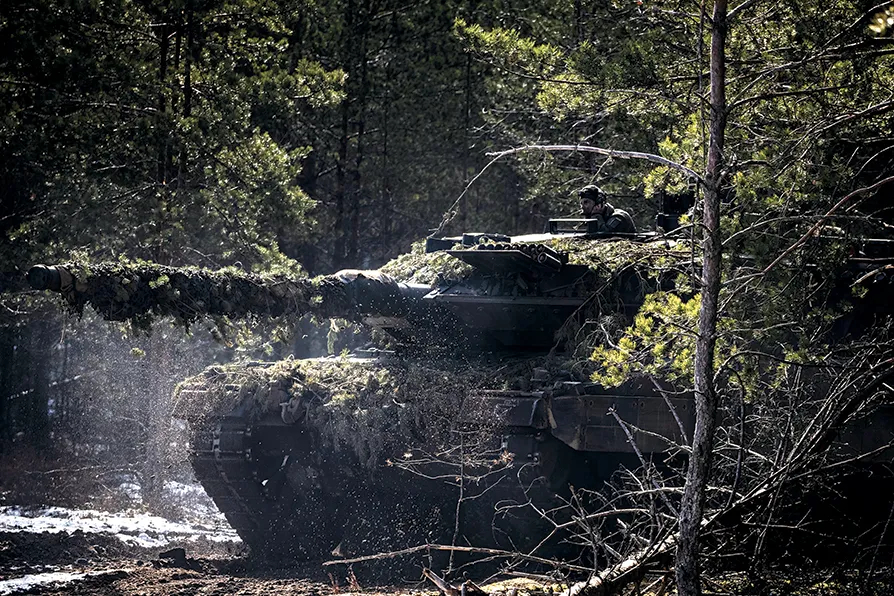
 ANOTHER ‘DRANG NACH OSTEN’: A German army Leopard tank of Germany's 45th Armoured Brigade and Nato’s enhanced Forward Presence Battlegroup Lithuania, its main base is 20Km from the Belarus border

US financial instability is exposing the limits of a dollar-dominated global economy — and giving the Global South a historic chance to build an alternative, says MURAD QURESHI
DOUG NICHOLLS says the parasitic finance markets must be challenged or another British government could be toppled
The late country singer’s Imagination Library has put hundreds of millions of books into children’s hands. We should build on that legacy by defending the libraries at the heart of our communities, says BRENDA AITCHISON
Deprivation is a fundamental factor in criminal behaviour that must be addressed but, KENNY MacASKILL argues, there needs to a major rethink in sentencing to tackle overcrowding
MML director MEIRIAN JUMP outlines the recently refreshed library’s busy autumn schedule that ranges from book sales, archival exploration, community work with online education and the ever popular site tours
TONY BURKE surveys the shifting political landscape and the challenges Labour needs to address if it is to prevail in the 2028 federal elections





THE Lithuanian government is set to abandon a decades-long post-Soviet prohibition on hosting foreign military bases and nuclear weapons. This move shows the close connections between European rearmament and growing nuclear risks. It also illustrates the potentially deadly consequences of mistaking military belligerence for security.
Article 137 of Lithuania’s 1992 constitution currently states that there “may not be any weapons of mass destruction and foreign military bases on the territory” of the country. Government ministers and members of the Seimas – Lithuania’s parliament – now claim that Article 137 is out of date and have introduced legislation to delete it.
There has been one parliamentary vote so far and two further votes will follow before the end of 2026. In each case, a “super majority” is required for legislation to proceed. The first vote in July this year – with 89 votes in favour, 11 votes in opposition – indicates that the “super majority” will be achieved.
There are two aspects to the Lithuanian government’s argument for scrapping Article 137. First, that the article was only adopted to ensure robust “sovereignty” with the permanent expulsion of Russian forces – nuclear and otherwise – and that such “sovereignty” is now best served by allowing permanent foreign – non-Russian – military bases. Second, that removing the prohibition on nuclear weapons and opening the prospect of a further eastward proliferation of Nato nuclear capabilities will enhance national security.
Lithuania’s move follows Belarus’s 2022 constitutional referendum to remove nuclear-free status and Finland’s more recent parliamentary decision to do the same. On the day of the Belarus referendum, President Alexander Lukashenko referred directly to the prospect of Nato nuclear deployment in Poland and Lithuania. He warned that: “I will turn to Putin to return the nuclear weapons that I gave away without any conditions,” in the event of such deployments. He did not pluck this risk from thin air. Well in advance of the announcement of the Belarus referendum, senior US and Polish officials openly speculated on a possible extension of Nato “sharing” arrangements.
Finland’s more recent parliamentary decision to renounce nuclear-free status followed quickly on the heels of its membership of Nato. In Finland, the decision to join Nato met with strong opposition from the peace movement, traditional left parties in parliament either backed or equivocated over the move, claiming that Nato membership could be merely “defensive.” How wrong they were.
Motivations
The argument proposed by those seeking change in Lithuania is that the original article in the constitution was designed for the express purpose of expelling all Russian forces from Lithuanian territory.
If this was indeed the motivation, why wait until 2026 to amend Article 137? Why wait three decades or more after the last Russian troops left the territory? Why cancel Lithuania’s nuclear-free status in 2026 when it has happily maintained membership of the nuclear-armed Nato alliance since 2004: for some 22 years?
It is undoubtedly the case that Russia’s invasion of Ukraine and the mercilessly grinding war that resulted has changed a great deal. But this war started four years ago. If, as is claimed, nuclear-free status inhibits “security,” why wait four years for a constitutional change?
Developments in Lithuania cannot be separated from the well-chronicled overall expansion of the nuclear boot-print in Europe. They follow French President Emmanuel Macron’s offer to base his country’s air-launched nuclear capabilities across Europe under Nato auspices and in addition to existing and future US nuclear deployments.
Speaking at the Nato summit in Turkey this year, Lithuania’s Defence Minister Robertas Kaunas told reporters that the country “certainly trusts the United States” to ensure “security.” He explained that: “France, the United States, and other friendly countries are all strengthening their deterrence capabilities. It is welcome that France sees the need to increase deterrence in Europe – this means greater security for Lithuania as well … We have security guarantees, and that is probably the most important thing. Whether those guarantees are under one flag or another likely makes little difference. The key point is that they exist.”
If, as the Lithuanian defence minister contends, the United States can be trusted in the context of the nuclear-armed Nato alliance – a claim that has been widely contested in the context of the second Trump administration – and if moves by France and other Nato member states to enhance their nuclear capabilities means “greater security for Lithuania as well,” then why the need to remove Article 137?
There is a need because Nato doctrine – which rests on the threat of nuclear use – claims that collective defence is best served by expanding deployments, increased Nato membership and an enhanced nuclear boot print.
European rearmament
The fate of Article 137 exemplifies the indivisibility of the question of European rearmament and drastically increased nuclear risks.
Take one example: German armed forces were last in Lithuania from June 1941 to January 1945, following the Nazi invasion and occupation. During this occupation, up to 95-97 per cent of Lithuania’s 250,000 Jewish people were slaughtered in the Holocaust. In 2027, 5,000 German troops – commanded under a very different government – are to be permanently based in Lithuania, a few miles from the border with Belarus. This deployment will be Germany’s first permanent overseas presence since 1955. Germany and their Lithuanian hosts claim that Panzerbrigade 45 will increase security. The deadly “logic” at the heart of European rearmament is that increased belligerence, heightened military threat, massive arms spending and nuclear proliferation are reasonable security measures.
Europe needs security arrangements based on diplomacy and the recognition that security cannot be achieved at the expense of others. That is, common security with a European nuclear-free zone at its heart. The alternative now being pursued only increases the risks.
At the very end of the preface to his most recent book, 85 Seconds to Midnight, Carlo Rovelli explains that: “My goal is to help avoid what seems to me to be the involuntary but hardly avoidable destination point of the current policy of the governments we have elected: nuclear war.”
Rovelli’s goal should be the collective goal of European peace, anti-war and disarmament groups.
Tom Unterrainer is chair of the Campaign for Nuclear Disarmament. He co-edits The Spokesman, journal of the Bertrand Russell Peace Foundation. A longer analysis of this issue and related matters can be found at endinfo.net.

Similar stories

On Hiroshima Day, Campaign for Nuclear Disarmament general secretary SOPHIE BOLT explains why the danger of nuclear conflict is growing daily
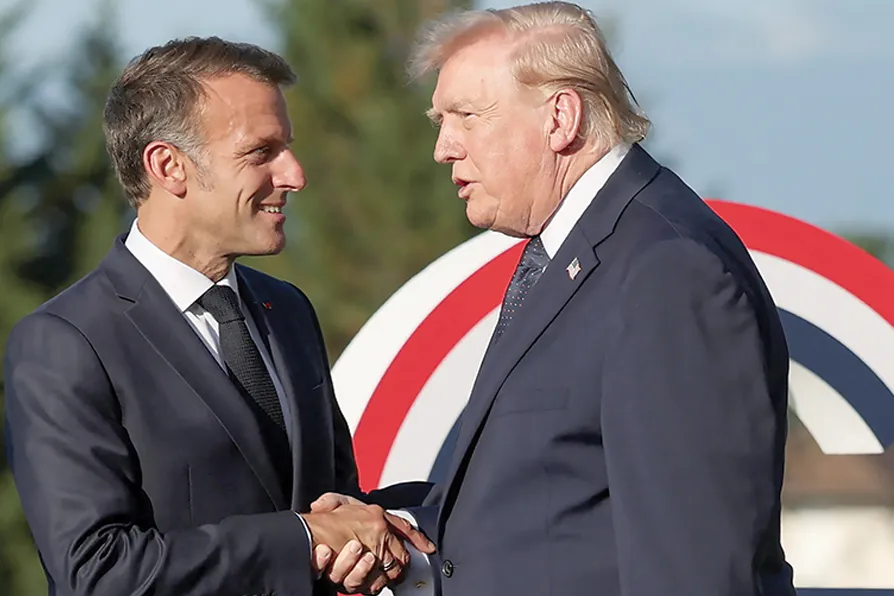
While millions face poverty and public services are squeezed, France is committing billions to defence spending and weapons production, in a dangerous shift towards permanent preparation for war, says CONOR BOLLINS

JENNIE WALSH reviews an urgent political intervention by physicist Carlo Rovelli at a time of escalating militarisation and war
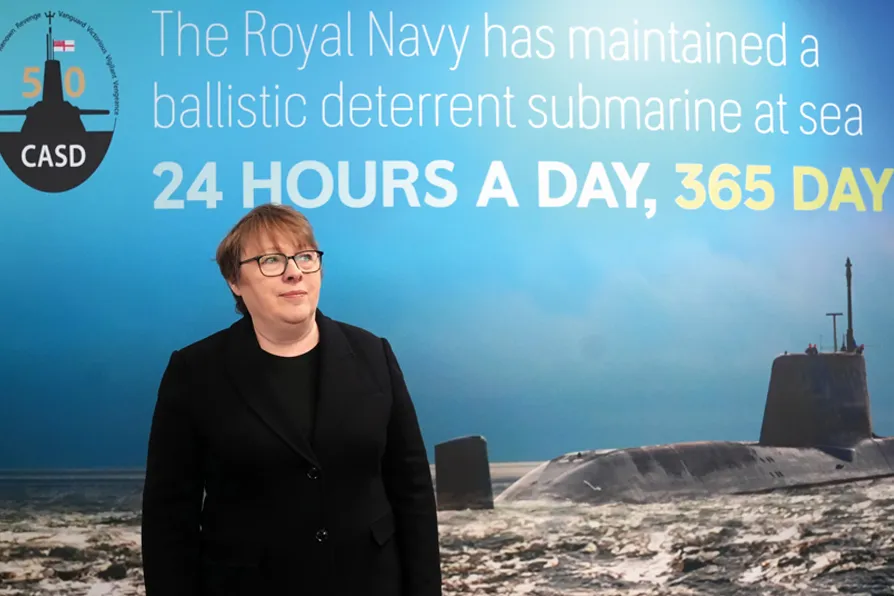
Expanding Britain’s nuclear capability increases the risk of nuclear confrontation. It does not keep us safe – it makes us a target, argues CAROL TURNER