
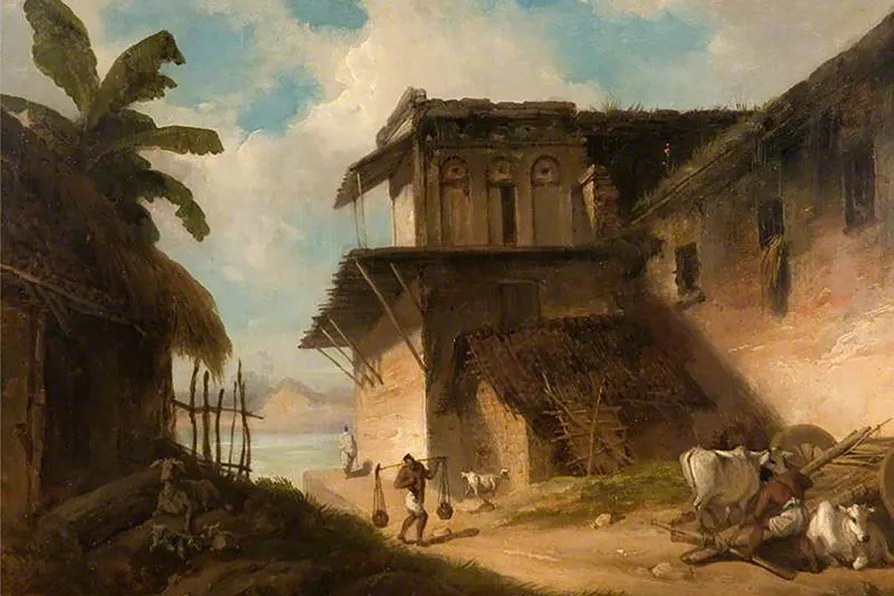
APURBA CHATTERJEE explains how British artists in India used the “picturesque” to reshape colonial landscapes and celebrate imperial power


Making, not consuming
ALAN MCGUIRE relishes a celebration of handmade craftsmanship in the UK, and hears a quiet warning

 THE SATISFACTIONS OF LABOUR: Dry stone wall building in South Wales [Pic: TR001/CC]
PAUL DONOVAN welcomes a revival of Reginald Rose’s classic play that reminds us of the fundamental need for trials with juries
SIMON PARSONS applauds an exceptional performance of Wesker’s little-known play, by the same actor for whom it was written 45 years ago
ANDY HEDGECOCK and MARIA DUARTE review Late Fame, The Death of Robin Hood, Leviticus, and Gail Daughtry and the Celebrity Sex Pass
ANGUS REID recommends a uniquely accomplished documentary collage that contemplates our relation to the natural world
GORDON PARSONS enjoys Kant’s ‘mind-boggling’ theory of human reality: that we create the reality we experience





Craftland
James Fox, Bodley Head, £25
IN Craftland, art historian James Fox travels across Britain in search of the country’s surviving traditional crafts from blacksmithing and chair leg whittling to bell-founding and dry-stone walling. It could easily have been a nostalgic meander through “heritage Britain,” but through the eyes of an art historian it becomes a journey of observation and analysis. His eye for detail enriches every encounter: the rhythm of hammer on hot metal, the patience of walling stone upon stone, the relationship between maker, tool, and material are all beautifully crafted together in a narrative not often told.
However, alongside the picturesque storytelling lies something urgent. Fox never preaches, but the reality he encounters speaks volumes about the economic forces reshaping Britain. When I refer to economics here, I don’t mean the type they teach on PPE courses in universities, but the economy that we set our alarms for each night and we wake up for in the morning.
Many of the craftspeople he meets are the last of their kind. Skills that were once crucial to local identity now live on because a handful of individuals. Many survive only in the form of our surnames, and many unaware of why.
Britain often boasts about its heritage, but Craftland quietly asks whether we have done enough to support the workers who actually built and sustain that heritage. For many they have been regulated to museum exhibitions. So far, we have failed to look after the people who practice these crafts and traditions. Fox’s message is clear: we risk losing not only our history, but also the heritage that once defined towns and villages across the country.
Some readers will also recognise another running theme through Fox’s travels: the alienation of modern labour. For those whose working lives involve screens, call centres or zero-hours service work, Fox’s description of purposeful labour feels painful. Labour itself is not meaningful (workers know this) but the act of making something skilfully can be. Crafts (old and new) don’t need to be our professions but they can offer a more fulfilling and nourishing alternative to a culture where consumption is a hobby, as can the products they produce.
In an age of fast fashion and mass-produced plastics that poison the oceans and strangle marine life, the work of these craftspeople comes as a form of resistance. A glow of hope among the streets littered with Amazon boxes this Christmas. Their objects are built to last, rooted in a local place and often made with renewable materials. This is the opposite to the cheap throw away items pumped out by the global capitalist system that pays poverty wages in dangerous conditions.
At times, Craftland is limited by its national focus. Fox’s position as an art historian gives the book depth, but I wished for a deeper analysis of the political and international forces forcing the decline of British craft. The loss of these trades did not occur in isolation: it is inseparable from decades of offshoring, deskilling, and the political acceptance of exploitative labour abroad. Of course that doesn’t mean preserving the economy of the 19th century but later chapters around ship building and industry do leave some political questions unanswered. A more internationalist perspective would have given the book a fuller political picture.
This, however, is a minor criticism of what is otherwise an absorbing work. Fox sets out to travel, to listen and to record and he succeeds. Craftland offers not just a catalogue of endangered skills, but an invitation to think more deeply about the world that made them endangered in the first place. It leaves readers with the questions that matter: who benefits from the disappearance of skilled labour? And what might a more sustainable society look like in which making, rather than consuming, is central to our common life?
In telling the stories of Britain’s last craftspeople, Fox brings us a much needed conversation. He makes it clear he isn’t being nostalgic, but a bolder political analysis might have given it more punch.
