


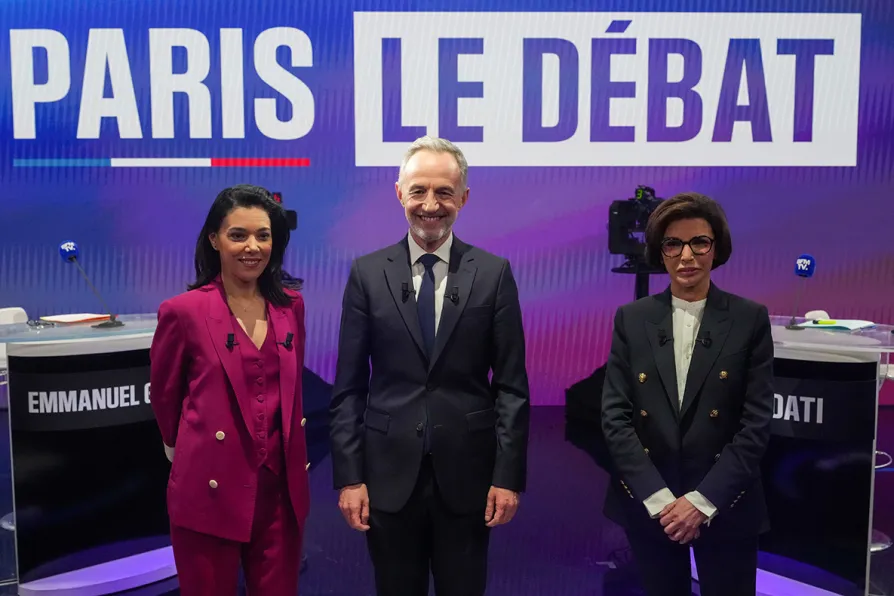
 From left: candidate of La France Insoumise, Sophia Chikirou, French socialist candidate Emmanuel Gregoire, and Conservative candidate, Rachida Dati, pose prior to a TV debate between the two rounds of the Paris municipal elections, March 18, 2026





FRANCE heads back to the polls tomorrow for the run-offs in the country’s municipal elections.
Since last Sunday’s first round, many left candidates have been attempting to forge electoral alliances to ensure that the far right is not able to capitalise on its increased vote.
But much of this has been carried out at a local level. Following the first round Socialist Party leader Olivier Faure ruled out any “national agreement” with the left-wing France Unbowed (LFI) party led by Jean-Luc Melenchon.
The already tense relationship between the two parties came to a head when Mr Faure accused Mr Melenchon of making “intolerable” anti-semitic remarks earlier this month following comments on the pronunciation of Epstein’s name.
The LFI saw a sharp increase in its vote last Sunday and look certain to make gains in its own right or to provide enough support for other left candidates to win in close contests.
But Socialist Party, LFI, the French Communist Party (PCF) and the Green Party have all worked to strike deals that could make the difference in tomorrow’s poll.
In several major cities, left-wing candidates have calculated that refusing an alliance with LFI, such as in Lyon, could cost them victory in the second round.
In Lyon, France’s third-largest city, where Green mayor Gregory Doucet held only a narrow lead over his main right-wing rival in the first round, he has since allied with LFI candidate Anais Belouassa-Cherifi.
In the western city of Nantes, Socialist mayor Johanna Rolland struck a deal with the LFI’s William Aucant.
Of around 60 French cities with more than 80,000 inhabitants, 16 now have alliances that include the LFI.
Fabien Roussel, the national secretary of the PCF, was re-elected as mayor of Saint-Amand-les-Eaux (Nord) last week with 51 per cent of the first round votes.
He said this week that he welcomed the 250 communist mayors across France who were also elected in the first round.
