


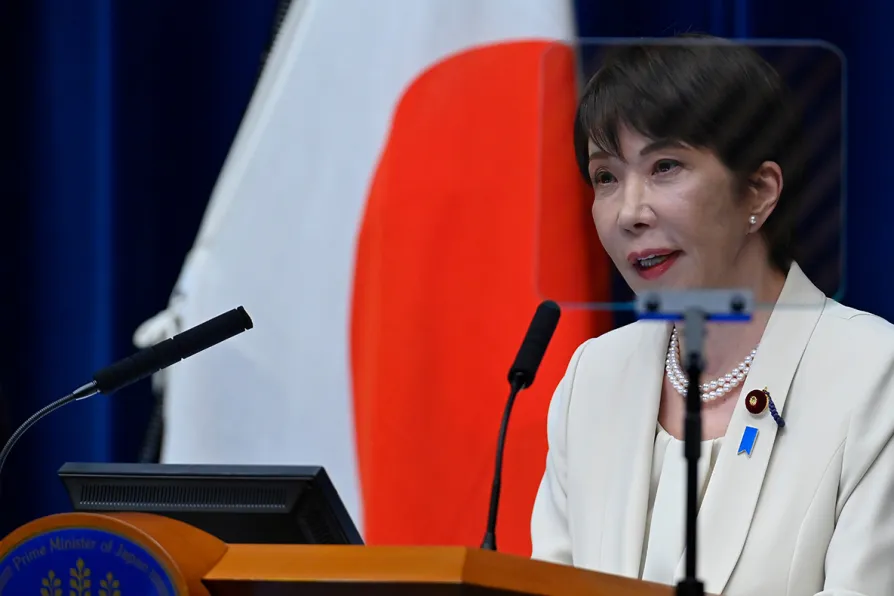
 Japan's Prime Minister Sanae Takaichi speaks during a news conference at the prime minister's office in Tokyo, July 27, 2026






TOKYO’S growing involvement in South China Sea affairs is driven more by Washington’s “Indo-Pacific” strategy than by Japan’s own security interests, according to leading experts.
Ukeru Magosaki, director of the East Asian Community Institute in Tokyo and a former foreign ministry official, warned that Japan’s expanding militarism is already raising tensions in the region, and called on Tokyo to uphold its pacifist principles by pursuing diplomacy rather than military moves.
Mr Magosaki told China Daily that Japan’s growing security cooperation with the Philippines is likewise not based on Tokyo’s own independent strategic judgment, but serves the overall United States strategic deployment in the Asia-Pacific.
He said the US regards China as its principal strategic competitor and is seeking to build alliances in diplomacy, security and other fronts to counter China. Japan’s actions involving the South China Sea, he said, are part of that broader strategy.
In his view, the US is seeking to establish a strategic framework involving Japan, the Philippines and Australia to counter China.
Japan’s closer co-operation with the Philippines is an integral part of that strategy, with the Philippines expected to serve as a key strategic foothold in the US regional strategy, Mr Magosaki said.
He warned: “Friendly relations with China are indispensable to stability and peace in East Asia. Any attempt to deliberately stir up confrontation with China could make the regional situation more tense and unstable.”
Hiroshi Shiratori, a professor of political science at Hosei University in Tokyo, told China Daily that as a country outside the South China Sea, Japan could face both constitutional and policy challenges if it continues to deepen its military involvement in South China Sea affairs.
Professor Shiratori said the moves deepens regional instability while further expanding the overseas role of Japan’s Self-Defence Forces.
He said that Japan should face up to its history of aggression in the Asia-Pacific region and uphold the pacifist principles established through deep war reflection.

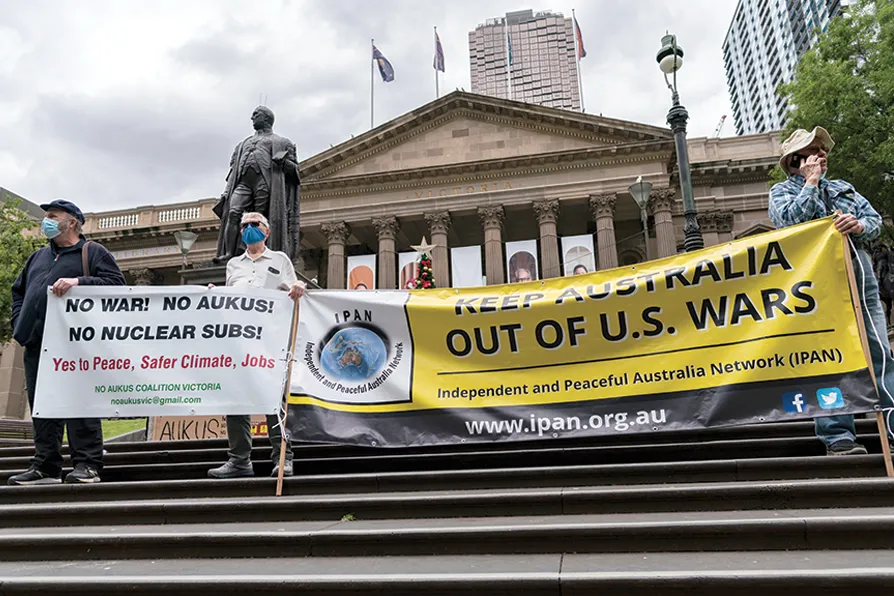
MIKE MARTIN surveys the regional opposition to US attempts to force the region into a military confrontation with China

Friedrich Merz’s call for a new Plaza Accord ignores how Washington’s 1985 currency ambush destroyed Japan without fixing US deficits — China, a sovereign socialist state with 1.4 billion consumers, cannot be bullied the same way, writes CARLOS MARTINEZ
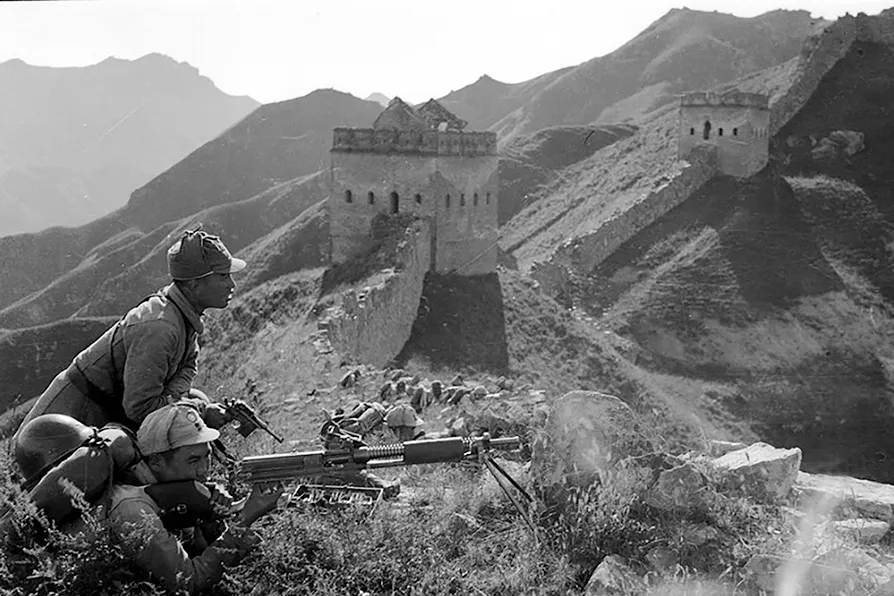
In Part 4 of her look at the Chinese revolution JENNY CLEGG addresses the relationship between the Peasant Movement and the National Movement
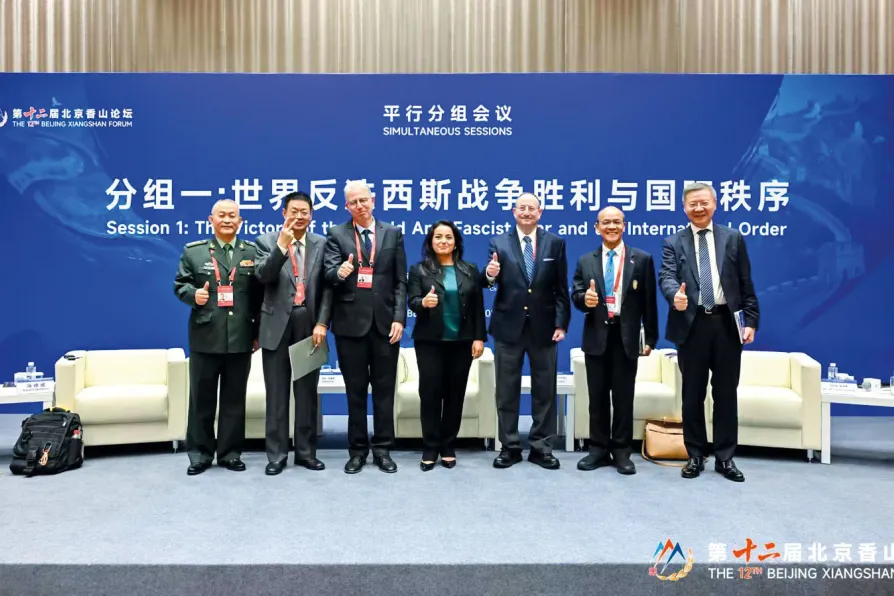
In a speech to the 12th Xiangshan Forum in Beijing, SEVIM DAGDELEN warns of a growing historical revisionism to whitewash Germany and Japan’s role in WWII as part of a return to a cold war strategy from the West — but multipolarity will win out