
RITA DI SANTO contemplates two films about journalism that opened this year’s festival


Jack London at 150
JENNY FARRELL reminds us that the US novelist, famed for pulp fiction and nature stories, was, by virtue of life experience, a committed revolutionary socialist
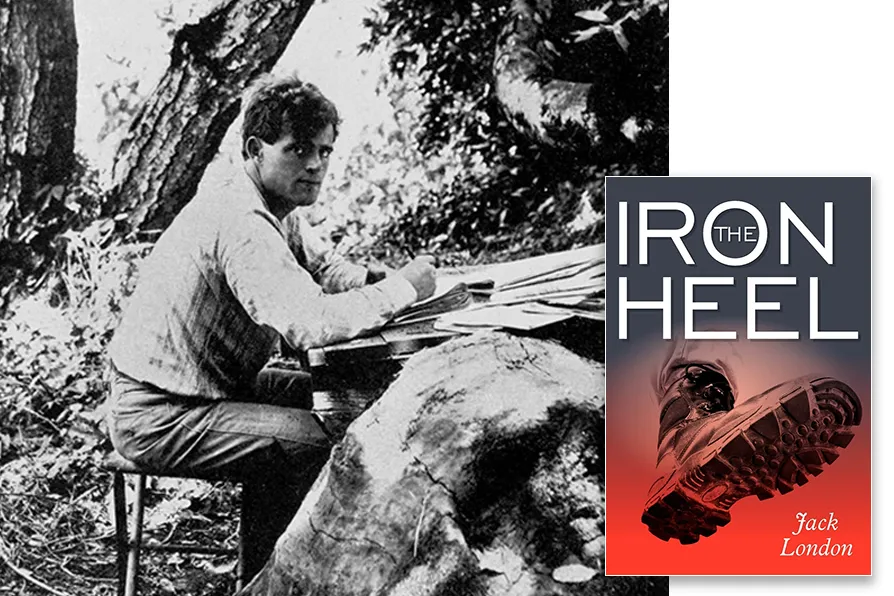
 Jack London, 1905 [Pic: Public Domain]

GEOFF BOTTOMS applauds a world-class production King Lear that pits late feudalism against a rising bourgeoisie
MARY CONWAY keeps up with the sheer pace of a drama about the terrible gap between sanitised reporting and real-life turmoil of race and gender
New releases from Brian Fallon, Antony Szmierek and Hollow Hand
APURBA CHATTERJEE explains how British artists in India used the “picturesque” to reshape colonial landscapes and celebrate imperial power
PAUL DONOVAN welcomes a revival of Reginald Rose’s classic play that reminds us of the fundamental need for trials with juries





JACK LONDON’s journey as a socialist and a writer is a story of dramatic ascent and tragic decline.
His socialism grew from lived experience: childhood poverty, hard labour in factories, and first-hand exposure to capitalism’s exploitative logic, crystallised in 1894 during his time as a hobo.
These experiences are recorded in The Road (1907) when travelling with Kelly’s Army and enduring imprisonment, and London ceased to see himself as an isolated victim. In boxcars and camps he first encountered socialism, Marx and Engels. The march itself, made in 1894, the second year of the great economic Depression, is notable as the first protest march on Washington, DC, and the paradigm for many further 20th century protests.
For London, reading the Communist Manifesto proved revelatory, yielding the three pillars of his lifelong belief: the reality of class struggle, the opposition between private ownership and the people’s interests, and an unshakeable confidence in the inevitability of socialism.
This fusion of experience and conviction launched London’s most powerful period as an activist and writer. A committed member of the Socialist Labour Party and later the Socialist Party of America, as well as a gifted popular lecturer, he turned literature into a weapon. His immersive journalism, The People of the Abyss (1903), offered a searing indictment of capitalism, documenting starvation and misery in London’s East End and securing his reputation within the international socialist movement.
As his fame grew, London used it without compromise. Elected president of the Intercollegiate Socialist Society, he toured elite campuses, telling audiences at Yale and Harvard that revolution was imminent. He simultaneously produced a formidable body of socialist essays, collected in War of the Classes (1905), alongside polemical short stories such as The Apostate (1906) on child labour, Something Is Rotten In Idaho (1906) defending framed union leaders, and parables like The Strength of the Strong (1911).
Widely circulated as pamphlets, these works equipped the movement with powerful arguments. The culmination of this period — and of London’s intellectual legacy — was his 1908 novel The Iron Heel, his most profound and prophetic creation.
The success that amplified London’s voice also produced fatal contradictions. Immense wealth from books like The Call of the Wild financed his Glen Ellen ranch, while pushing him towards commercial writing. The former champion of proletarian internationalism now asserted Anglo-Saxon racial superiority in his South Seas work. Most damningly, he abandoned his politics. In 1911 he hailed the Mexican Revolution; by 1914 he defended US intervention as a war correspondent. This betrayal culminated in his 1916 resignation from the Socialist Party.
Aligned with the forces he once opposed, London ended his life isolated, ill and disillusioned, succumbing to the despair he had already chronicled in Martin Eden (1909). Nonetheless, he remains a brilliant working-class voice — forged in struggle, amplified by genius and silenced by the contradictions of the system he sought to overthrow.
Among the left, London is best known for The Iron Heel, written at the height of his activism (1905-07). The novel is not only a landmark of revolutionary fiction but the culmination of his socialist thought and a foundational text of dystopian literature, emerging directly from the advent of imperialism.
It delivers a fierce class critique of monopoly capitalism, exposing the power of finance and industry and the corruption of press, law and church in defending elite interests. London depicts capitalism’s drift towards dictatorship and the violent suppression of organised labour, dismantling illusions of parliamentary reform or peaceful transition. Monopoly capitalism produces an oligarchy, imperialist wars and the crushing of dissent, culminating in global conflict.
Following the bloody suppression of the 1905 Russian Revolution, London concluded that the ruling class would never relinquish power voluntarily, but must be overthrown. He decisively breaks with reformism and anticipates the revolutions of 1917-18, indeed predicts the imperialist wars of the 20th century, years before WWI.
The novel also offers a prophetic warning about fascism. London’s “Iron Heel,” a regime of monopolists crushing a rising socialist movement, prefigures the dictatorships of Italy and Germany decades before their emergence. His vision of rule by industrial and financial elites remains disturbingly relevant.
The novel delivers a scathing critique of reformist politics, showing how efforts to change the system from within are either co-opted or destroyed. Bishop Morehouse is committed to an asylum for his beliefs; the narrator’s father simply disappears. London also highlights the oligarchy’s tactic of dividing the working class through a privileged labour aristocracy. Yet he also underscores international solidarity: in chapter 13, “The General Strike,” co-ordinated action by US and German workers prevents imminent war between their ruling classes.
Formally, The Iron Heel is framed as a manuscript discovered centuries after socialism’s triumph, using commentary from a future society to satirise the present. This creates dramatic irony: the revolution fails in the short term but succeeds historically.
The book also introduces a new type of US literary hero: inspired by London himself and figures such as the socialist activist and trade unionist Eugene V Debs, and labour organiser “Big Bill” Haywood, both founders of the IWW. However, ideas take precedence over character depth: Everhard often functions as a mouthpiece, and Avis Everhard’s political awakening remains largely instrumental. It is unapologetically a novel of ideas.
By the late 19th century, capitalism had entered an aggressive imperialist phase. Technological progress, urban poverty, colonial expansion foreshadowed WWI. Humanist and rationalist traditions gave way to anti-humanism and nihilism, paving the way for fascism. London stands apart as a committed socialist and his dystopia is the first to depict the logic of imperialism systematically, making The Iron Heel the inaugural dystopian novel of the imperialist era.
