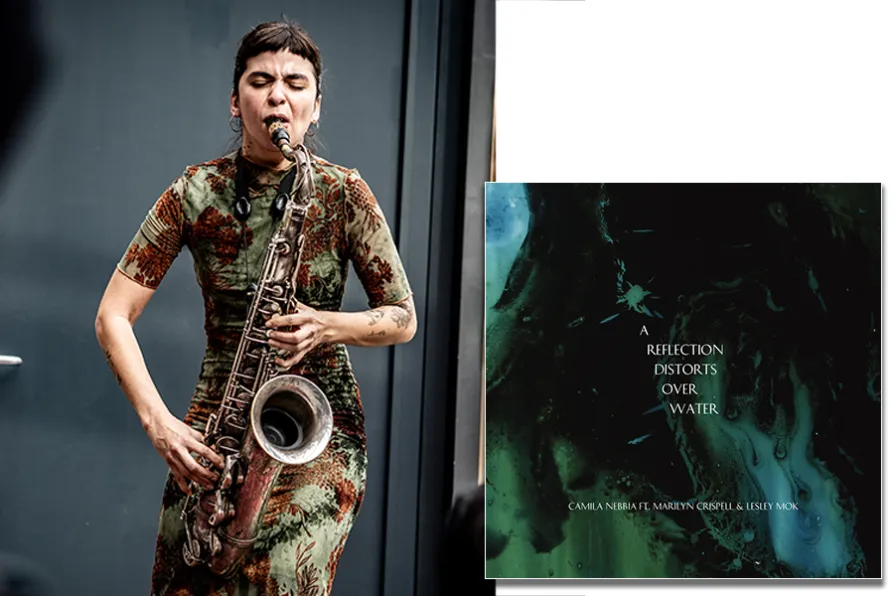
CHRIS SEARLE speaks to Argentinian saxophonist CAMILA NEBBIA


 Latest editorial

‘It was quite clearly time to stop reporting and start participating’
IAN SINCLAIR revels in the reissue of great recordings by one of the most recognisable and radical voices in British music
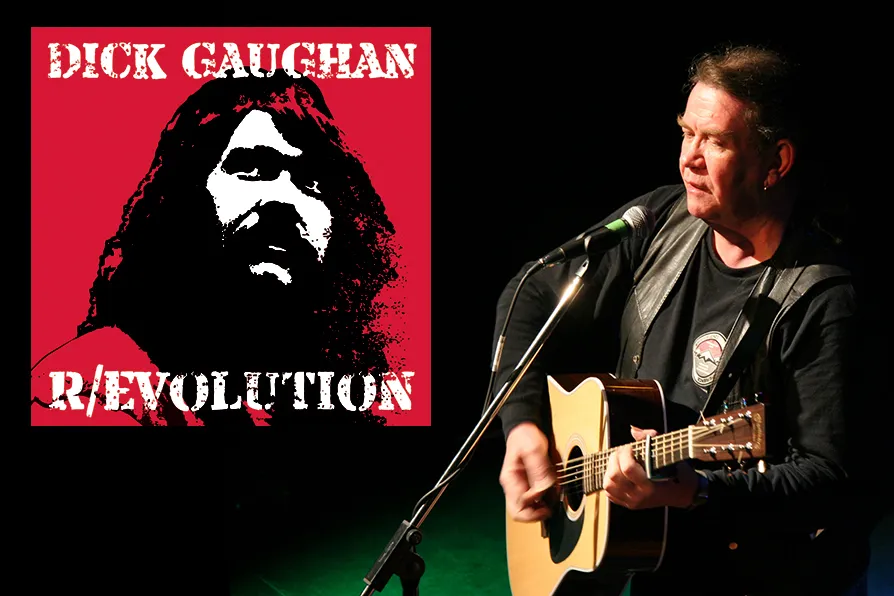 Dick Gaughan, 2006 [Pic: Markus Grossmann/CC]
SOPHIE WENBAN recommends a remarkable Italian quartet who revive Bluegrass on period instruments to give a taste of the communal spirit that first made it popular
Family issues and dragon-fuelled history amount to a vacuous spectacle that ill-fits the theatre, muses SIMON PARSONS
Monster profits on the Tube, paternal dilemmas for time travellers, and an alien abduction buddy saga
New releases from The Jayhawks, Primal Scream, and Max Subar
MIGUEL YOSHIDA explains the evolution and influence of the Cuban Casa De Las Americas in joining culture to the revolutionary struggle





Dick Gaughan
R/evolution: 1969/83
(Gaughan Recordings)
⭑⭑⭑⭑⭑
A REACTION to Margaret Thatcher’s general election victory two years earlier, 1981’s Handful Of Earth earned Dick Gaughan Folk Album Of The Year in Melody Maker, and album of the decade in Folk Roots magazine.
Thirty-five years later the Scottish folksinger retired after suffering a stroke, and today feels a forgotten figure.
Which brings us to music writer Colin Harper and his heroic co-ordination of this crowdfunded box set of Gaughan’s career up to 1983. There’s a whopping 127 tracks (of which 86 are previously unreleased) over seven CDs, a DVD of live performances, and two informative 80+ page booklets.
Turning professional in 1969, Gaughan was a member of two important groups for short periods in the 1970s, the Boys Of The Lough and the folk-rock band Five Hand Reel. He was a hard-drinking “awkward bastard,” he tells Graeme Thomson in a wide-ranging interview for the release.
For me, and many others, it’s the solo work that really stands out. Initially performing traditional songs in Scots language (“can you understand me?” Gaughan asks the audience at the superb concert in Berkeley, California included), over the years he shifted to a more accessible sound, singing in English with his repertoire becoming more overtly political.
His passionate support for “an independent Scottish socialist republic,” working-class power and internationalism shines through on broadsides such as his self-penned “anti-cold war polemic” Think Again (opening line: “Do you think the Russians want war?”) and Rebel Corps by the Communist Bob Cooney. And let’s not forget the extraordinary songs on Handful Of Earth, such as the immigration epic Craigie Hill and his intense rendition of Leon Rosselson’s Digger anthem The World Turned Upside Down.
“Although all my solo albums prior to this had included songs which reflected my political ideas, they had been more as chronicler than as protagonist,” Gaughan writes on his website about this pivotal period. “It was quite clearly time to stop reporting and start participating.”
Muscular and soulful with the ability to convey deep feelings of anger, hope, mystery, tenderness and great beauty, it’s Gaughan’s voice that hits hardest for me. But we shouldn’t forget his skilful guitar playing, best seen on the DVD, which includes his performance of Which Side Are You On? to striking miners in Ken Loach’s 1984 documentary of the same name.
Excitingly, there is more to come, such as an expanded True And Bold: Songs Of The Scottish Miners, originally released by the Scottish TUC in 1986.
For now R/evolution confirms Gaughan’s place not just as one of the most important artists in the history of British folk music, but as one of the most recognisable and radical voices in British music full stop.
