

 Latest editorial
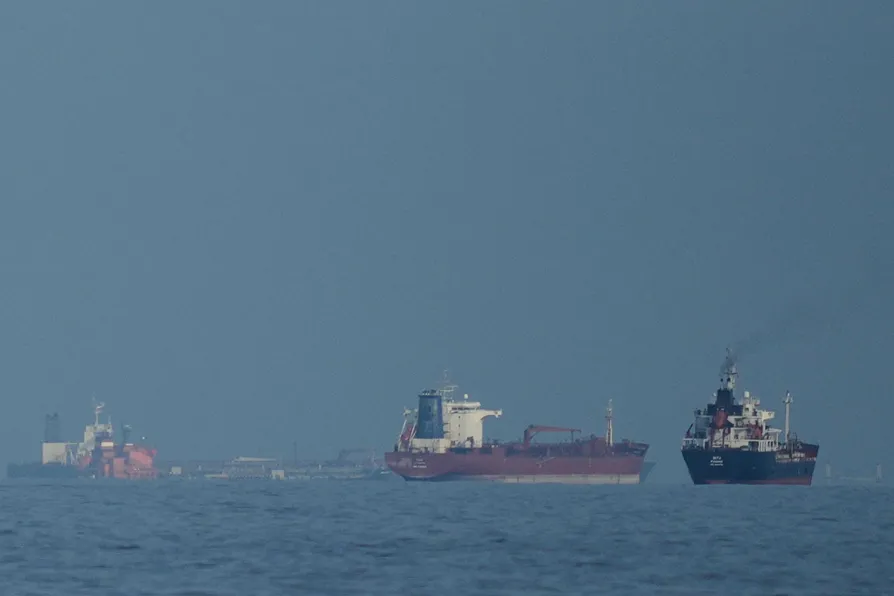 Oil tankers and cargo ships line up in the Strait of Hormuz as seen from Khor Fakkan, United Arab Emirates, March 11, 2026





NEW Iranian Supreme Leader Ayatollah Mojtaba Khamenei said today that the closure of the Strait of Hormuz should be used as leverage and that his country’s attacks on facilities on Gulf Arab states’ territory will continue.
His first statement since his appointment was read on state television by a news presenter.
Ayatollah Khamenei did not appear on camera. An Israeli assessment claims that he was wounded in the opening salvo of the illegal and unprovoked war unleashed by the United States and Israel.
He warned that Iran would not hesitate to “avenge the blood of Iranians” who have been killed, especially the victims of a US strike a school in Minab that killed 184 people, among them around 110 children.
Washington has denied carrying out the attack, even though independent experts have shown that the missile used was a US Tomahawk.
Ayatollah Khamenei also demanded the immediate closure of all US bases in the region, otherwise they would be attacked.
Iranian President Masoud Pezeshkian insisted that for the war to end, the world would need to recognise Iran’s “legitimate rights,” pay reparations and offer guarantees against future attacks.
Iran has a stranglehold on the Strait of Hormuz, through which a fifth of the world’s oil is transported.
With traffic in the crucial sea lane effectively halted, the price of Brent crude oil, the international standard, rose by another 9 per cent to more than $100 (£74) a barrel, some 38 per cent higher than what it cost when the war started.
US President Donald Trump has promised to “finish the job,” while claiming, without evidence, that Iran is “virtually destroyed.”
The Israeli military said today that it had struck a nuclear facility in Iran in recent days.
Israel destroyed the Taleghan 2 site in an air strike in October 2024, but Tel Aviv has now claimed that the Iranians have been working to restore the facility.
The US and Israel say destroying Iran’s nuclear programme is one of the central aims of the war, although the Islamic Republic insists that its nuclear programme is entirely peaceful.
Meanwhile, China has intensified its diplomatic efforts to defuse tensions in the region.
Over the past 10 days, Foreign Minister Wang Yi has held 11 phone calls with his counterparts from Russia, Oman, Iran, France, Israel, Saudi Arabia, the United Arab Emirates, Kuwait, Bahrain, Qatar and Pakistan — countries that are either directly involved in the conflict, neighbouring Gulf states or major powers.
Zhai Jun, the Chinese government’s special envoy on the Middle East, has also been engaged in shuttle diplomacy across the region.
