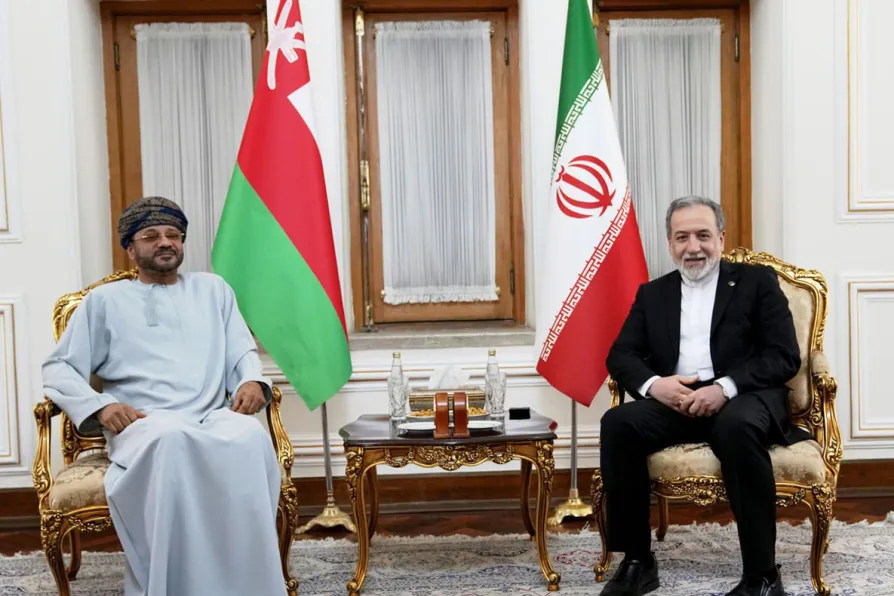
 Iran’s Foreign Minister Abbas Araghchi (right) meets his Omani counterpart Sayyid Badr Albusaidi in Tehran, Iran, August 25, 2026






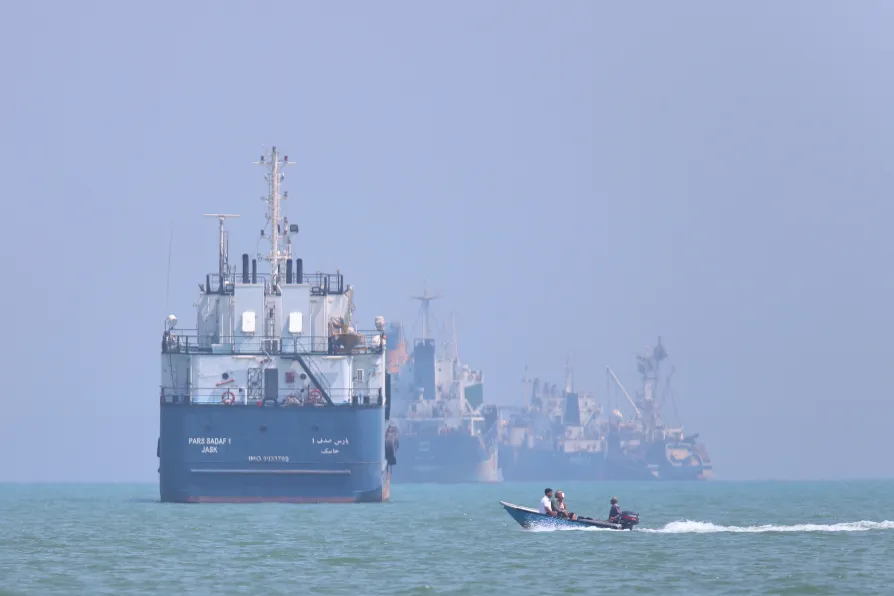
A TOP Iranian official said on Tuesday that a deal has been reached with Oman to set up a temporary transit route for shipping in the Strait of Hormuz.
But Kazem Gharibabadi, Iran’s deputy foreign minister for legal and international affairs, insisted that the strait would not reopen until the United States fulfils the commitments it agreed to under the memorandum of understanding (MoU) that it signed in June.
Iran and Oman, both coastal nations on the strait, have been in on-and-off talks for weeks about controlling traffic through the strategic waterway, which handled one-fifth of global oil and liquefied natural gas shipments before the US-Israel war on Tehran began in February.
Most shipping in the strait has been shut down since then.
In a television interview, Mr Gharibabadi said that Iran and Oman had agreed the new route’s entry “would be through our territorial waters and part of the exit route would also be through our territorial waters.”
He said that the temporary transit route would be seven miles wide.
The announcement came hours after Iran’s Foreign Minister Abbas Araghchi met with his Omani counterpart Badr Albusaidi in Tehran to discuss the possible deal and a project to clear mines from the strait, according to a joint statement from the two countries.
In a social media post, Mr Albusaidi said that he hoped the countries would “soon announce” the corridor, saying that “future management of the strait and a permanent solution will follow in due course.”
Mr Gharibabadi also dismissed a claim by US President Donald Trump that all mines had been cleared from the strait’s international waters, saying it was “only aimed at calming the markets.”
He warned that US mine-detection vessels would become “very good targets” if they entered the area.
The Strait of Hormuz became a flashpoint after Tehran responded to the illegal and unprovoked US-Israel war by closing the waterway.
It then announced a new shipping route through its territorial waters, bypassing the internationally recognised traffic separation scheme adopted by the International Maritime Organisation (IMO) in 1968.
Tehran said that route had been mined.
Then in June, when the MoU was signed by both Iran and the US to end the war, Oman and the IMO announced a new transit corridor in the Strait, backed by the US, that effectively violated the peace deal.
The US then launched fresh attacks on Iran which led to retaliation by Tehran.
Diplomatic efforts towards a new peace deal have been led by Pakistan. Meanwhile, passage through the strait remains dangerous.