


Travel bans, visa refusals and political tensions have raised some serious questions about the tournament’s integrity, writes JAMES NALTON
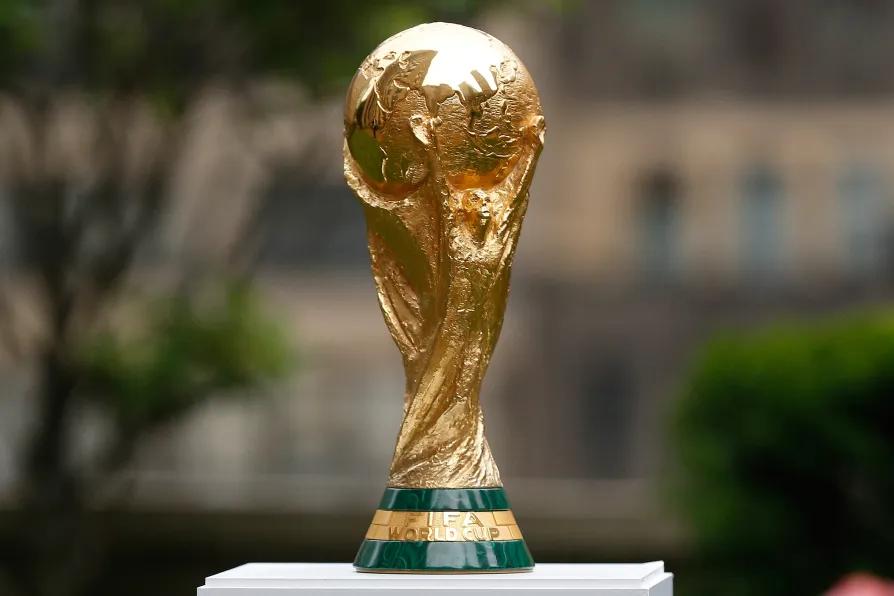
 The FIFA World Cup Trophy is displayed before press conference at Rockefeller Plaza, June 16, 2022, in New York





THE warning signs have been there all along, but Fifa has chosen to ignore them. Two incidents last week further revealed the United States as unfit to host international football matches at both club and national team level, but instead of the US being sanctioned by Fifa and Concacaf, it is the teams on the receiving end who are being unfairly punished.
A World Cup host has launched an illegal attack on a World Cup participant. You’d think that would be grounds for the country carrying out such an attack to be stripped of its hosting privileges, but not in this case.
Fifa president Gianni Infantino has even tried to play down the issue.
“President Trump reiterated that the Iranian team is, of course, welcome to compete in the tournament in the United States,” Infantino posted on Instagram on Tuesday.
Infantino’s decision to pander to Trump ahead of this tournament, going as far as awarding the US president a peace prize, looks increasingly ridiculous and makes Fifa a laughing stock.
“I sincerely thank the president of the United States for his support, as it shows once again that football unites the world,” Infantino added at the end of his post.
Then, just a day later, Trump himself came out with a line directly addressing the matter that contradicted Infantino’s assurances, saying that: “I really don’t believe it is appropriate that they [Iran] be there, for their own life and safety.”
It’s worth reiterating that here we have the president of a Fifa World Cup host country warning that a nation qualified for the World Cup should not take part in it due to risk for “life and safety,” while at the same time the president of Fifa is thanking him for his support.
The situation with Iran has escalated since the attack on the country by the United States and Israel. After it became clear they would be one of the first nations to qualify for the World Cup, there were immediate concerns about the Iranian team being able to enter the US for the tournament. Then there was the issue of Iranian nationals looking to support their team also being subject to travel bans.
These were early warnings, and weren’t limited to Iran, but the escalation in recent weeks has made their participation seem impossible in the current climate.
“Given that this corrupt government has assassinated our leader, under no circumstances do we have the appropriate conditions to participate in the World Cup,” Iran’s minister of sports Ahmad Donyamali told Iranian sports channel IRIB Sports Network on Tuesday.
“Our boys are not safe, and conditions for participation do not exist.”
This is clearly the most serious issue and has escalated just as the World Cup is about to begin, but there have been hints for some time that there would be problems for teams and fans entering the US for an international tournament.
In a repeat of the kind of situation seen on an almost yearly basis in the Concacaf region (which covers North, Central America, and the Caribbean) 10 players, including several Haitians, from the Jamaican club Mount Pleasant, were denied visas to play a match against LA Galaxy in the US last week.
You’d think the fairest response to this would be that the US-based team surrenders their home advantage and the game is moved to another country that allows everyone to compete with all their registered players involved. But, again, not in this case.
Instead, Mount Pleasant travelled to California with a much-depleted squad, missing a team’s worth of senior players and being forced to make up the numbers with academy players.
“We don’t want to just show up for the game, we want to be able to compete, but we are not being given the opportunity to be at our best,” Mount Pleasant’s sporting director, Paul Christie, told the Jamaica Observer ahead of the game.
Previous instances of teams being unable to make up the numbers for Concacaf games in the US due to being unable to enter the country because of visa issues have resulted in them, not the US team, forfeiting the game and withdrawing from the tournament.
If a team has to withdraw, it should surely be the team from the nation causing the issue in the first place.
Instead of sanctioning the US in Concacaf competition and making arrangements to host these games in fairer territory, Concacaf, like Fifa, pandered to them.
Concacaf released a statement placing the responsibility on the travelling team, saying they are “responsible for submitting visa applications within the timeframe required.” But Concacaf surely should have foreseen this issue, especially as one country in its confederation, Haiti, is subject to a complete travel ban to the US, while three others, Cuba, Antigua and Barbuda, and Dominica, are subject to partial bans.
How can teams be responsible for submitting visas on time when certain nationalities are banned from attaining such visas?
This doesn’t just affect teams from those countries, but players of those nationalities wherever they are playing.
There was even a warning sign in World Cup qualifying itself when the Cayman Islands forfeited a game in Cuba, as some Cayman Islands players who studied in the US feared losing their student visas if they travelled there.
There was another example in international football in 2021 when Cuba was unable to compete in the Gold Cup (the region’s Euros/Copa America equivalent) in the US in 2021. These issues are not new.
The Mount Pleasant incident would also seem to go against a proclamation from the White House in June last year that those involved with sports teams participating in major sporting events would be exempt from travel bans. That, apparently, was not the case for the region’s premier continental football tournament, which is the equivalent of the Uefa Champions League or the Conmebol Copa Libertadores.
None of the official match reports on LA Galaxy 3, Mount Pleasant 0, mentioned the circumstances surrounding the latter’s unusually depleted lineup, either. More ignorance of the issues, hoping they will pass unnoticed.
Someone at Fifa must have known hosting a World Cup in the United States at this time would threaten the integrity of the tournament, but it seems the lure of the country’s sports money was too much, and it has ignored even some of the most extreme problems ever to face a World Cup in order to wave it through.
Fifa and Concacaf should act, but they haven’t and likely won’t, as the US continues to be given carte blanche to do as it pleases on the world (cup) stage without resistance or repercussions.
