Work with the NEU
What is 'natural capital' — and is nature a commodity?
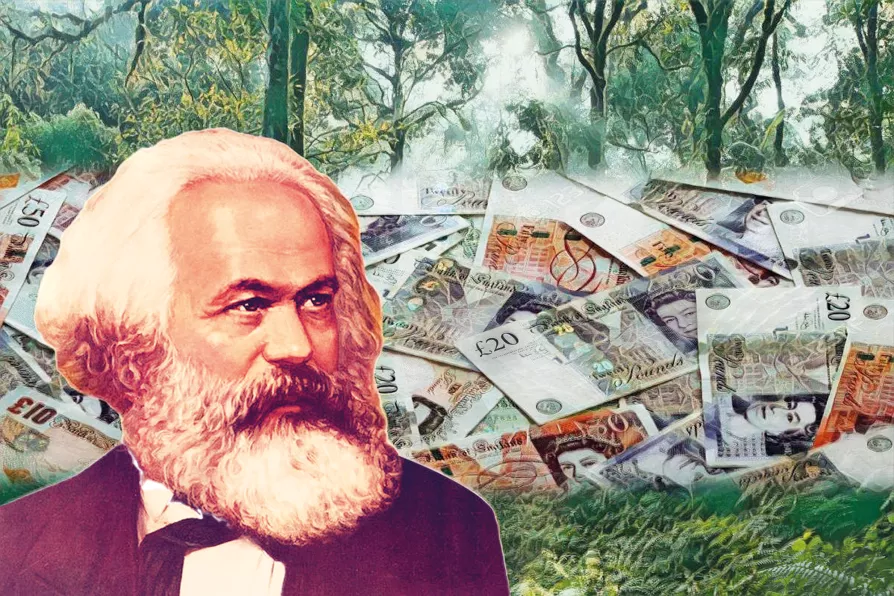
Normally, you would need to combine a forest with labour to produce capital — e.g. furniture to be sold. Today however, nature can be traded to ‘offset’ damage done elsewhere, locking us into a vicious cycle, explains the MARX MEMORIAL LIBRARY

KARL MARX wrote a lot about capital. And for Marxists today one meaning of “capital” at least is clear. It is private property — financial as well as physical, whether owned by individuals or corporations — which can be used to generate value.  

Under capitalism, that value is produced through labour, by workers, who receive less in wages or other benefits (such as education or health services, paid for through taxation) than the value they produce.  

The excess, the “surplus,” is taken as profit by the owners of capital, either for personal consumption or to invest in more capital to generate yet more wealth.  

The 95th Anniversary Appeal
Support the Morning Star
You have reached the free limit.
Subscribe to continue reading.
Similar stories
A poster by Otto Lander designed for May 1, 1901: Proletarians of all lands, unite!
Full Marx / 2 August 2026
2 August 2026

Internationalism is deeply embedded in socialist theory and practice. Examination illuminates its complexity asserts the Marx Memorial Library and Workers’ School

Planet earth by Kevin M Gill/CC
Full Marx / 18 July 2026
18 July 2026

Nature as well as society works dialectically, asserts the Marx Memorial Library and Workers’ School

Attendees listen to Brazil’s President Lula during Cop30
Features / 18 November 2025
18 November 2025

From summit to summit, imperialist companies and governments cut, delay or water down their commitments, warn the Communist Parties of Britain, France, Portugal and Spain and the Workers Party of Belgium in a joint statement on Cop30

The front of the Marx Memorial Library
Features / 23 August 2025
23 August 2025

From hunting rare pamphlets at book sales to online panels and courses on trade unionism and class politics, the MML continues connecting archive treasures with the movements fighting for a better world, writes director MEIRIAN JUMP