
The US administration is endangering lives by reversing environmental protection laws, CHAUNCEY K ROBINSON argues

Britain seems doomed to join the new Washington Consensus
In a painful display of sycophancy, the PM committed Britain to the US’s twisted worldview, sacrificing our economy, diplomatic autonomy, and potentially our lives in a war against the East, writes CARLOS MARTINEZ
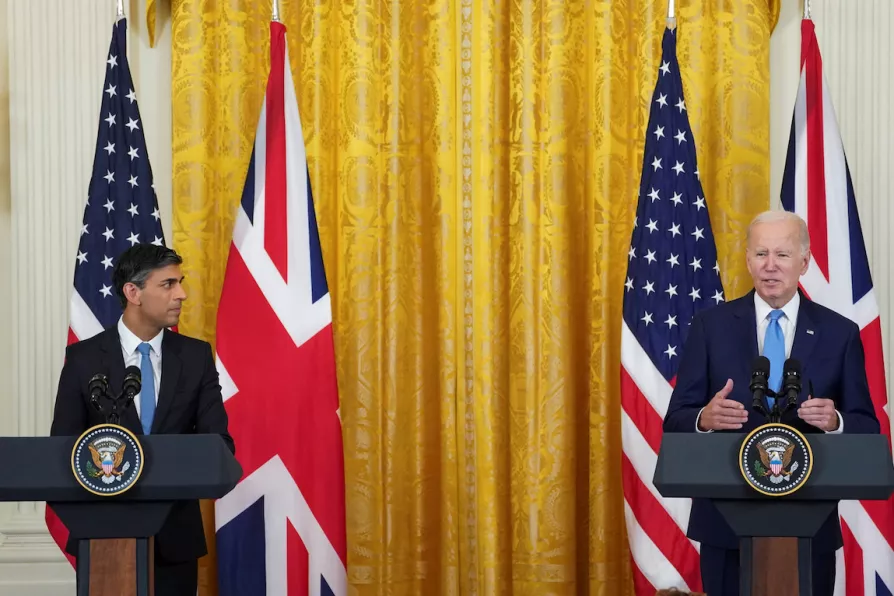
 Prime Minister Rishi Sunak (left) and US President Joe Biden, take part in a joint press conference in the East Room at the White House, during his visit to Washington DC in the US. Picture date: Thursday June 8, 2023.

It’s time to stop retreating and go on the offensive to promote working-class interests, argues DOUG NICHOLLS
Marco Rubio wants to defeat socialism in Nicaragua, not restore ‘democracy,’ writes JOHN PERRY
Believe it or not, there was a time when the US government built beautiful homes for working‑class Americans to deal with a housing shortage, writes ERAN BEN-JOSEPH
DIANE ABBOTT provides an analysis of the reasons for EU and British voters’ dramatic swing to the right
Train drivers’ union Aslef general secretary DAVE CALFE speaks to Ben Chacko about his hopes that Burnham’s devolution agenda will include the importance of the railway





LAST Wednesday marked the second annual UK-US Friendship Day. Although this momentous occasion was met with near-universal indifference on both sides of the Atlantic, Rishi Sunak took the opportunity to celebrate by making his first official visit to the US as Prime Minister.
The discussions didn’t reap the variety of fruit Sunak had been hoping for; the Tories’ long-promised free-trade deal remains in deep freeze. Indeed, very little of substance was announced beyond the Atlantic Declaration for a Twenty-First Century US-UK Economic Partnership.
This declaration makes clear that the focus of US-UK collaboration today is to jointly manage “new challenges to international stability,” in particular “from authoritarian states such as Russia and the People’s Republic of China.”

Similar stories

The new Prime Minister must abandon decades of automatic support for US foreign policy, which makes us all less safe, argues DIANE ABBOTT MP
JENNY CLEGG looks at the key points that defined the China-US relationship, for now
Trump’s vision of ‘might is right’ signals the collapse of the postwar order — and a warning of who may be next, warns BOB ORAM