
APURBA CHATTERJEE explains how British artists in India used the “picturesque” to reshape colonial landscapes and celebrate imperial power


Dream on, son!
Angus Reid speaks to JAZZ BHALLA about the genesis of his superb feature debut, Never Had A Chance, in cinemas this weekend
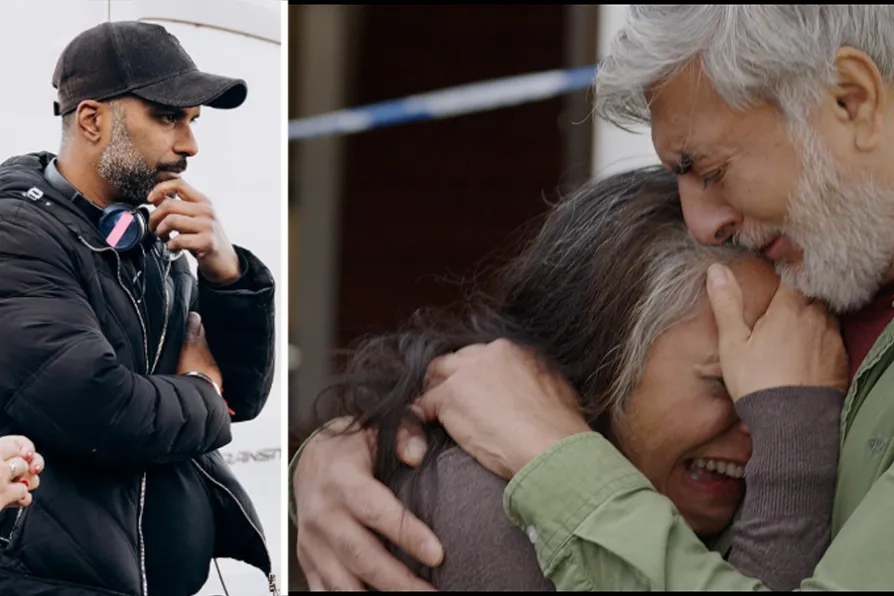
 (L) Director Jazz Bhalla; (R) A scene from Never Had A Chance [Pics: Courtesy of Reelistic Dreams]
PAUL DONOVAN welcomes a revival of Reginald Rose’s classic play that reminds us of the fundamental need for trials with juries
SIMON PARSONS applauds an exceptional performance of Wesker’s little-known play, by the same actor for whom it was written 45 years ago
ANDY HEDGECOCK and MARIA DUARTE review Late Fame, The Death of Robin Hood, Leviticus, and Gail Daughtry and the Celebrity Sex Pass
ANGUS REID recommends a uniquely accomplished documentary collage that contemplates our relation to the natural world
GORDON PARSONS enjoys Kant’s ‘mind-boggling’ theory of human reality: that we create the reality we experience





THIS weekend marks the launch of the most unusual, authentic and thrilling film of the year, Jazz Bhalla’s Never Had A Chance.
The film belongs to Hounslow in London — its Tube stations, streets and flightpaths (jets to Heathrow cross the sky every other minute) — and specifically its Punjabi community, their pubs, family homes and ever-present Asian dub music.
It follows two young men on the make as they reach for their own ideals; it sees the domestic and wider cultural and economic pressures that mould and deform their lives. It is a vision of contemporary lived realities, both rich, frenzied and bleak. And, unusually for a film with an all-Asian cast, it is not a comedy nor a gangsta film, but social realism told with nerve, panache and style.
So, when there is no support from the usual channels — the BBC, C4 or the BFI — how does such a film get to be imagined, and so well made, and make it into the multiplex?
Every film is a team effort and writer/director/producer Jazz Bhalla is the first to acknowledge this, listing his collaboration with Darren Rapier, co-screenwriter and Ayoub Lamrani, the Moroccan cinematographer, the cast and post-production crew, the real story begins with the frankly astonishing way he acquired the skills, the know-how and the contacts to construct a feature.
“In my late twenties,” he says, “I was going nowhere fast. I tried music and realised I was not going to make any money there. Then I walked onto a film set and I had a Hallelujah moment… I thought, right, I can work in film.”
There was no point applying to film school when he had no support, and would never get in. “It’s not for people like us,” he says. “When I told my family I wanted to make films, they just said ‘Dream on, son’.”
So, instead, he brought a van and offered his services to NFTS students as a driver. Assisting dozens of student films he tried all the departments: assistant directing, art directing, lighting, in which he became a sought-after specialist, and always driving the van.
“I know that’s a strange route into directing,” he says, but never underestimate the working-class gaffer on a filmset, learning on the job.
The film in his head was a drama set within his own community, and it needed a script. His process is fascinating to follow: beginning with a “vomit draft” — just spilling everything onto the page — then developing into a structure: synopsis, treatment and a sequence of plot points.
At this moment, without dialogue, the project was very malleable and what emerged was what he calls the “British Asian theme” — two young men, one from a broken home, and the other from a loving secure home.
“Someone who comes from a harsher background will have more focus and more drive,” he says. But the one with a secret bedroom life within a loving family: “this can be a deadly thing.” Once this was established, Bhalla rewrote the dialogues into Hounslow demotic. “I enjoyed that!” he says.
I ask if the story is autobiographical and he denies it. Rather, “I am each one of those characters,” he says, emphasising that it is the overall social vision that preoccupies him, and where the politics of the project reside.
“There’s no point for these kids in going to university and spending 40 grand to do a business degree.” Rather, they are under the influence of popular culture: “To go be a rapper or a hustler and drive a big, expensive car without actually working hard for it.”
Inevitably this leads to tragedy, and the film offers a hard and human look at the false ideals on offer: drugs, alcohol and crucially, addictive gambling. To speak about these things openly, and not to brush them under the carpet is, you feel, a moral mission for Bhalla, and shared not just within the British Asian community, but much more widely.
Precedents and influences for the film include, of course, Danny Boyle’s Trainspotting, Coppola’s Rumble Fish and Scorsese’s Mean Streets, but also, and most interestingly, Franc Roddam’s Quadrophenia. Bhalla admires it for “having captured a whole community at a certain moment in time,” and you feel he shares the ambition.
“Hounslow is a character in the film,” he says, “and I couldn’t shoot it anywhere else. That’s my sister’s house, my parents’ house, and the pub I used to hang out in. Real places that have their own character with aeroplanes constantly flying over. If you fake it it will look fake.”
By not faking it he can portray, via the furniture and door fittings as well as the characters themselves, the strange unease in a British urban setting that endlessly and everywhere attends the experience of first, second and third generation immigrants.
Then, having completed and screened the film for distributors, he hit another brick wall. They “liked the film but couldn’t see a market for it.”
This sounds like the final and toughest barrier of censorship between working-class self-representation and the audience itself. Is it class, or a racial agenda that accounts for this reluctance to commit by those that distribute films? Bhalla shrugs, and his solution was simply to bypass the companies and strike the deals himself.
It’s a triumph that the film — this love-song to Hounslow — has made it into Vue, Cineworld and others this weekend, and it deserves our support, just as this kind of independent working-class film-making as a whole deserves wider support and acknowledgement.
Never Had A Chance is in cinemas now.

Similar stories
The Bard hands out medals for his Edinburgh campaign and urges us to support The Men They Couldn’t Hang
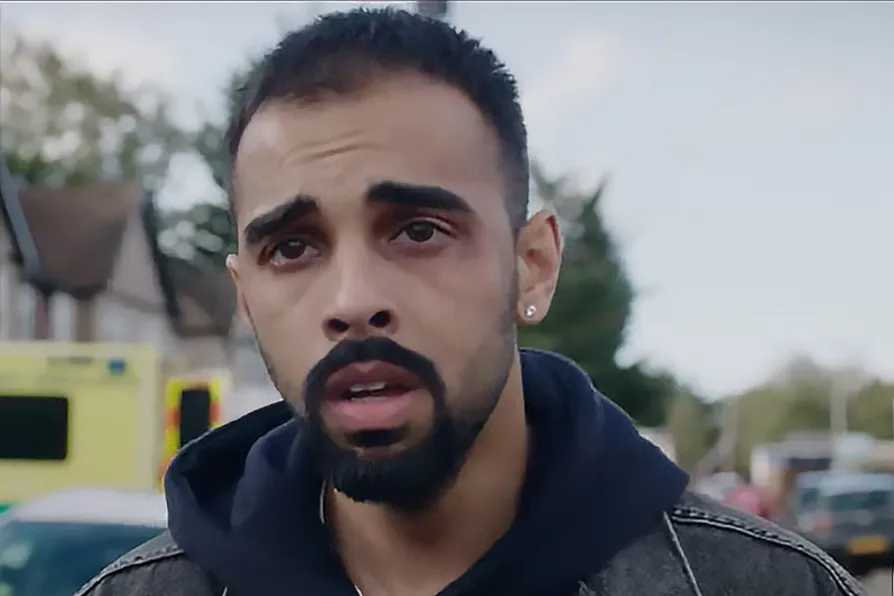
JOHN GREEN relishes a powerful and moving drama that explores the lived realities of west London’s Punjabi community
Lesbians and Gays Support the Miners co-founder MIKE JACKSON talks to Matt Kerr about the enduring power of Pride, protest and trade unionism

ANDY HEDGECOCK, MARIA DUARTE and ANGUS REID review Synthetic Sincerity, Our Hero, Balthazar, Heartstopper Forever, and A Year In London