

 Latest editorial
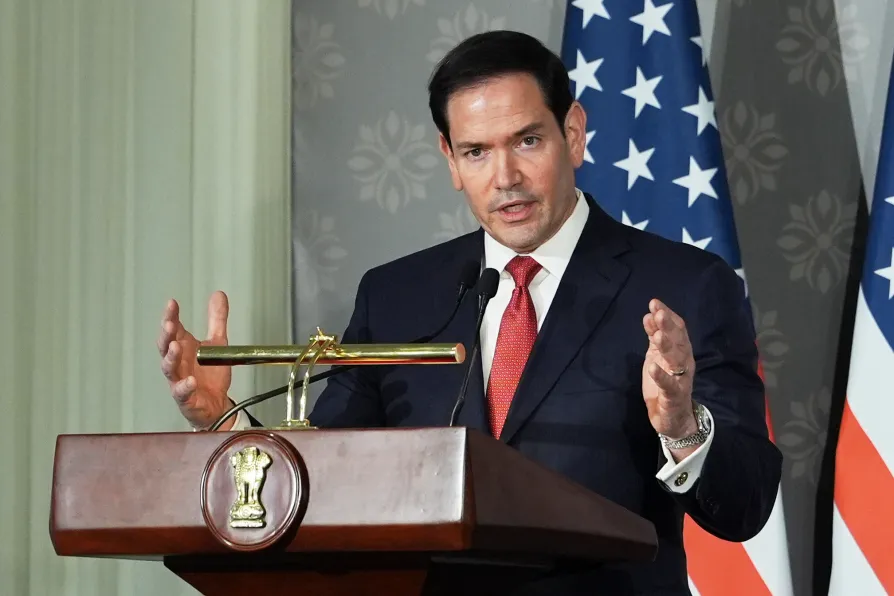 United States Secretary of State Marco Rubio speaks at a joint presser with India's Minister of External Affairs S. Jaishankar, unseen, following their talks in New Delhi, India, May 24, 2026





UNITED STATES President Donald Trump said a deal with Iran on the war in the Middle East, including opening the Strait of Hormuz, has been “largely negotiated” after calls with Israel and other allies in the region over the weekend.
But other US officials called for caution over the prospects for a deal.
US Secretary of State Marco Rubio said today that there had been “significant progress, although no final progress has been made” in the negotiations.
Secretary Rubio added that he hoped that there would be good news in the coming hours.
The negotiations have succeeded in one of Trump’s main aims, Rubio said: “That is a world that no longer has to be in fear or worry about an Iranian nuclear weapon.”
President Trump said on Saturday he had spoken with leaders from Saudi Arabia, the United Arab Emirates, Qatar, Pakistan, Turkey, Egypt, Jordan and Bahrain, and separately with Israel.
“Final aspects and details of the deal are currently being discussed, and will be announced shortly,” President Trump said on social media, with no details.
The potential deal will include Iran’s longstanding commitment that it won’t pursue a nuclear weapon, and Tehran agreed to give up its stockpile of highly enriched uranium, according to two regional officials.
One official said how Iran will give up its reportedly 972 pounds of uranium enriched up to 60 per cent purity is a subject of further negotiations over the course of a 60-day period.
It’s highly likely that a part of the amount will be diluted, while the rest will be transferred to a third country, potentially Russia, he said.
The Strait of Hormuz will be gradually open in parallel with the US ending its blockade of Iran’s ports, said the official.
The US will also allow Iran to sell its oil through sanctions waivers, said the second official who has been briefed on the negotiations.
Sanctions relief and release of Iran’s frozen funds will be negotiated during the 60-day time frame, he said.
Both officials said the draft deal includes an end of the war between Israel and Hezbollah, as well as a commitment to not interfere in the domestic affairs of countries in the region.
Israeli officials are concerned that Hezbollah, the Lebanese resistance group, remains a serious threat to Israel and that Lebanon is ill-equipped to disarm it.
Prime Minister Benjamin Netanyahu warned President Trump that Israel “maintains freedom of action against threats in all arenas, including Lebanon,” according to another source.
