


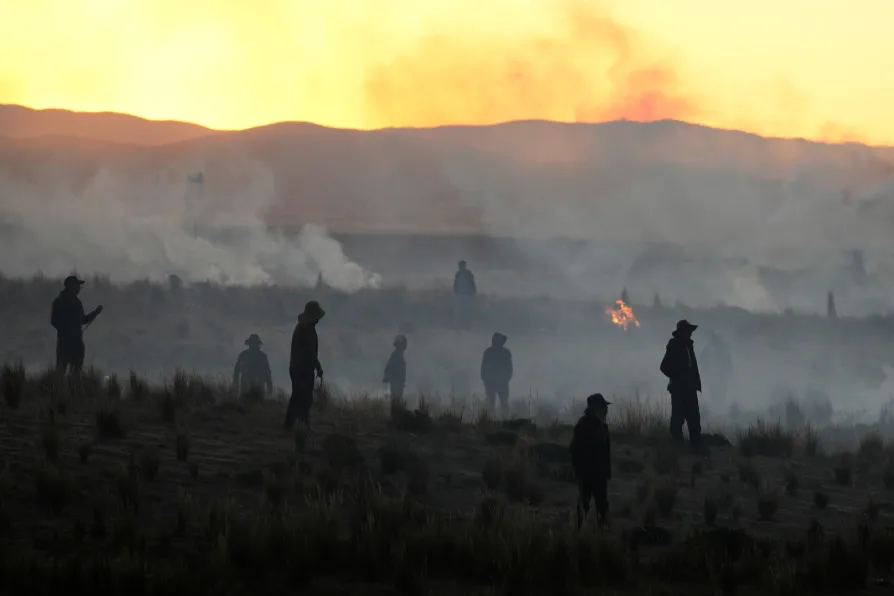
 Anti-government protesters standing in a field are silhouetted against clouds of tear gas launched by police, near El Alto, Bolivia, May 16, 2026
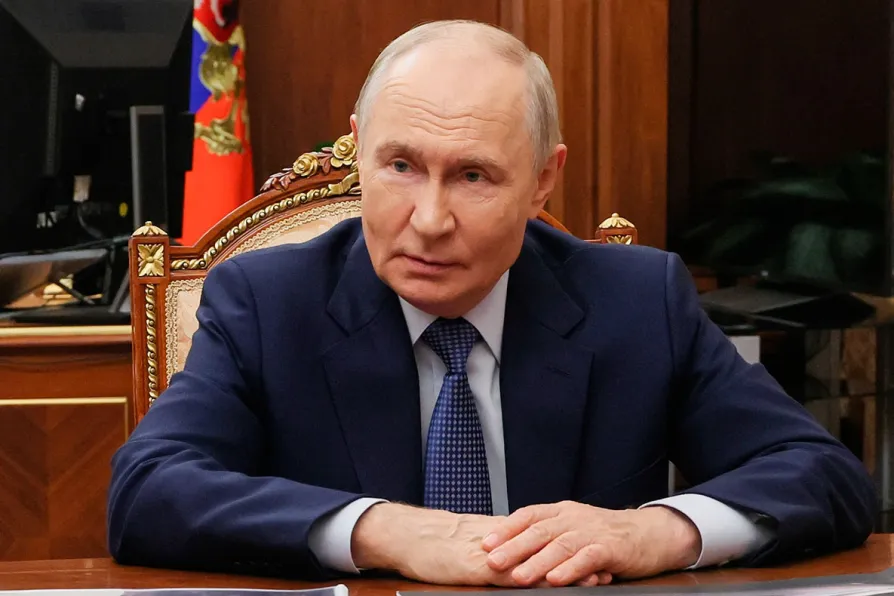





THE crisis facing Bolivia’s President Rodrigo Paz deepened on Tuesday as widespread protests and blockades left the country’s political capital under siege less than six months after he took office.
Two weeks of road closures, spearheaded by the Bolivian Workers Central (COB) trade union federation, peasant organisations and miners, have emptied markets in La Paz.
The government has reported the deaths of at least three people after emergency vehicles were blocked from reaching medical centres.
On Monday, supporters of former president Evo Morales clashed with police in La Paz as they joined protests demanding the resignation of the president, who lacks both a legislative majority and a robust political party to anchor his administration.
“Those seeking to destroy democracy will go to jail,” the right-wing president warned on Friday, as the blockades expanded to cover nearly the entire country.
The COB began by demanding wage increases, while peasant unions demanded a steady supply of gasoline. The miners, meanwhile, are negotiating separately for access to additional mining areas. State school teachers are also holding separate talks in pursuit of higher pay.
“These demands have been largely addressed in a manner consistent with current realities. However, there are dark forces seeking to destabilise our democracy,” said presidential spokesman Jose Luis Galvez.
According to business organisations, ongoing protests and road blockades are draining more than $50 million (£37m) a day from Bolivia’s economy and have left roughly 5,000 vehicles stranded on the highways.
The end of the rule of the Movement Towards Socialism (MAS) after two decades, first under Mr Morales and then Luis Arce, has left the Bolivian political landscape deeply fractured, with no single party emerging as a dominant force.
The Christian Democratic Party, the vehicle for Mr Paz’s victory six months ago, has fractured and the president is locked in an open feud with his vice-president, former police officer Edman Lara.
