ROB WARZYNIAK recalls the emblematic 1906 book, The Jungle, in its analysis of the crisis presently engulfing the US Food and Drug Administration


 Latest editorial

Chile’s failure to bury neoliberalism led to an overtly Pinochetista president
Decades of centre-left accommodation and deepening inequality have opened the door to a hard-right restoration — posing stark challenges for the left, argues FRANCISCO DOMINGUEZ
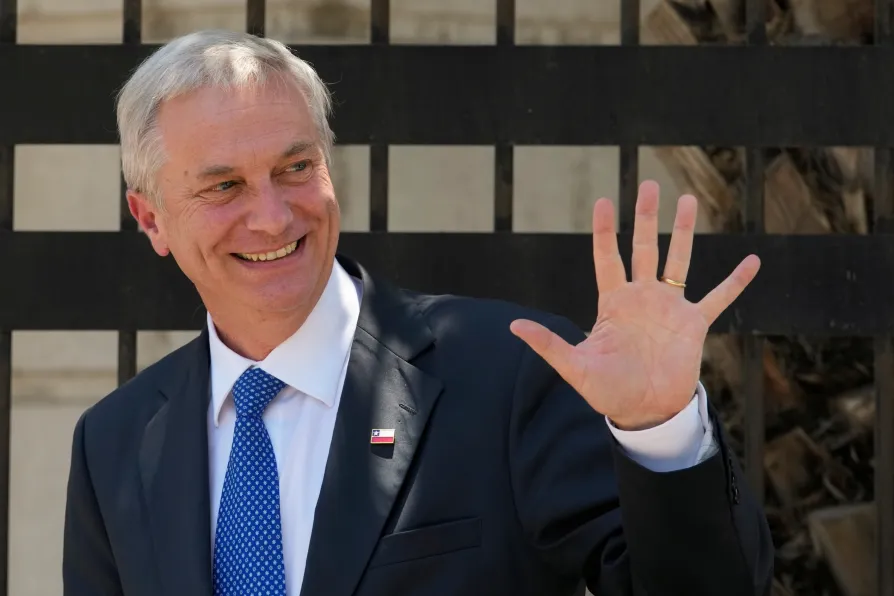 HARD RIGHT: New President Jose Antonio Kast

Welsh wanderings showcase fiery destruction, alternative water ways and revive memories of a local mining legend, writes MARK SEDDON
As thousands die in the eastern DRC, a global health emergency is being starved of funds, says S KRISHNASWAMY
MAT COWARD explains how in the 17th century a row over whether to kneel at communion became a battle over religion, class and royal power
Renewed illusions in social democratic reformism are sprouting as a result of Andy Burnham’s rhetoric, but material conditions are already intruding into the debate, argues NICK WRIGHT
Andy Burnham could learn a few lessons from a previous Labour government in the pre-privatisation era on how to tackle water shortages, writes KEITH FLETT





STUNNING, though expected, on December 14, a majority of Chileans (58 per cent to 41 per cent) elected far-right Republican Party candidate Jose Antonio Kast as president for the 2026-30 term, defeating the Communist candidate Jeannette Jara in the second round.
A strong admirer of the Pinochet dictatorship, Kast is also an open supporter of Argentina’s Javier Milei and Donald Trump, and maintains close links to the Trump-affiliated Heritage Foundation. His victory presents a significant opportunity for US imperialism.
Kast is a lawyer and legislator, brother of Miguel Kast — a “Chicago Boy” minister under Pinochet — and son of Michael Kast, a German army officer and Nazi party member who emigrated to Chile after World War II.
During his campaign, Kast “did not rule out pardoning convicted perpetrators of the military dictatorship, including Miguel Krassnoff, who is serving over 1,000 years in prison for crimes against humanity.”
Since the dictatorship ended in October 1989, the centre-left Concertacion coalition governed Chile almost uninterruptedly for 28 years (until 2010, and again from 2014-18 and 2022-26).
During this period, the people made significant gains in political freedoms and poverty reduction (from 45 per cent in 1987 to 6 per cent in 2024).
However, the Concertacion spent most of those years perfecting Pinochet’s neoliberal model, transforming Chile into a paradigm of privatisation. Health, education, utilities, pensions, rivers, the sea, natural resources and infrastructure were all placed in private hands, with adverse social consequences for the majority of Chileans.
Inevitably, the worsening conditions created by a small, immensely wealthy and arrogant Pinochetista oligarchy erupted into a social rebellion in October 2019. This was triggered by right-wing president Sebastian Pinera’s attempt to impose an austerity package, which was met with brutal repression. Throughout 2019 and 2020, mass protests unfolded to the rhythm of “El pueblo unido jamas sera vencido,” carrying images of Salvador Allende and the dictatorship’s victims.
The diverse mass movement extracted substantial concessions, including the return of pension contributions from the widely despised private administrators (AFP), which is a colossal swindle.
Most crucially it won the right to elect “a constitutional convention tasked with drafting an anti-neoliberal constitution to replace” Pinochet’s 1980 “constitution.” The historic opportunity to bury Pinochetismo and its neoliberal legacy seemed within reach when the convention issued its radical proposal for a referendum in September 2022.
In May 2021, those in favour of change obtained 118 seats in the Convention to the right wing’s 37 (plus 17 reserved for indigenous nations), and elected Elisa Loncon Antileo, Mapuche leader, as its president. In November 2021, Concertacion candidate Gabriel Boric, then 35, comfortably defeated Jose Antonio Kast to become president. Approving the new constitution seemed a foregone conclusion.
However, in August 2022, the Concertacion got an agreement to make the previously voluntary vote compulsory. This brought a depoliticised 30-50 per cent of the electorate — disenchanted with politics and, notably, containing Chile’s most pro-Pinochet segment among the poorest 20 per cent — into the process.
This bloc became an easy target for a corporate and social media campaign of toxic disinformation, spreading lies that the new constitution would confiscate homes to be given to the homeless or that it would permit abortion up to the ninth month of pregnancy.
The Concertacion leadership, including President Boric — who had openly supported the Convention’s objectives — failed to prepare an effective counter-campaign. Instead, Boric devoted time to criticising Cuba, Venezuela and Nicaragua as dictatorships (applauded by far-right media), (un)wittingly legitimising the right’s narrative and sapping the constitution’s appeal. He also held a high-profile meeting with Volodymyr Zelensky to support Ukraine.
With little defence against the disinformation campaign, the constitution was rejected by 62 per cent to 38 per cent. Boric and the Concertacion had snatched defeat from the jaws of victory.
Thereafter, the centre-left position deteriorated. Neoliberalism had entrenched high levels of informality (28 per cent), precarious employment (longer hours, smaller salaries), and staggering inequality: the top 1 per cent and 10 per cent receive over 36 per cent and nearly 60 per cent of total income respectively, while the poorest 50 per cent accounts for about 7 per cent. Millions are trapped in debt at exorbitant rates to make ends meet (household debt reached 37.7 per cent of the country’s GDP, and $133.4 billion by late 2025, and Chile suffers the worst income inequality in the OECD, after Brazil and South Africa.
Boric’s presidency “failed to change the economic structure and the social inequalities in Chile.” His approval rate plunged to 22 per cent by May 2024, with right-wing media unashamedly capitalising on high crime levels and illegal immigration flooding the labour market to blame his government.
In this climate, Jeannette Jara, candidate of the revamped Concertacion coalition “Unity for Chile,” faced an uphill battle. She sought to offer a progressive break with Chile’s complacent pro-neoliberal centre-left while simultaneously retaining old coalition support. Her platform included key anti-neoliberal policies, but it proved to be too little too late. Nevertheless, her 41 per cent vote represents solid support for a leftward shift.
As Boric’s labour minister, Jara secured a “long-awaited reform of the pension system, which, among other things, increased current and future pensions through a system of solidarity among contributors. She also achieved the reduction of [working hours] from 45 to 40 hours a week and she is also remembered for her efforts to increase the minimum wage to more than 500,000 Chilean pesos, around $530.”
However, these achievements — largely down to her initiative — were insufficient to convince poorer right-wing voters that she represented a fresh start. The long-term clientelistic relationship between sections of the poor and Pinochetismo meant that Kast won in four of the five poorest districts in the country (in 2021 Kast won in the 20 poorest districts).
There is a deeper reason for this “anomaly”: the main concerns of the poorest 50 per cent of the population are crime, immigration, pensions, health and income inequality, areas inadequately addressed by Concertacion governments.
Jeannette Jara’s candidacy expressed the political necessity to break neoliberalism’s 50-year grip with a radical programme to reverse its grossest inequities that will be attractive to the poorest. Winning 41 per cent as a Communist candidate is a notable feat.
Kast’s victory proves that “managing neoliberalism” is a failed strategy for the left, as it only fuels Pinochetismo, which the centre-left accommodated for decades. The left, with the Communist Party at its core, now faces the challenge of organising mass resistance against Kast’s agenda of fiscal austerity, mass expulsion of immigrants and a full neoliberal restoration that will erase even the timid Concertacion progressive reforms of 1990-2025.
Chile’s communists, as the most consistently anti-neoliberal force within the broader left, have the potential to shape and organise a broad political and social front of resistance against Kast’s extreme right-wing government. Resistance against Kast will be inextricably linked to the struggle against neoliberalism. A critical weakness in Chile remains the lack of an authoritative left leadership capable of successfully organising the working class to fulfil Boric’s own promise: “If Chile was the birthplace of neoliberalism, it will also be its grave.”
