


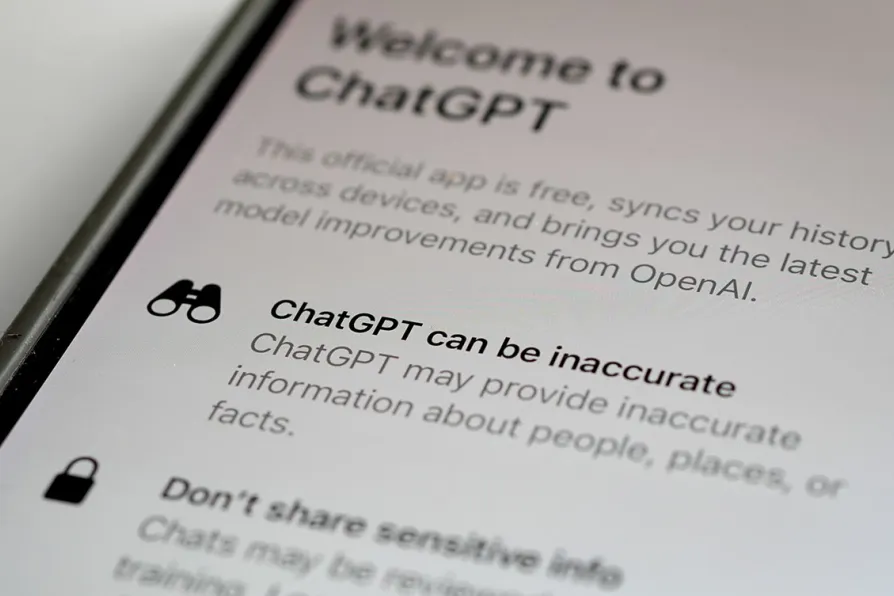
 A mobile phone displays the welcome screen to the ChatGPT app






TWO in three secondary school teachers believe that pupils’ critical thinking has declined due to AI usage, according to a National Education Union (NEU) survey.
One in three “strongly agreed,” with educators reporting that some children are even losing their ability to have a conversation.
Teachers in their twenties were more likely to agree with the statement (57 per cent) than those who aged 50 or more (39 per cent).
Respondents told the survey: “Students are losing core skills — thinking, creativity, writing, even how to have a conversation.
“If we don’t have to work hard for something, we become complacent. AI is destroying what ‘learning’ — problem solving, critical thinking and collaborative effort — is!”
The rate among primary teachers was 28 per cent.
NEU general secretary Daniel Kebede said: “Students must be able to think for themselves. This is at the heart of learning, but our survey shows a reliance on AI is having an effect on students’ ability to think critically.”
The survey of 9,408 NEU members teaching in state schools in England also found that 76 per cent are now using AI tools for day-to-day work, up from 53 per cent last year.
This usage is primarily in resource creation (61 per cent of respondents) but also lesson planning (41 per cent) and administrative tasks (38 per cent). Just 7 per cent turn to AI tools for marking.
Half of schools had no policy for the use of AI either by staff or students. Two-thirds didn’t have one specifically for students.
And just 14 per cent supported the government’s planned introduction of AI tutors for disadvantaged pupils.
Mr Kebede said: “AI should be there to enhance rather than diminish student learning. Teaching students about acceptable AI uses requires time in the school week and that time is in short supply.
“AI must be regulated so that schools have appropriate tools which don’t undermine learning.
“The profession is far from convinced that AI tutors are a magic bullet for closing opportunity gaps for disadvantaged students.
“The government is taking a risk in rolling out AI tutoring before its impacts are properly understood.
“AI will only improve learning and support teachers in their role if implemented correctly, within a vision of a highly skilled profession.”
