Supporters from both sides prepare to stand together against season ticket threats and exploitation, writes JAMES NALTON


 Latest editorial
Boxing’s working class heroes still carry the fight
From Ali to Hatton, the ring produces icons shaped by struggle, solidarity and the realities of class, writes JOHN WIGHT
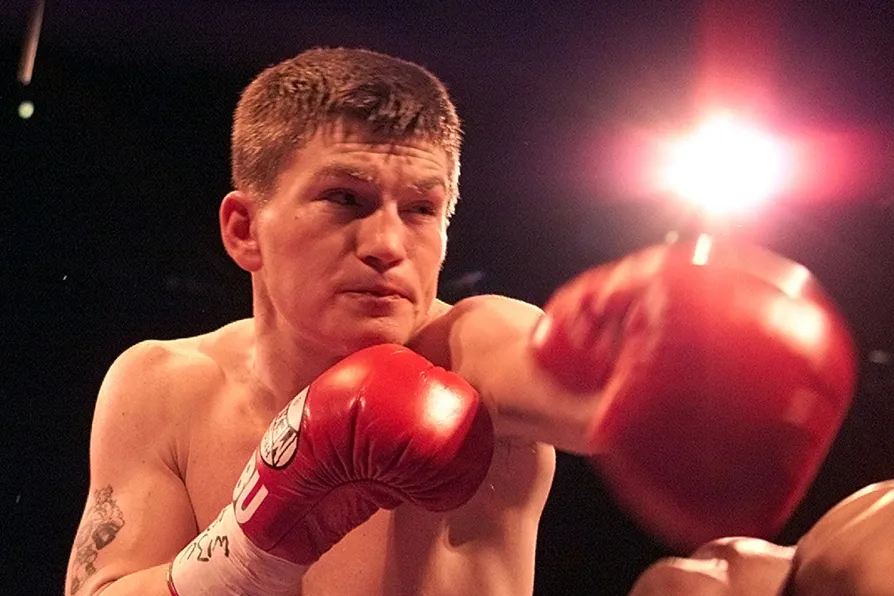 Ricky Hatton, November 2001

French federation withdraws support as pressure mounts on Fifa president





THE sport and culture of boxing is near-unique in the way that it has and continues to throw up fighters so popular that they transcend the sport to attain the status of working-class folk hero.
This is no surprise, not when you consider that to be working class is to be oppressed by forces so invisible that you can easily become putty in the hands of the dominant ideas of a ruling class, for which and whom false consciousness is currency. This, ultimately, is how they control us, how they successfully convince enough working-class voters to tick the box marked Conservative at election time. It is a box that in truth should be marked “self-harm.”
Denied the class emancipation we so desperately need, sport fills the void. By associating with a football team whose highs and lows we share with thousands in packed stadiums, we experience the human connectedness that conforms to our species being and is denied to us otherwise. That football is a team game, operating to socialist principles within a capitalist context, is surely no accident either.
When it comes to boxing, this connectedness coheres around fighters whose feats in the ring tap into our primal instincts and the traits our ancient ancestors had to rely upon just in order to survive. Those traits are aggression, courage, resilience, determination, speed, strength, evasion, agility and athleticism. Author and thinker Joyce Carol Oates has an interesting take on this: “Spectators at public games,” she writes, “derive much of their pleasure from reliving the communal emotions of childhood, but spectators at boxing matches relive the murderous infancy of the race.”
Yet even within the brutality of boxing arguably lies nobility and transcendence, which is where the role of the fighter as folk hero comes into play.
Of Scotland’s flyweight king in the 1930s, Benny Lynch, another former Scottish world champion, Jim Watt, once argued that he was “the most important figure as far as Scottish boxing is concerned. He [Benny Lynch] was the first one to do it. He showed us that a little guy from Glasgow, a little guy from Scotland, could be champion of the whole wide world.”
When it came to Rocky Marciano in the 1940s and ’50s, there was no working-class Italian-American in the whole of the United States who did not view his 49-0 unbeaten record as evidence of Italian masculine stock being superior to every other. As for the other legendary Rocky — Rocky Graziano — the role of reinvention, normally the preserve of those with the money to reinvent, is central to what he became. Author Gerald Early makes this clear: “The essence of the Graziano story lies in the fact that he had to change his name. It was the only way he could escape his father and his life of juvenile crime and anti-social behaviour.”
There are two elements, of which a fighter must possess at least one, in order to transcend the sport and become nationally and, in the case of Muhammad Ali, internationally esteemed. Those elements are either relatability or empathy.
Ali’s empathy with the suffering of his own people in the Jim Crow era was expressed in his defiance of the received truths of white supremacy, wherein “I am the greatest” was translated in the hearts and minds of poor black America into “We are the greatest.”
When, as Cassius Clay, Ali fought one of England’s boxing folk heroes, Henry Cooper, at Wembley in 1963, “Our Henry” was all that stood between national pride and national defeat. As it turned out, though he lost, Cooper still succeeded in salvaging Anglo-Saxon pride by being one of only two men to have knocked Ali down in the ring at this juncture, with the other being Sonny Banks the year before at Madison Square Garden.
With just one beautifully placed and perfectly timed left hook, Cooper entered the annals of British sporting history — a beloved figure whose relatability and warmth earned him warmth in return from the country entire. In this respect, however — unlike Ali — Cooper filled the role of champion of the status quo rather than any departure from it.
Barry McGuigan, when in his fighting prime in the 1980s, achieved the impossible in uniting two antagonistic communities in the North of Ireland whenever and wherever he fought. The Troubles were raging, yet the suspension of hostilities became an unofficial rule in order to allow those nights of unbounded unity to occur as a beacon of what a different world could look like. The folk anthem Danny Boy, which McGuigan sang after most every fight in the ring, became an anthem of peace and unity.
Ricky Hatton — sadly now departed — has claim to being the most popular fighter Britain has ever produced. The army of fans he took to Vegas to urge him on against Floyd Mayweather Jnr in 2007 was and remains unprecedented. With and in him, relatability reached new levels. Here was a fighter who between fights you would find in local pubs and cafes close to where he grew up, indulging his passion for beer and fry-ups. The common man found in Ricky uncommon greatness. His imperfections were their imperfections and theirs his. Rather than use boxing to escape his background, Hatton used boxing to further identify with it.
Tyson Fury belongs in the same category — a giant of a man with a childlike sense of fun. His own reinvention from villain to hero, along with his new-found role as tribune of those suffering mental illness, is validation of Oscar Wilde’s axiomatic assertion that “every sinner has a future, and every saint has a past.”
Being a folk hero, of course, carries with it the potential of being pulled down from that perch and pilloried as a villain. Roberto Duran met this fate after his ignominious No Mas defeat to Sugar Ray Leonard in their 1980 rematch. He returned to Panama in shame and briefly retired.
The prosaic truth is that there are no heroes, only heroic acts. And with this in mind, in a boxing ring all fighters begin from a place that defies belief. Returning to Joyce Carol Oates: “Even as he disrobes himself ceremonially in the ring, the great boxer must disrobe himself of both reason and instinct’s caution as he prepares to fight.”
A working-class hero is something to be, the song would have us believe. A different take, entirely, from Brecht’s admonition of “unhappy the land that is in need” of such.
Perhaps, as ever, the truth lies somewhere in between.
