Washington’s inability to subjugate Iran is an example of how it is trying to preserve a regional order that no longer exists, argues RAMZY BAROUD


Is Bangladesh going to face Islamist militancy again?
A spate of bomb recoveries across Dhaka raise questions whether extremism is making a comeback, says SIAM SAROWER JAMIL
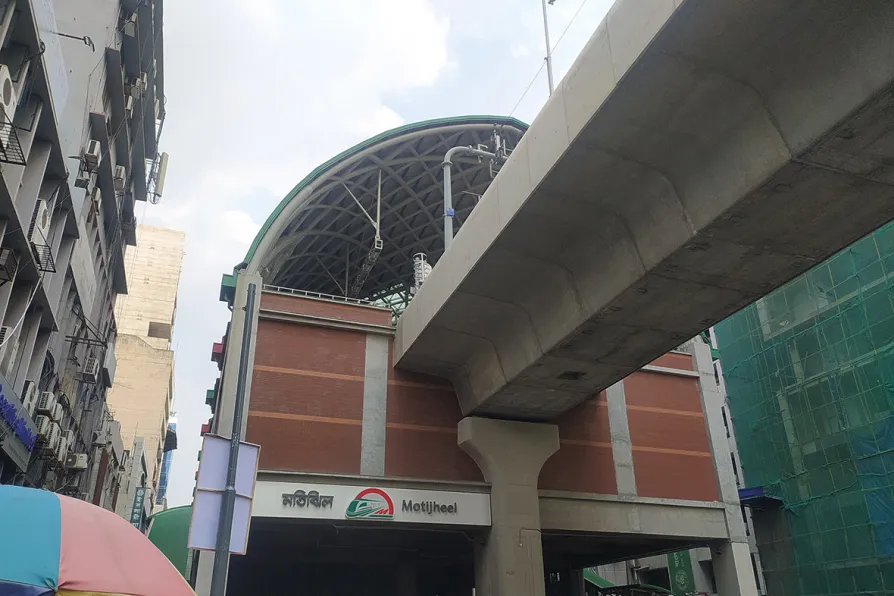
 Motijheel Metro Rail Station, where bomb-like objects were found earlier this year [Pic: Md Joni Hossain/Creative Commons]
US financial instability is exposing the limits of a dollar-dominated global economy — and giving the Global South a historic chance to build an alternative, says MURAD QURESHI
DOUG NICHOLLS says the parasitic finance markets must be challenged or another British government could be toppled
The late country singer’s Imagination Library has put hundreds of millions of books into children’s hands. We should build on that legacy by defending the libraries at the heart of our communities, says BRENDA AITCHISON
Deprivation is a fundamental factor in criminal behaviour that must be addressed but, KENNY MacASKILL argues, there needs to a major rethink in sentencing to tackle overcrowding
MML director MEIRIAN JUMP outlines the recently refreshed library’s busy autumn schedule that ranges from book sales, archival exploration, community work with online education and the ever popular site tours
TONY BURKE surveys the shifting political landscape and the challenges Labour needs to address if it is to prevail in the 2028 federal elections





A DECADE has passed since the horrific terrorist attack at Gulshan’s Holey Artisan Bakery. Bangladesh was free from major terrorist attacks for a long time after that.
However, in the last month, at least one person has been killed in a bomb blast, bombs and explosives have been recovered from seven places and some members of militant groups arrested from different parts of the country. A new difficult question has emerged in these series of incidents — is Bangladesh once again entering the initial stage of the rise of Islamist militancy?
According to law enforcement agencies, after the political change on August 5 2024, there have been cases of escapes from prisons and release on bail of accused in militant cases. A recent report, citing police data, said that a portion of the prisoners who escaped from prison during the political unrest in 2024 have not yet been identified or arrested.
On the other hand, from September 2024 to July 2025, more than 370 militant-linked individuals were granted bail; 185 of them were Afghanistan’s Taliban-linked Jamaatul Mujahideen Bangladesh (JMB) and 16 were Neo-JMB connected, according to police data.
In addition, there have been concerns about online extremist activities and the recent recovery of bombs and explosives one after another.
The biggest turning point in Bangladesh’s fight against militancy came on July 1 2016. On that day, 22 hostages were killed in a militant attack on the Holey Artisan Bakery in Gulshan, 17 foreign nationals including nine Italians, seven Japanese.
After the attack, the state launched a massive operation against JMB, Neo-JMB and other extremist networks. The organisational and operational structure of the militants was weakened in one operation after another. After that, no major militant attack like the Holey Artisan took place again.
However, security analysts fear that if surveillance on high-risk individuals weakens, old militant networks may get an opportunity to establish contact again. This is linked to the recent bomb and explosive recovery incident.
On August 11, the Counter Terrorism and Transnational Crime (CTTC) claimed to have recovered nine pipe bombs, gunpowder, various chemicals and bomb-making equipment during a raid at a house in South Shyampur, Savar, near the capital. Earlier, law enforcement agencies had also recovered pipe bombs from a person named Arif. According to the police, a raid was conducted on the basis of information given by him.
Police claim that Arif is an active member of the banned JMB. Leaflets related to the organisation’s invitation and organisational activities were also recovered from him. JMB has long been under the watch of law enforcement agencies as a extremist organisation influenced by the ideology of the Taliban.
A powerful pressure cooker-based improvised explosive device (IED) was recovered from a bag abandoned outside a grocery store in the Charabagh area of Ashulia on July 31, a few kilometres from the house in Savar. The CTTC’s bomb disposal team defused it through a controlled explosion.
In the past month, bombs and bomb-like objects have been recovered from three metro rail stations in the capital. In late July, bomb-like objects were recovered under the Motijheel Metrorail station. Bomb-like objects were also recovered at Farmgate and Mirpur Metro stations. No arrests were made in these incidents. Police said the bombs found near Motijheel metro station were planted to target the Hindu minority’s fest Rath Yathra.
Jahangir Alam, a researcher at Dhaka University, who works on terrorism and security, said: “The immediate risk may not be another major attack like the Holy Artisan. Rather, the re-establishment of contact between old militants, recruitment of new members online and the formation of small cells are now major warning signs. The fact that the militants who are outside are not being monitored is also a major reason.”
According to him, “Not every person granted bail in a militant case can be considered a militant. But it is important to have effective intelligence surveillance on the movements of high-risk individuals after their release. However, it is important to take into account the movements of many top Taliban leaders in Afghanistan and the explosions in madrasas during the interim government.”
The researcher said that before 2016, much of the recruitment and communication of militant organisations was based on face-to-face meetings, secret hideouts and physical contact. Now, there are many opportunities to attract young people to radicalisation through encrypted messaging apps, closed online groups and social media.
He said that in recent CTTC investigations, allegations of Neo-JMB’s online communication and involvement of youth have also come to the fore. The biggest lesson of the Holy Artisan is that militant organisations usually do not acquire the capacity to carry out major attacks in a day. Before that, they recruit members, raise funds, build communication networks, receive training and establish safe havens. That is why the current situation is important.
“Bangladesh may not yet have faced a full-fledged militant resurgence. But if any part of the old networks are trying to regroup, then this could be the initial stage of that process,” said Istihak Raihan, a teacher of Bangladesh’s Jahangirnagar University.
“The biggest task before the government now is to find out whether there is any connection between the recent bomb recoveries, rather than seeing them as isolated cases,” he said.
“Where did the explosives come from, who paid for them, who made them, where were they planned to be used, and who else was involved in them — the answers to these questions will determine whether the Savar incident was an isolated act of terrorism or an indication of a larger network.”
After the Holey Artisan a decade ago, Bangladesh showed great success in combating terrorism. This time too, the biggest test is whether it is possible to identify and dismantle a potential network before a major attack takes place, said Istihak Raihan.
Siam Sarower Jamil is a Dhaka-based writer.

Similar stories
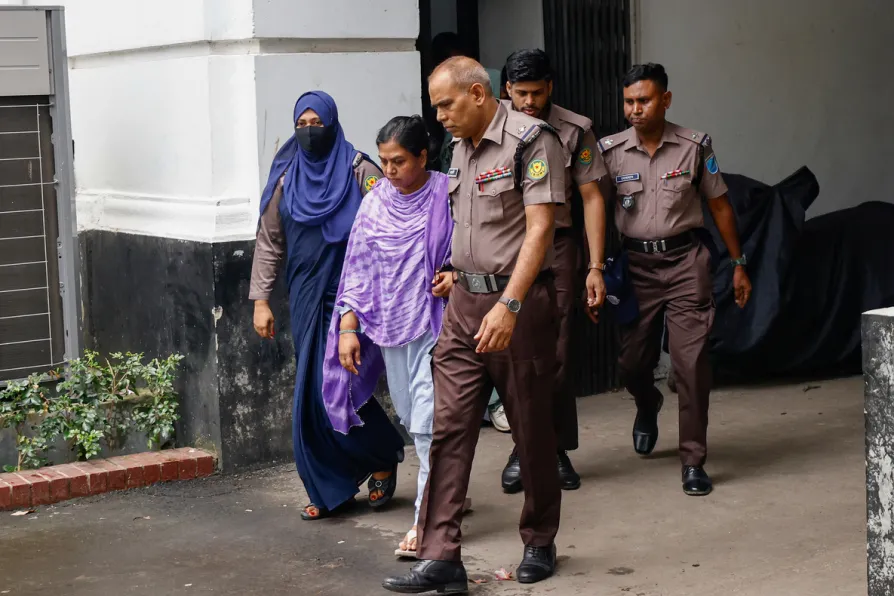
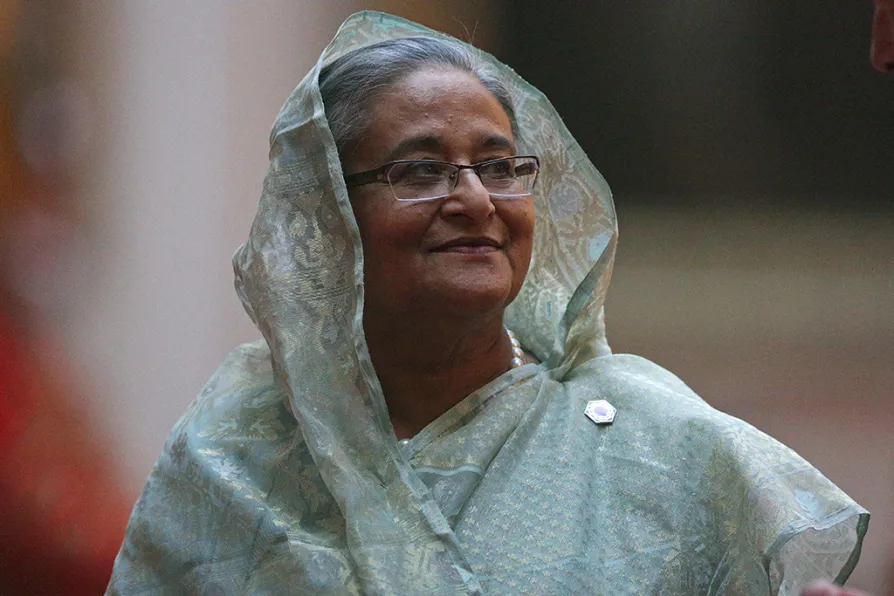
A New Delhi press conference in which Sheikh Hasina and her son implied the new order in Bangladesh is a security threat to India has sparked fears she is planning a comeback. SIAM SAROWER JAMIL reports on the fallout