

 Latest editorial
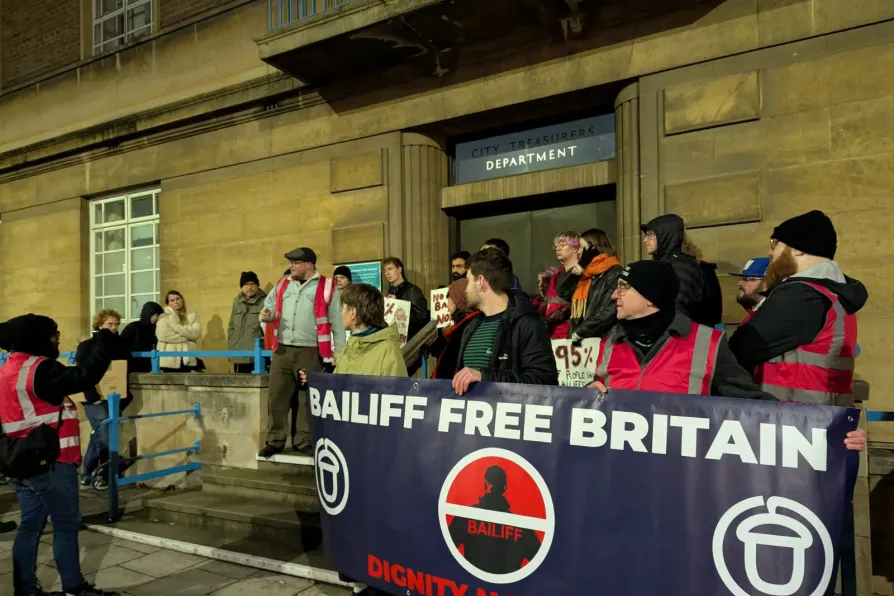 Protesters in Norwich. Photo: ACORN the union





CAMPAIGNERS who have piled pressure on local authorities to stop using bailiffs, staging protests at 20 council meetings in a month, warned today that more demonstrations will follow.
Community union Acorn has disrupted council meetings in Cardiff, Liverpool, Oxford, Sheffield, the east London borough of Hackney and elsewhere, with more actions planned in the coming days.
The protests are part of the union’s Bailiff Free Britain campaign, which also calls for an end to imprisonment for non-payment of council debt and for the exploration of alternatives such as a proportional property tax.
According to government figures, total council tax arrears have now soared to £6.6 billion.
Debt recovery firms have profited handsomely, with a recent BBC investigation revealing that more than 1.4 million households had been referred to bailiffs in the past year.
Acorn members have responded by storming chambers to share their experiences, bringing council meetings to a halt.
In Bristol, protesters occupied the council’s chambers and held a “people’s council meeting,” refusing to leave until councillors agreed to meet to discuss the campaign’s demands.
In Birmingham, security staff were filmed trying to thwart protesters by attempting to snatch speeches from their hands and forcibly remove them.
And in Norwich, Acorn reports that a council meeting was abandoned and all doors to the town hall were locked after councillors heard that protesters had assembled nearby.
Acorn national chairwoman Chelsea Phillips said: “Councils exist to serve and protect people and it is a disgrace that thugs are sent to people’s homes on the council’s behalf.
“Private bailiff firms are making a killing — literally, in some cases — as struggling residents are hounded and harassed. This hurts people, it harms our communities and in the long run it costs our councils.
“That’s why we’re calling for councils to replace them with early intervention and support for people falling behind, for reform of the unfair and ineffective council tax system and for dignity, not debt, for our families and our communities.”
A government consultation on modernising the administration of council tax ended in September.
The government was contacted for comment.
