
 Latest editorial
RAMZY BAROUD sees Gaza abandoned while the genocide continues


The grotesquely unfair and unbalanced Britain
Aspiration for all? How can Cameron and Osborne even spit out the words?, asks MICHAEL MEACHER

ANDREW MURRAY offers some troubling thoughts on pressing political issues
Tensions have once again escalated between Egypt and Ethiopia over GERD, Africa’s largest hydroelectric project, and now Trump has offered to mediate. NICHOLAS MWANGI reports
The National Education Union general secretary speaks to Ben Chacko on growing calls to protect children from a toxic online culture
While Iranians take to the streets en masse to protest sky-high inflation, Trump and Netanyahu are threatening military intervention. The Iranian population is trapped between a repressive regime, a suffocating economic war from the outside, and a history of dark alliances, argues MARC VANDEPITTE
Unison Scotland’s BRENDA AITCHISON says her union won’t tolerate further cuts to public services





According to the official Office of National Statistics latest report 19.3 million persons in Britain had an income below 60 per cent of the national median at some point during 2010-13.
That is nearly a third of the entire population and a higher proportion than for the EU as a whole.
Britain’s figures are even higher for pensioners (40 per cent) and single-parent households (60 per cent).

Similar stories
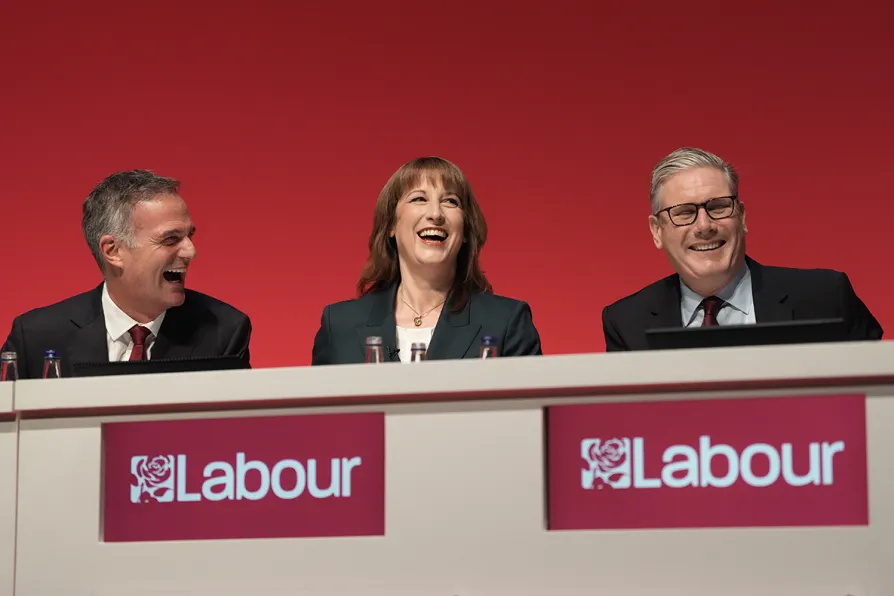
Labour will find increases in the state pension age are unacceptable, just as cuts to the Winter Fuel Allowance, personal independence payments and universal credit are — it needs to change direction immediately, writes PCS general secretary FRAN HEATHCOTE

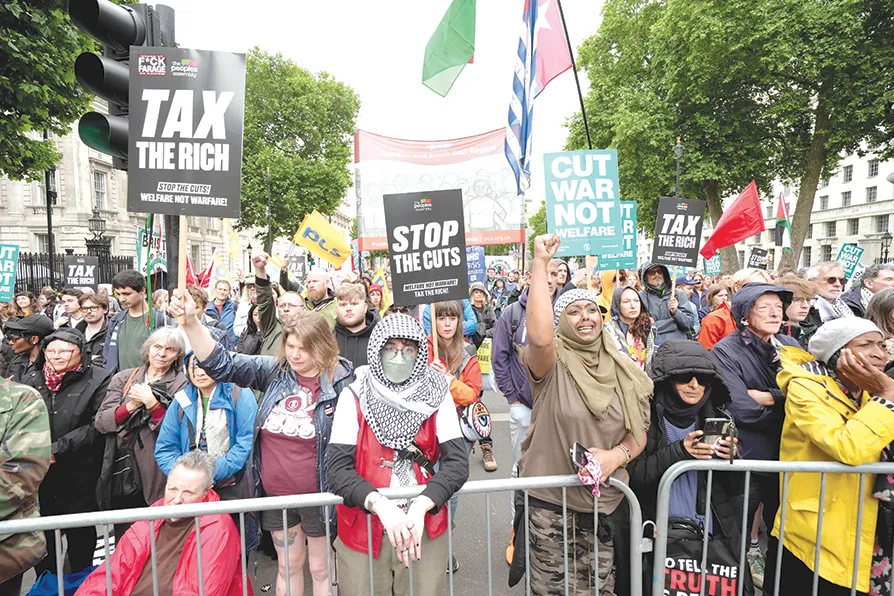
RICHARD BURGON MP points to the recent relative success of widespread opposition to the Labour leadership’s regressive policies as the blueprint for exacting the changes required to build a fairer society
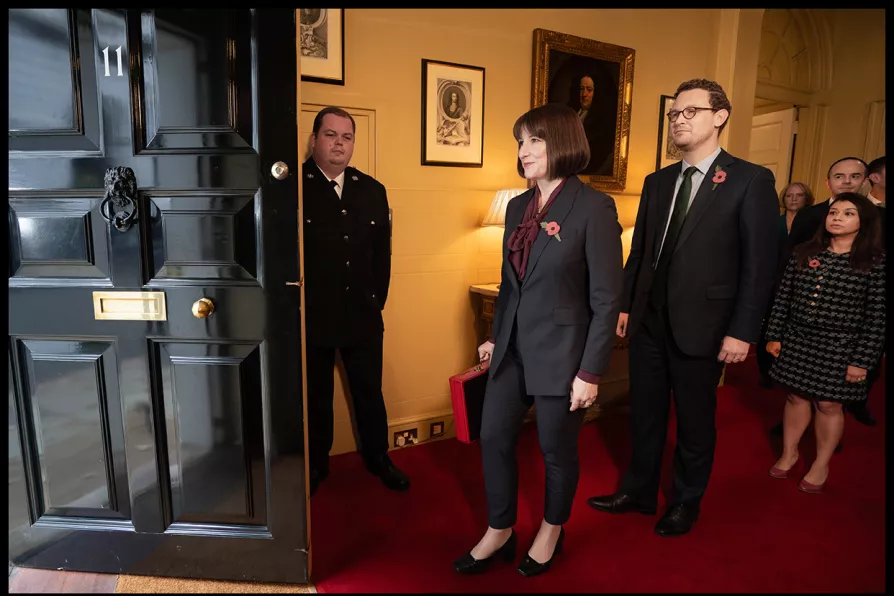
In his first of a new monthly economics column MICHAEL BURKE argues that public-sector investment is more effective, more productive than private-sector investment