RITA DI SANTO assesses the winners of the most politically charged festival to date


 Latest editorial
‘It’s such a beautiful sound; a woman’s voice has special memories’
Chris Searle speaks to US pianist RAN BLAKE
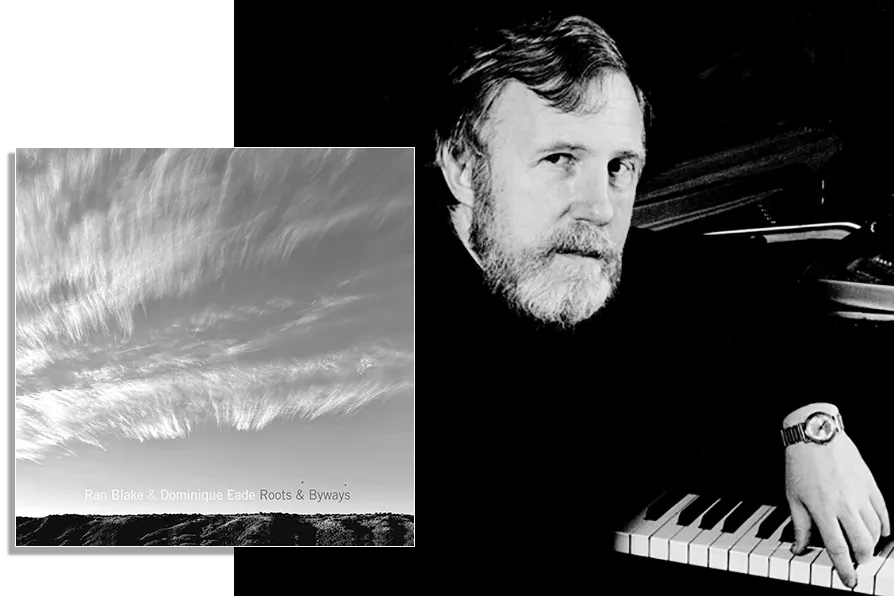 Ran Blake / Pic: Brianmcmillen/CC
KATARZYNA KOSMALA introduces a retrospective by one of the most significant figures in contemporary US photography
MAYER WAKEFIELD is entertained but let down by an audacious production that, sadly, doesn't ring true
MARY CONWAY is disappointed by drama that, despite accomplished performances, cannot overcome an unfocused script
New releases from Sam Carter, Spell Songs and Les Thomas





I HAVE to admit that one of my heroes of jazz is the pianist Ran Blake, born in Springfield, Massachusetts, in 1935 and still playing brilliantly, as attested on his new album Roots and Byways, with long-time vocalist partner Dominique Eade, born in London in 1958 and, like Blake, for many years a teacher at New England Conservatory.
I ask him, what were his musical inspirations when he was a teenage student at New York’s Bard College. He answered with his customary eclecticism: “Prokofiev’s Scythian Suite — movements One and Three, Debussy’s Afternoon of the Faun, Monk, Mahalia Jackson’s I’m Gonna Tell God, Chris Connor’s Something to Live For.”
“Monk’s impact would take me pages to describe! I’d play his records endlessly — the Blue Note, Prestige and Riverside albums like The Unique Monk, Brilliant Corners, the Duke Ellington album, and Monk’s Music, which has Crepuscule with Nellie. I wore these records out! I couldn’t get enough of him! Students down the hall started banging on my door!
“I remember going to the Five Spot to hear Trane and Monk. He, Chris Connor and later Abbey Lincoln and of course Billie Holiday were always on my record player. And at the same time I discovered Shostakovich’s Tenth Symphony. But I still have Monk in my dreams. I remember my meetings with him, his wife Nellie and his friend Nica.”
Blake made his first album with the singer Jeanne Lee, The Newest Sound Around, in 1961, but his 1969 album The Blue Potato and Other Outrages, used song titles as messages of political truths in a revolutionary way, giving their melodies new realities.
Stars Fell On Alabama reflected the civil rights struggle, Chicago (“that toddling town,” as sung by Sinatra) spoke wordlessly of the resistance to the Vietnam war and racism around the 1968 Democratic Party Convention in the Windy City, the melody of Never On Sunday told of the fascist coup in Greece, and the Three Seeds Suite described by piano the lives of Che Guevara, Regis Debray and Malcolm X. It was truly audacious music of its times.
I ask him why the female voice inspired him so much — Jeanne Lee, Chris Connor, Billie Holiday have always featured largely in his pianism, and his 1997 album, Unmarked Van, is a solo tribute to Sarah Vaughan.
“First of all it’’s such a beautiful sound; a woman’s voice has special memories. Singers like Dominique, Rebecca Sullivan, Sara Serpa and Christine Correa mean so much to me. But men singers too. If you could arrange an album with Al Green, I wouldn’t say no. I also adore Ray Charles.”
I ask him about musicians of his youth who campaigned against racism and political freedom — like Max Roach, Charles Mingus, Archie Shepp and Coltrane — shouldn’t they be emulated in now-times by new generations of musicians?
He agrees, and adds: “Well, because racism is so prevalent in our country. What about yours? I also find other music can speak about freedom, such as Giovanna D’Affini, Shostakovich’s Lenin Symphony and Mahalia Jackson — considered jazz, but defined as gospel.”
The Roots and Byways album is a musical treatise of intense beauty. There are two companion instruments, the piano and voice, and two companion voices, the keyboard and the utterance. From Eade’s first swirling notes in Ellington’s Mood Indigo, along Hank Williams’ Lost Highway of Blake’s tolling solo and Eade’s toss-away words of Gershwin’s Who Cares? or Mancini’s Dreamsville.
From the phantasmal Les Grognards, originally sung by Edith Piaf, invoking the ghosts of Napoleonic soldiers slaughtered in Russia returning to Paris and haunting and tormenting its people, to the swirling version of Mary Lou Williams’ What’s Your Story, Morning Glory and Blake’s naked, Monkish accounting of the US songbook ballad You Go to My Head to the rustic love truths of On Top of Old Smokey, listeners are constantly surprised, their consciousnesses awakened and provoked.
No more so than on the revisiting of Max Roach’s Mendacity sung by Abbey Lincoln, from his 1961 album Percussion Bitter Sweet. In a direct commentary on 2026 Trumpery, Eade’s voice declares with a lucid diction: “Mendacity, mendacity,/ It makes the world go around./ The winner’s not the one who’s straight/ But the one who lies the most.”
Blake remembers his time spent many decades ago in London with warmth.
“I did have a week at Ronnie Scott’s in 1964 when you were probably too young to come to the club,” (not quite right there!) “and a decade or two later I was at the Guildhall.”
He’s intensely looking forward to his upcoming 91st birthday concert at the Massachusetts Institute of Technology.
I ask him what is his message to a new generation of musicians? He couldn’t have been more tersely exact: “Use your ears before your instruments and your eyes!” A musical lifetime’s wisdom, for sure.
Roots and Byways with singer Dominique Eade is released by Sunnyside Records.

Similar stories
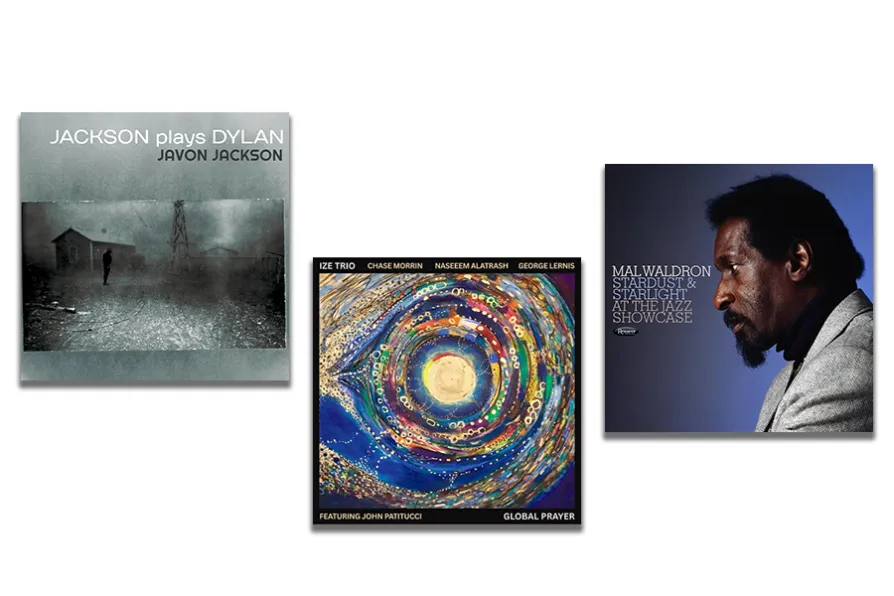
New releases from Javon Jackson, IZE Trio, and Mal Waldron Trio
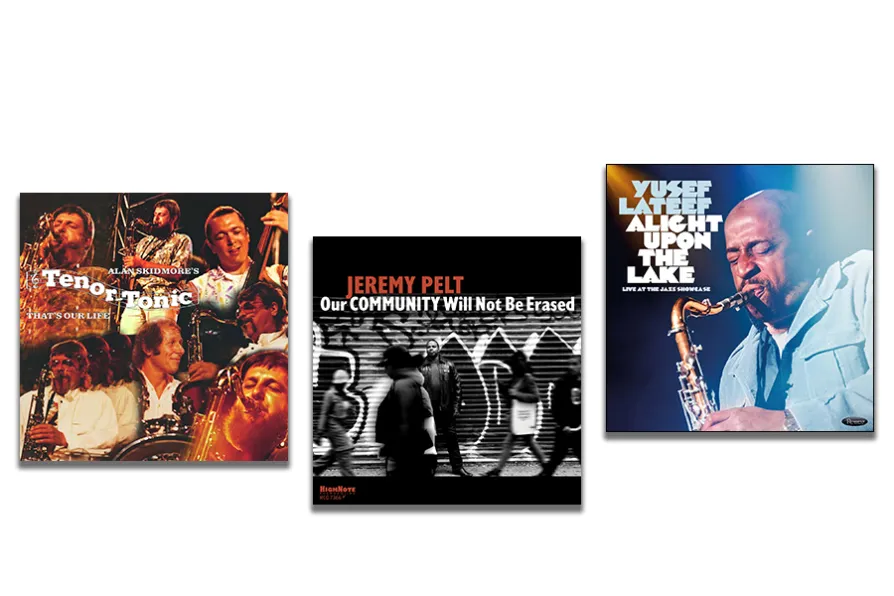
CHRIS SEARLE waxes lyrical over Alan Skidmore’s tenor-tonic, Jeremy Pelt, and the Yusef Lateef Quartet
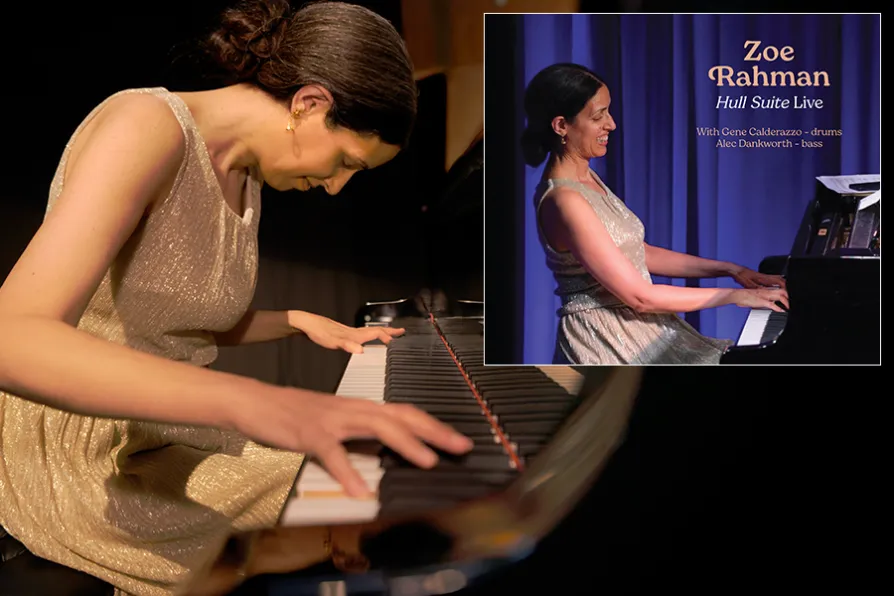
Chris Searle speaks to British pianist ZOE RAHMAN
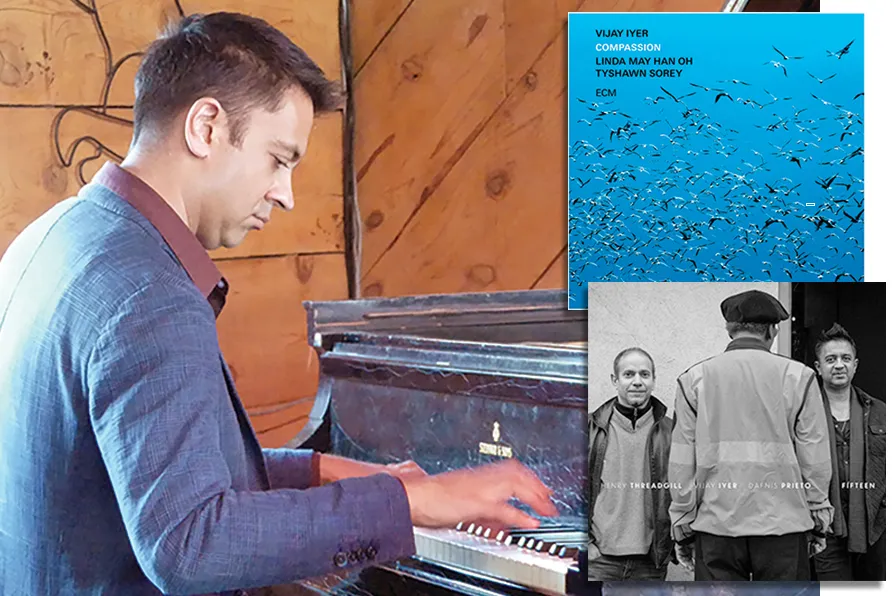
CHRIS SEARLE urges you to listen to two new albums by the US Indian pianist VIJAY IYER