Sovereignty and the rule of law are under threat from Trump’s attacks on Lula’s administration just as they have been across Latin America, argue CARLOS MARTINEZ and SARA VIVACQUA


 Latest editorial

A habitable planet is possible, but we must tackle the power of billionaires
The future does not have to be climate chaos and social breakdown. MARC VANDEPITTE looks at the alternatives offered by the Global Justice Report, co-authored by Thomas Piketty
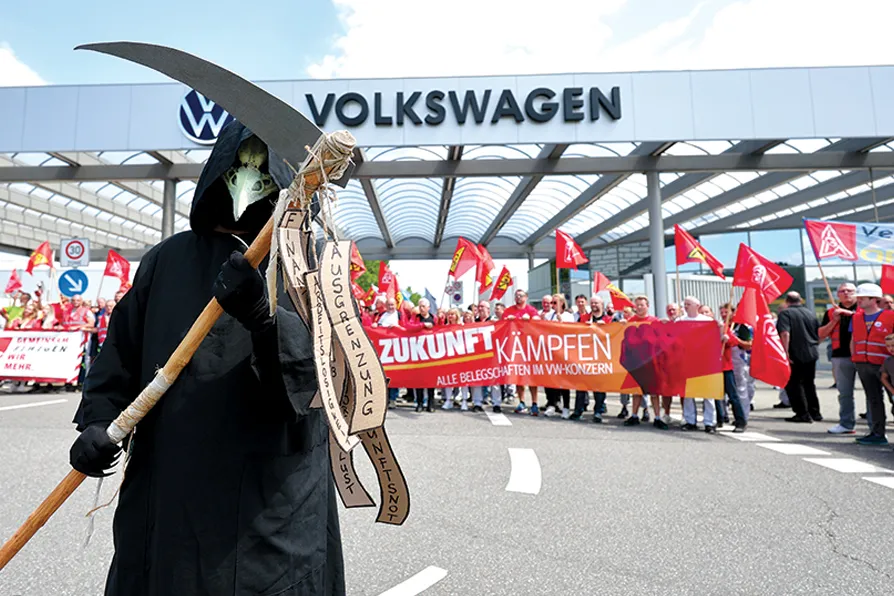 UNITED VOICE REQUIRED: Workers stand up, yesterday, to the management of Volkswagen plant in Zwickau, Germany with slogans: ‘fighting for the future,’ and ‘exclusion,’ ‘job insecurity’ (strips attached to the scythe) / Pic: Jan Woitas/dpa via AP
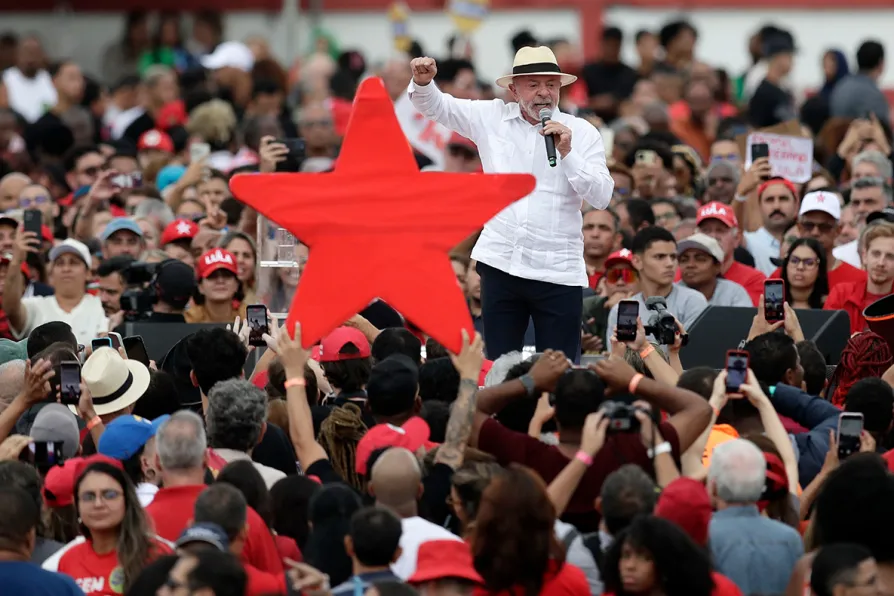
Glasgow will remember the martyrs of the 1787 strike this weekend in speech and song, their spirit is sorely needed today, writes JIM LISTER
ALEX BROWN explains how medieval Europe was plunged into sunless years, with widespread crop failures and devastating famines
Police crackdowns on Israeli peace demonstrators combined with court rulings and settler organisations are designed to strip Palestinian families of their homes and land. The Israeli state has tried to silence both Israelis and Palestinians who resist, according to Zo HaDerekh (This Is The Way) the Communist Party of Israel’s Hebrew-language weekly
Remembering a legendary trade unionist and inspirational leader
Communists in Australia, Britain and the US outlined a joint state agreement against their governments’ militarist provocations.





THE Global Justice Report sketches a hopeful and concrete transition path for humanity from 2026 to the year 2100. The main conclusion is simple: it is possible to unite well-being for everyone with a habitable Earth.
However, that transformation rests on three equally important pillars.
First, a rapid decarbonisation of our energy systems is necessary.
Second, we must drastically switch to the principle of sufficiency: enough to live well without burdening the planet. That means fewer working hours, a smaller material footprint and alternative consumption patterns.
Third, global inequality must be tackled drastically and structurally, both between and within countries.
That reduction of inequality is not just a socially desirable idea. It is a prerequisite for being able to finance the necessary climate investments and to maintain social support for such a transformation. Without equality, there is no habitable future.
The report was published in June 2026 and was written by a core team of seven researchers, including the well-known economists Thomas Piketty and Lucas Chancel. It is a collective initiative of the World Inequality Lab and is based on data collected by more than 200 scientists worldwide.
Five thousand euros per month
What does the report concretely propose? The plan provides for the average monthly income per person in each country to reach €5,000 by 2100.
Today, a massive gap still exists, ranging from €290 in subsaharan Africa to 4,590 euros in North America. A global income of €60,000 per year will become the new normal.
That income convergence goes hand in hand with a true revolution in wealth distribution.
The share of the richest 50 per cent of the world population in total wealth falls from 6 per cent to just 0.05 per cent. At the same time, the share of the bottom half rises from 2 per cent to no less than 30 per cent. Almost 90 per cent of the world population will see their income double.
Working less, living more
One of the most striking proposals is the drastic reduction of working hours. While we currently work an average of 2,100 hours per year worldwide, that figure should fall to 1,000 hours by 2100.
This is a historical trend that we can choose to continue, although it requires strong collective mobilisation.
The time gained is not simply filled with doing nothing. The plan provides for a shift away from material sectors toward more immaterial ones, such as education and healthcare.
The share of global working hours dedicated to these sectors rises from 11 per cent to 43 per cent. Countries like Norway and Sweden already demonstrate that this is feasible.
Added to this is the pursuit of full gender equality: equal labour participation, equal hours of paid and unpaid work and equal pay. That implies a fundamental redistribution of power and time, linked to narrower income gaps.
The world cools down
The plan shows that we can limit warming to 1.8°C by 2100. That is considerably better than the more than 4°C that awaits us if we do nothing.
The combination of the principle of sufficiency (working and consuming less) and a rapid energy transition is the only way forward.
That transition requires an investment of three to four per cent of global GDP per year over the next three decades. That money must come primarily from the global rich, who have profited disproportionately from economic growth and bear a massive responsibility for historical emissions.
Important: the plan does not opt for a simple shrinking of the economy. A targeted shift toward less material sectors and alternative food production methods is more effective than a general reduction in prosperity.
In this way, a prosperity level of €60,000 per capita can be combined with a lower temperature rise than under a general economic contraction.
Global Justice Fund
The engine behind this transformation is the Global Justice Fund (GJF). This new international institution must collect and manage the revenues from global wealth and income taxes. Those taxes will affect only the richest 1 per cent of the world population and will come on top of national taxes.
The fund pays out country dividends based on equal amounts per capita. For poor countries, that can amount to as much as 9 per cent of their GDP, while for rich countries it represents only 2 to 3 per cent.
Those dividends, however, are not without obligations: they are tied to strict conditions in the fields of climate, education, health and inequality.
The annual expenditures of the fund amount to an average of 10.3 per cent of global GDP. That is a gigantic sum compared to the current 0.4 per cent allocated to development aid.
But the challenge is also unprecedented: climate investments alone require three to four per cent of global GDP.
Majority wins, small part loses
Who benefits from this plan? An overwhelming majority: 89 per cent of the world population doubles its income. In the global South, that figures reaches 95 to 98 per cent of the population. In the North, 85 to 95 per cent benefits as well. Only a small minority, mainly the very rich, will see their income fall.
If we also factor in the value of free time and a habitable planet, more than 99 per cent of the world population comes out ahead. Still, the plan will meet with fierce resistance, and not just from billionaires. Part of the middle class in rich countries may also resist choosing more free time over increased consumption.
Democratic world order
The implementation of this plan requires a fundamental democratisation of international institutions.
Today, Europe and North America hold four times as much voting power in the IMF and the World Bank relative to their share of the population.
The plan argues for one vote per person, marking a transition from global plutocracy to global democracy.
That also means the end of the “exorbitant privileges” of rich countries, which currently benefit from higher returns on their foreign assets than they pay on their debts. A new international currency and an international clearing union must put an end to this, meaning that not only debtor countries but also countries with large surpluses will be obliged to adjust their economies.
Shortcomings
The report is unique and highly significant because it is the very first attempt to present a fully quantified plan. It combines redistribution on a global scale, financial order reform, energy transition and shifts in consumption.
Where traditional climate scenarios, such as those of the IPCC, separate these issues, this model brings them together. In terms of statistical data, the report is monumental.
According to current macroeconomic trends, the world is heading for a catastrophic warming of more than 4°C. The proposed integral model succeeds in limiting warming to 1.8°C by 2100. The report thereby offers a realistic, scientific alternative to destructive contemporary capitalism.
Still, the report contains a number of fundamental shortcomings. The first is that the timeline lacks sufficient urgency.
The Global Justice Report targets major changes by 2100. That makes it ambitious on paper, but at the same time very slow, given the climate urgency, social crises and ecological destruction already under way today.
For billions of people living in poverty, for countries already battered by climate disasters, and for ecosystems on the verge of collapse, 2100 is not a reassuring horizon. The question is not only whether a just world is possible, but why it should not be enforced much more quickly.
A second weak point of the report is that it focuses mainly on the redistribution of wealth, while barely touching upon the root causes of the problem.
Taxing billionaires and redistributing wealth is fine and necessary, but as long as large corporations, banks, energy companies and tech giants continue to control investment decisions, the economy will keep revolving around profit instead of social and ecological needs.
The focus on taxes, redistribution and public funds changes nothing about property relations and the profit logic that structurally causes and widens the gap between rich and poor, driving climate degradation.
These measures, however important, remain trapped within the same systemic logic that caused the current problems and will continue to cause them.
A third shortcoming is the weak analysis of power. The report demonstrates in a technically convincing way that a more just world is possible, but remains much vaguer about who actually holds the power to enforce it.
According to Professor Duncan Green of the London School of Economics, the report offers no convincing theory of change.
A dominant core of 147 companies, through interlocking branches into other corporations, jointly holds 40 per cent of global wealth. Just 737 companies own 80 per cent of total wealth.
These giants, fossil fuel companies and financial elites will not voluntarily give up their enormous power just because a report proves that another world would be better and necessary.
For that, organised counterpower is needed: trade unions, social movements, climate movements, political parties, strikes, boycotts, and international solidarity.
The Global Justice Report is strong as an arithmetic and moral compass, but weaker as a strategy for struggle.
Between “possible” and “reality” stand class struggle, geopolitics, capital flight, the far right, fossil fuel interests, war economies and weak international solidarity.
Whoever wants a habitable planet and a dignified life for everyone must do more than just show that it can be done. They will also have to organise the power to enforce it.
There is indeed mention of an organised civil society, but without concretely analysing which coalitions, organisations and power dynamics are required to enforce the proposed shift.
Thus, the report remains partly technocratic. Taxes, institutional reforms and democratic procedures are necessary, but they are not enough if they continue to function within the same systemic logic that caused the crisis.
The report shows that a better future is indeed arithmetically possible, but the open question remains how the social force will be built to actually bring that future into being.
The Global Justice Report is important because it shows that the future is not set in stone. Still, the road toward it is less clear than the calculations themselves.
The real challenge lies not only in designing just measures, but in breaking the power that prevents them today. There is still a lot of work to be done.

Similar stories
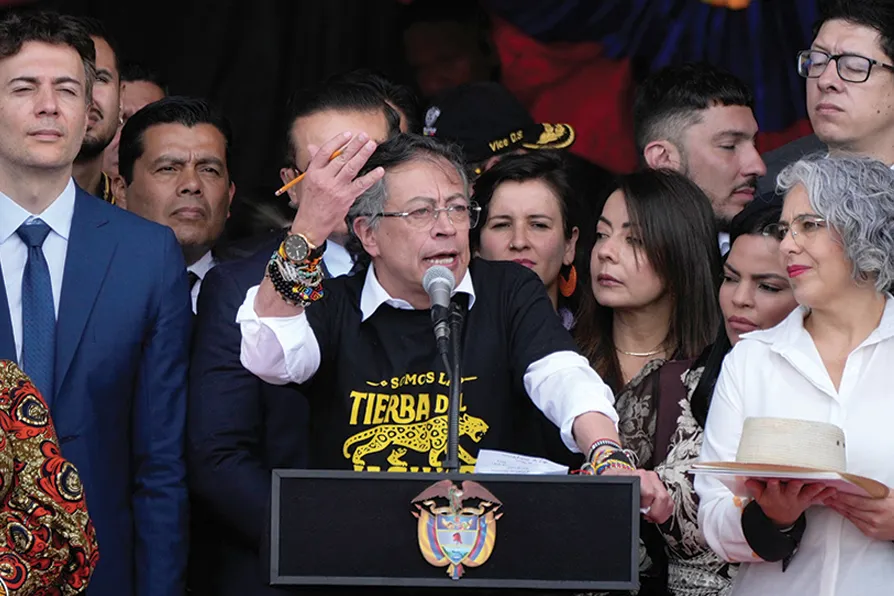
Latin America is being swept by a series of right-wing electoral victories. But behind that shift to the right lies less of an ideological conversion than anger, fear, insecurity, and a deep crisis of democracy, asserts MARC VANDEPITTE
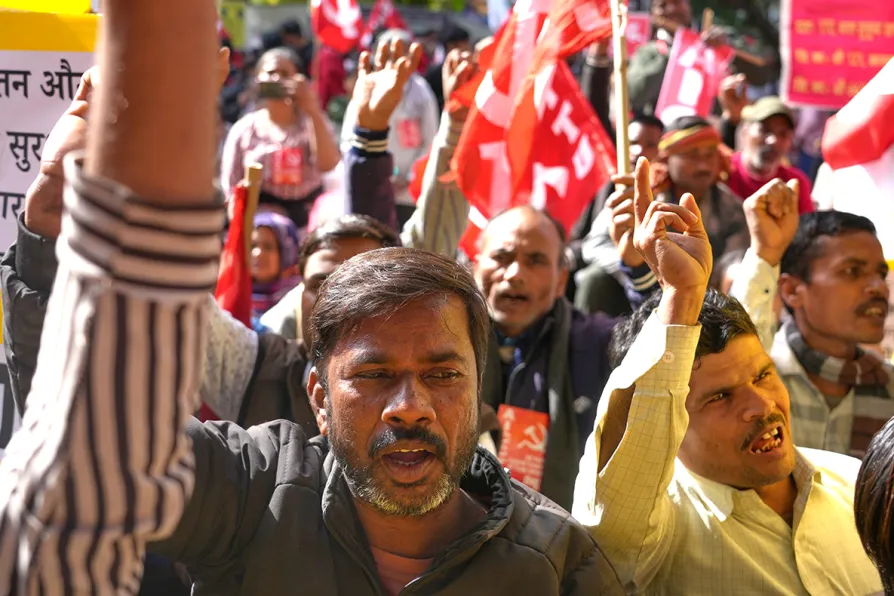
The biggest strike in global history is a template for our future. The silence tells you all you need to know, writes CLAUDIA WEBBE
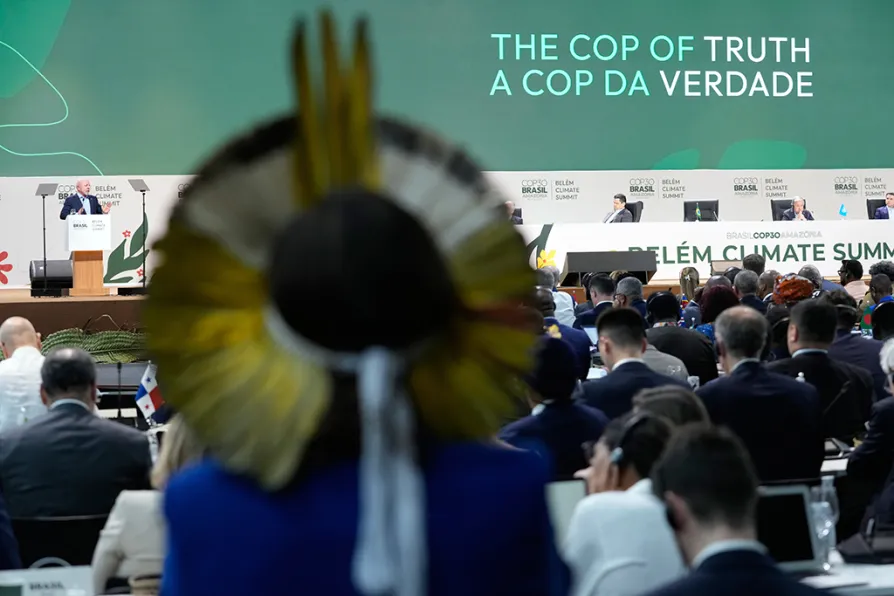
From summit to summit, imperialist companies and governments cut, delay or water down their commitments, warn the Communist Parties of Britain, France, Portugal and Spain and the Workers Party of Belgium in a joint statement on Cop30

Climate justice and workers’ rights movements are uniting to make the rich pay for our transition to a green economy, writes assistant general secretary of PCS JOHN MOLONEY, ahead of a major demonstration on September 20