Supporters from both sides prepare to stand together against season ticket threats and exploitation, writes JAMES NALTON


 Latest editorial
How boxing united Mandela and Ali
JOHN WIGHT writes about the shared love of the ring that strengthened two icons in their struggles against racism and injustice
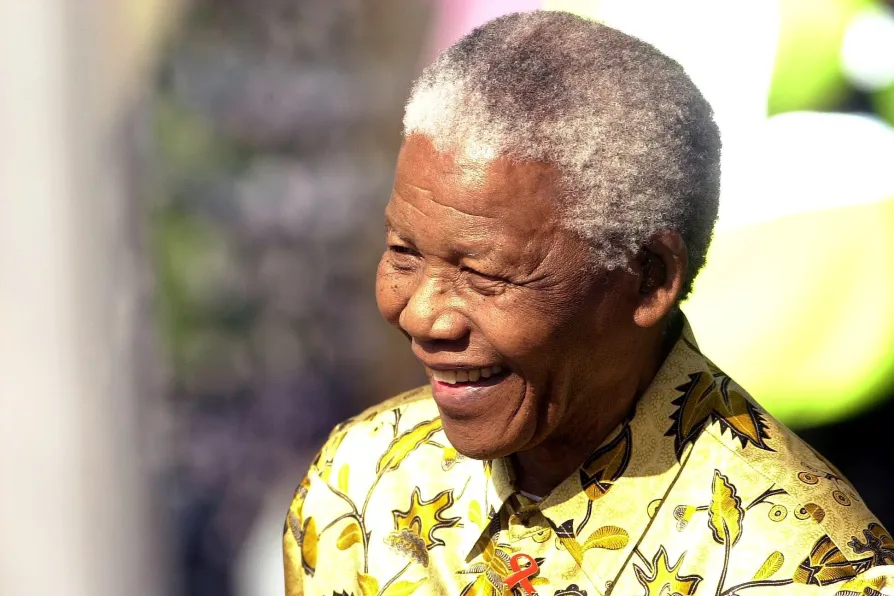 Former South African President Nelson Mandela, April 7, 2000

French federation withdraws support as pressure mounts on Fifa president





NELSON MANDELA’S death in 2013 resulted in an outpouring of tribute and veneration such as no other political or world figure could ever hope to inspire in modern times, perhaps with the exception of Muhammad Ali. And as with Mandela, it is no coincidence that Ali also dedicated himself to confronting racial oppression and in so doing became a global icon. What Mandela — or Madiba as he was more affectionately known — also had in common with Ali was his love of boxing.
For Ali, boxing was the platform that enabled him to touch the hearts of millions at home and abroad, both as the heavyweight champion of the world in the ring and a champion in the struggle against racial oppression outside it.
Mandela, meanwhile, used the sport to build the fitness, discipline, and the mental fortitude he called upon to help him in his monumental struggle against apartheid in South Africa. In his autobiographical work, Long Walk To Freedom, Mandela’s love of the sport shines through. “I did not enjoy the violence of boxing so much as the science of it,” he writes. “I was intrigued by how one moved one’s body to protect oneself, how one used a strategy both to attack and retreat, how one paced oneself over a match.”
In the same passage, he goes on to state: “Boxing is egalitarian. In the ring, rank, age, colour and wealth are irrelevant … I never did any real fighting after I entered politics. My main interest was in training. I found the rigorous exercise to be an excellent outlet for tension and stress. After a strenuous workout, I felt both mentally and physically lighter.”
Mandela also revealed that he was “never an outstanding boxer.” But then he didn’t have to be in order to use the sport to his advantage. This he also made clear. “It was a way of losing myself in something that was not the struggle.”
As a way of taking his mind off his participation in the struggle for the freedom of his people and to replenish his strength, boxing was key in helping to forge the determination he needed to prevail against the seemingly insurmountable weight of the state machine of structural oppression that defined white South Africa. In this regard, boxing served not only a physical purpose but, just as importantly, a psychological and a spiritual one.
Ali, likewise, used his exploits in the ring to help him overcome his struggles outside it, not least of which the years he spent battling his own government over his refusal to be drafted into the US armed forces to serve in Vietnam. Ali: “Only a man who knows what it is like to be defeated can reach down to the bottom of his soul and come up with the extra ounce of power it takes to win when the match is even.”
The development of Mandela’s and Ali’s personalities were informed by the injustices suffered by their people in white-dominated societies during the 1950s and ’60s. The boxing gym in such circumstances was a sanctuary, offering a temporary escape and providing the means to hold on to their self-esteem. Both men benefited from the bonds of solidarity and human connectedness that were afforded them in the process of sparring and training with other fighters.
In his later autobiographical work, Conversations with Myself — consisting of letters, interviews, and fragments of his writings — Mandela recounts his fond memories of the gym he trained in while living in Soweto as a young man. The gym was called the Donaldson Orlando Community Centre (DOCC), and Mandela trained there in the early 1950s. In a letter to his daughter Zinzi, written while incarcerated on Robben Island where he spent 18 of his 27 years in jail, he writes: “The walls of the DOCC are drenched with the sweet memories that will delight me for years.”
His daughter never received the letter, however, confiscated as it was by the prison authorities. But it illustrates, nonetheless, the central importance of the gym in the life of this then young revolutionary leader.
Just days before Mandela passed away, Ali paid tribute to him in an article to mark the upcoming release that Christmas of the movie of his life Long Walk to Freedom.
“I know something about protest,” he wrote. “I know well the feelings and questions that run through the mind of those who stand against a system, braving everything for a cause. It is never easy. The personal price is high, but the greatest of people persevere for the greater good. Modern South Africa is built on the back of Mr Mandela’s sacrifice.”
Ali continues in the same piece: “It still amazes me, even to this day, that a man could give up two and a half decades of his life, emerge from prison and forgive his imprisoners.”
Truly it is something to contemplate, the bond shared by two of history’s great icons — men who were born and lived thousands of miles apart on different continents, yet were brothers in the struggle against oppression and injustice and whose characters were forged to a large extent in the environs of the boxing gym.
Perhaps it was just as another great revolutionary, Irishman Terence MacSwiney, said: “Victory is not won by those who can inflict the most but those who can endure the most.”
Nelson Mandela and Muhammad Ali were men whose ability to endure enabled them to overcome. And it was in their overcoming that their respective legends were forged.
