Councillor SAM WHEELER says there’s a tangible shift in mood on the left in the city whose mayor has recently become PM — but there’s no room for complacency



Hands off Raul Castro!
Born on this day in 1931, the heroic revolutionary faces a dangerous new wave of White House aggression. We must treat his birthday as a rallying cry to resist the illegal siege of Cuba, writes ROGER McKENZIE
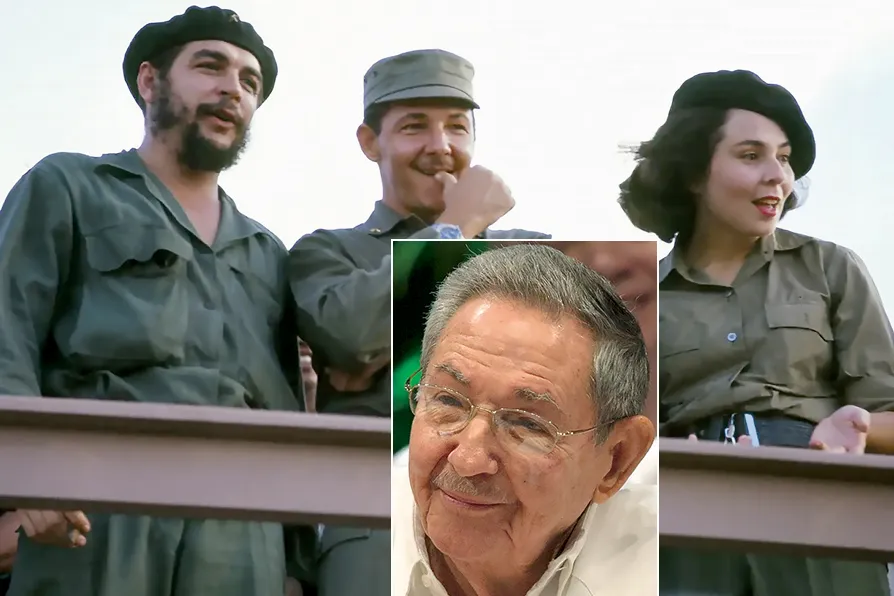
 (L to R) Ernesto Che Guevara, Raul Castro and Vilma Espin (Castro’s wife) in July 26 1964; (inset) Castro at the Summit of the Association of Caribbean States in 2016 / Pics (L to R): Ullstein Bild/CC, Pic: Presidencia de El Salvador/CC
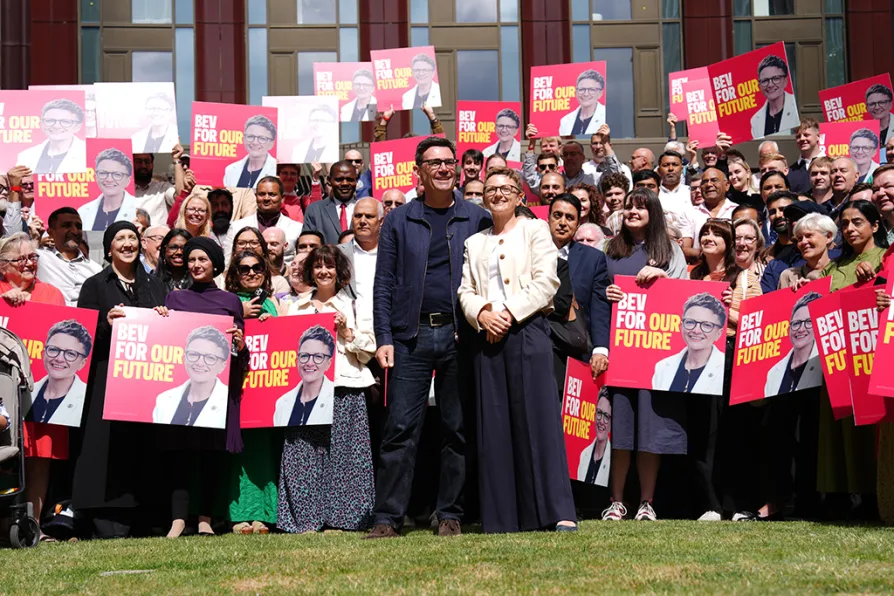
Communist Party leaders Alex Gordon and Lorraine Douglas deliver vital medicines in trip to besieged socialist island
TUC Cymru is playing a leading role in tackling far-right ideas in the workplace, says LAURA DOEL
A New Delhi press conference in which Sheikh Hasina and her son implied the new order in Bangladesh is a security threat to India has sparked fears she is planning a comeback. SIAM SAROWER JAMIL reports on the fallout
Two months of student unrest have forced out India’s education minister and rattled the BJP regime. Could this be the beginning of the end for Modi, asks Communist Party of India (Marxist) general secretary MA BABY
MAT COWARD says the heatwave is a testing time for gardeners — but he has some tips





RAUL CASTRO was born on this day in the small Cuban village of Biran in Holguin Province in 1931.
If there was ever a time when we needed to celebrate the life and contribution of this heroic revolutionary it is today.
Castro, Cuba’s former president, has been accused by the US regime of being a terrorist over the shooting-down of two aircraft three decades ago.
The fact is that these planes had repeatedly violated Cuban airspace and had been part of a concerted campaign by an alleged US backed-terrorist organisation called Brothers to the Rescue to destabilise Cuba.
Their campaign included dropping anti-Castro leaflets near the Cuban coast.
The Cuban government has rightly accused Washington of using “shady” legal manoeuvres to try to justify aggression against sovereign states to the public.
Deputy Foreign Minister Carlos Fernandez de Cossio said: “Any attempt to use this excuse for action against these comrades within Cuba will be met with fierce resistance from the Cuban people.”
He, along with most of the rest of the world not under the shackles of US colonial or military rule, denounced the accusations against Castro as “fraudulent,” given that they have “no legal, political or moral basis whatsoever,” and asserted that “it should be seen as part of the growing, aggressive escalation” unleashed by the White House against the Caribbean country during 2026.
Cuban President Miguel Diaz-Canel has also rejected the accusation against Castro, recognising it for what it is: “A political action, without any legal basis, which only seeks to fatten the file they fabricate to justify the folly of a military aggression against Cuba.”
The move comes amid escalating tensions between Washington and Havana.
On January 29, Trump signed an executive order declaring a “national emergency” in response to the alleged “unusual and extraordinary threat” that, according to Washington, Cuba poses to the security of the US and the region.
The order accuses the Cuban government, without the slightest bit of evidence, of aligning itself with “numerous hostile countries,” of harbouring “transnational terrorist groups” and of allegedly allowing the deployment on the island of “sophisticated military and intelligence capabilities” from Russia and China.
Based on these flimsy and unfounded claims, tariffs were announced against countries that sell oil to Cuba, along with threats of retaliation against those who act against the White House executive order.
I don’t think that it takes a genius to work out that the action of the Trump regime this year and the charges brought by his far-right gangster regime are done to bring a modicum of justification to the intention of Washington to continue its illegal and unprovoked destruction of Cuba through its intensified six-decades-old siege.
The targeting of Castro bears all the hallmarks of the attack that we saw against Venezuelan President Nicolas Maduro.
First you seek to delegitimise and undermine, then you make up some cock-and-bull nonsense about crimes that they personally are alleged to have committed and then you launch a military operation to seize them in the hope of bringing about regime change.
In the case of Maduro earlier this year, he was alleged to be some sort of drug baron before the US killed 100 people, including around 30 Cubans, as they kidnapped the Venezuelan president and his wife, Celia Flores.
Both were then subjected to the full US media humiliation over their “capture” and have languished in a Brooklyn detention centre for more than 150 days.
The US is clearly operating on the basis that it can get away with something similar for Castro.
The Trump regime has made its intentions clear by surrounding the island with an unprecedented array of attack vessels. Trump has bragged that he will look forward to taking over Cuba — presumably and without needing to be said — on behalf of US monopoly capital.
Anyone that does not see the attack on the person of Castro as not just an attack on the individual and the sovereign state of Cuba but also on the movement for socialism internationally is living in a dream world.
I say this not to take the debate away from the grievous threat being made against Castro but to underline that something greater is at stake here.
The attack on the Cuban revolution must be taken as a warning against socialism across the globe.
But we should also recognise the inspirational contribution that Castro, along with his brother Fidel Castro, Che Guevara and all the other Cuban revolutionaries have made towards keeping in our minds that a new world is possible.
For example, Cuba’s healthcare system is considered one of the strongest globally, serving a population of 11.5 million and is entirely government-funded.
Cuba invests heavily in providing students with the best facilities. With no private medical colleges, all students are given equal access, regardless of financial background.
Admissions are based on entrance exams and high school marks. Special quotas are also reserved for rural students, and many international students from Latin America come to study here.
Why should I bother to even mention this here? The answer is because it is everything that successive US governments hate. The US regime takes great pleasure in the idea that the most vulnerable in society should still have to pay their way.
They still trot out that ridiculous phrase that people should pull themselves up by their own bootstraps — failing to be the least bit concerned that many in the US have neither shoes or bootstraps amid soaring levels of poverty in the richest country on the planet.
Cuba’s excellent and entirely free education system, like its health service, is being hit hard by the US blockade.
The country’s severe energy crisis, caused by the US blockade, has forced the Cuban government to end the school year 15 days earlier than planned because of the collapse of the national power grid and fuel shortages.
The Ministry of Education said it will begin a gradual shutdown of the academic year starting June 15, acknowledging that in-person classes have become unsustainable for students and teachers who spend entire nights without electricity in their homes.
The contingency plan also affects higher education. Universities will conclude the academic year in July and university entrance examinations will be cancelled, with admissions based instead on students’ cumulative academic records.
So when many wonder why the US is mounting the assault that it is against Cuba, we must understand that of course it is ideological but it is also about the fact that Washington believes these areas should be open and available for their friends and backers to make money.
Of course the US wants to go back to the days of Cuba as a decadent playground for the US rich, but, for them, there is plenty of money to be made out of the basics that have been prioritised as free public services by the Cubans.
So I urge everyone to celebrate the birthday of Castro today and to treat it as a rallying point, a rejuvenation, of our commitment to stand up for the Cuban revolution and to continue the struggle for revolutionary change wherever we are reading this.
